Piles are one of the most common discomforts of pregnancy, and they often arrive without much warning. An itch, a small lump near the back passage, or a streak of bright red blood when passing stool.
For many pregnant women this is uncomfortable and a little unsettling, especially the bleeding, and it is rarely an easy thing to raise with anyone.
Piles, also called haemorrhoids, are blood vessels in and around the back passage that have become enlarged and puffy. They are very common in pregnancy and usually do not cause serious health problems, though bleeding should not automatically be assumed to be from piles.
Most piles ease with steps that keep stools soft and reduce pressure on the area. The right approach can still depend on the pregnancy and how severe the symptoms are, so ongoing or heavy symptoms are worth discussing with a doctor.
Key takeaways
- Piles are very common in pregnancy and usually do not cause serious health problems, though bleeding can feel alarming.
- Softer stools are the main goal, so fibre, fluids and avoiding straining matter most.
- Warm sitz baths and a cold compress may ease pain, swelling and itching.
- Bleeding from the anus after passing stool may occur with piles, but vaginal bleeding in pregnancy has different causes and needs medical assessment.
- Most piles improve after delivery once the pressure eases.
The quick answer
Piles are very common in pregnancy because of pressure on pelvic veins and constipation. Fibre, fluids, not straining, warm sitz baths and cold compresses usually help. Heavy, recurrent or unclear bleeding needs a doctor.
Why do piles happen so often in pregnancy?
Pregnancy increases the pressure on the veins around the pelvis, and this makes the veins near the back passage swell more easily than usual.
Constipation adds to the problem. Hard stools and straining put extra pressure on these veins, and the iron tablets many women take in pregnancy can make constipation worse.
Piles can develop at any stage of pregnancy. They tend to become more common as pregnancy progresses, particularly later on and around the time of delivery. How they fit with the other changes of each stage is set out in Pregnancy Symptoms Month by Month: Normal vs See a Doctor.
Internal and external piles are not the same
Haemorrhoids can form in two places, and this affects what a woman notices.
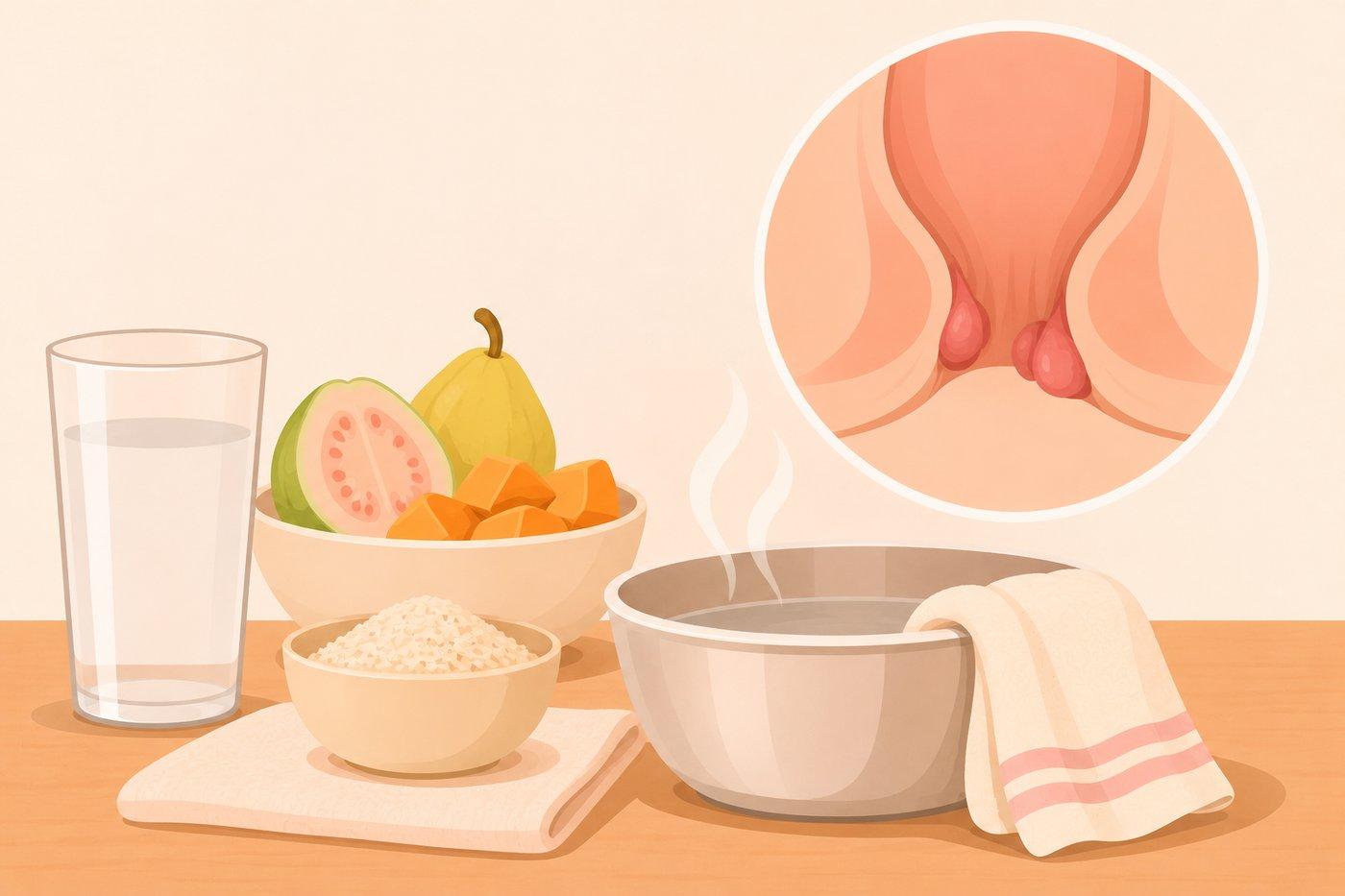
Internal piles sit higher up, in the last part of the bowel, and may cause bright-red bleeding, often without pain. External piles develop just beneath the skin at the opening of the back passage and are more likely to cause swelling, itching or pain.
Both are common in pregnancy, and some women have both at the same time.
Home remedies that can ease piles
The most useful thing is to make each bowel movement easy, with stools soft enough to pass without pushing. The measures below are commonly suggested for that.
| Remedy | How it may help | How to use it |
|---|---|---|
| Psyllium husk (isabgol) | Adds fibre and can help soften stools | Take with adequate fluid. Ask a doctor or pharmacist about the appropriate product and amount during pregnancy |
| High-fibre foods | Help prevent constipation | Include dals, whole-wheat rotis, vegetables and fruit such as guava and pear regularly |
| Fluids | Help keep stools softer | Drink water regularly through the day. Other fluids can add to overall intake |
| Warm sitz bath | May soothe pain, itching and swelling | Sit in comfortably warm water for a short while, a few times a day |
| Cold compress | May reduce swelling and discomfort | Wrap something cold in a clean cloth and hold it gently against the area briefly |
Adding fibre too quickly can bring wind and a bloated tummy. Gas and Bloating During Pregnancy: Indian Food Fixes suggests gentle ways to ease it.
Everyday habits that reduce pressure
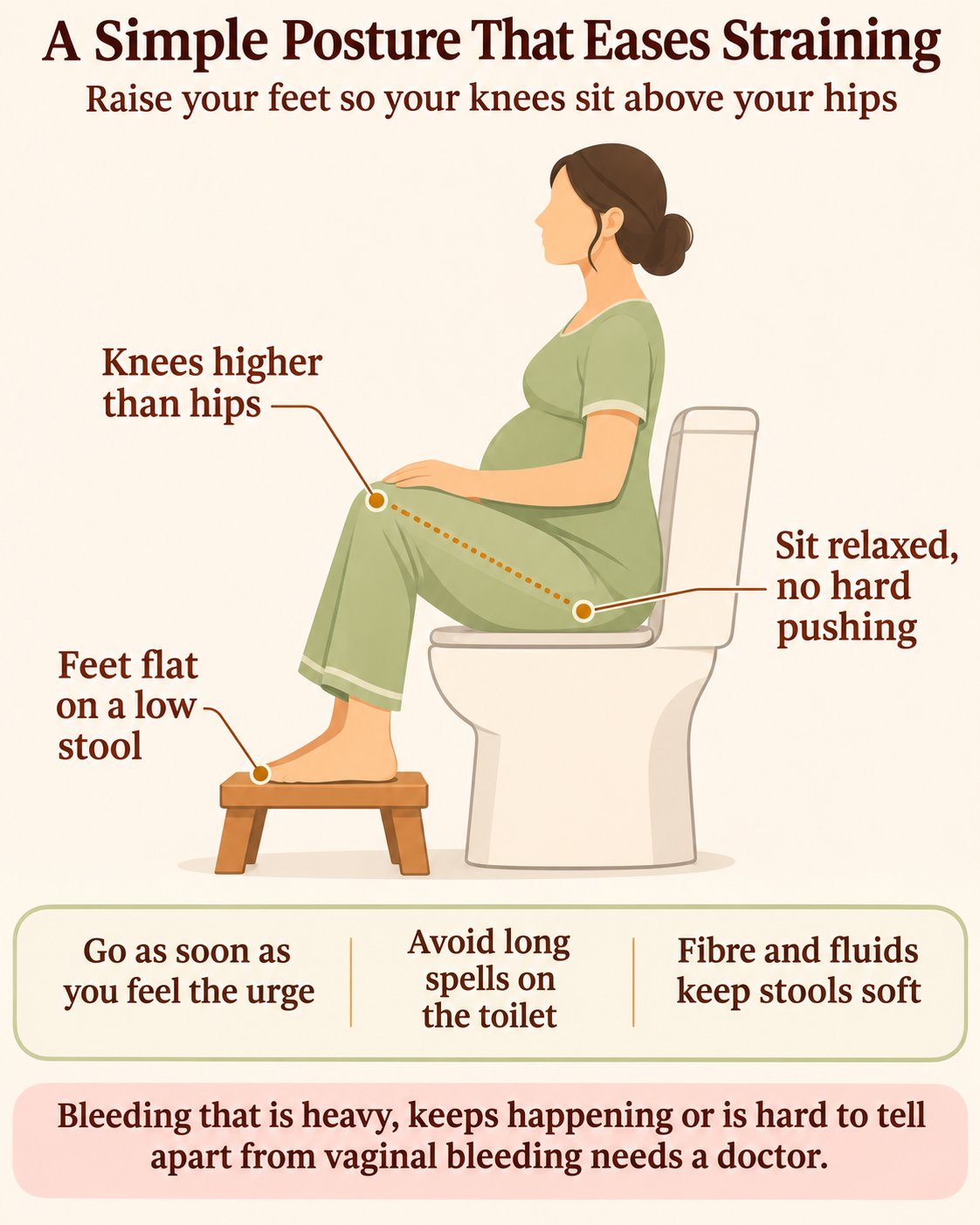
Small changes to toilet habits often bring as much relief as any single remedy.
- Passing stool as soon as the urge comes, rather than holding it in.
- Resting the feet on a low stool so the knees sit above the hips.
- Avoiding long spells on the toilet or hard pushing.
- Changing position often, and lying on one side to take pressure off the veins.
- Keeping the area clean and patting it dry gently.
What tends to make piles worse?
A few everyday things quietly keep piles inflamed, and most are easy to adjust.
- Straining or spending a long time on the toilet.
- A diet low in fibre.
- Ignoring the urge to pass stool.
- Harsh wiping or scented soaps on a sore area.
- Strong herbal or Ayurvedic laxatives and oral aloe vera, which are best avoided in pregnancy unless a doctor approves them.
Are piles creams and medicines safe in pregnancy?
Many over-the-counter piles creams and ointments are used in pregnancy. They work mainly on the surface, so only small amounts are absorbed, but it is still best to check with a doctor or pharmacist before using one, as their ingredients vary.
For pain, paracetamol is usually the preferred painkiller in pregnancy when something is needed. Ibuprofen is generally avoided in pregnancy and should not be used unless a doctor or pharmacist advises it.
If iron tablets seem to be worsening constipation, it helps to mention this at an antenatal visit. A doctor may adjust the dose or suggest a gentler option rather than have a woman stop iron on her own. Iron tablets also need spacing away from antacids, as explained in Acidity During Pregnancy: Heartburn Relief That Works.
When might symptoms start to improve?
Mild symptoms may start improving over several days as stools become softer and straining eases. Some episodes take longer to settle, particularly around delivery.
When symptoms do not improve with softer stools, less straining and simple comfort measures, a doctor can check whether another treatment is needed.
Piles can also flare in the early days after birth, especially after pushing in labour, before they gradually settle.
When to see a doctor
Bright-red bleeding often comes from piles, but it is not the only cause. An anal fissure, a small tear that can follow hard stools, can cause similar bleeding, so blood that is new, recurrent, heavy or unexplained should be checked rather than assumed to be piles.
If home measures have not helped after a couple of weeks, or symptoms are worsening, a review is sensible. The following signs deserve prompt medical attention:
- Bleeding that is heavy, keeps happening, or is mixed into the stool rather than on the surface.
- Stools that are black and tar-like. Iron tablets can make stools look dark, but black, tar-like stools, especially with other symptoms such as dizziness or weakness, should be assessed promptly.
- Severe or worsening pain, or a new hard, very painful lump around the anus.
- Heavy or ongoing bleeding, especially alongside dizziness, fainting, unusual tiredness or breathlessness.
- Any bleeding that is hard to tell apart from vaginal bleeding, since vaginal bleeding in pregnancy needs urgent review.
Looking ahead
Because piles are driven by the pressure of pregnancy, most begin to shrink in the weeks after birth as it eases, though some take a little longer.
The early postpartum days can flare them, so it helps to carry the same habits forward. For women whose main trigger is constipation, our guide to constipation in pregnancy covers safe relief in more detail.
References
- National Health Service (NHS). Piles in pregnancy.
- NHS Specialist Pharmacy Service. Haemorrhoids: treatment during pregnancy.
- Health Service Executive (HSE), Ireland. Piles (haemorrhoids).
Common questions
Can piles cause bleeding during pregnancy?
Yes. Piles commonly cause bright-red bleeding, usually spotted when wiping or on the outside of the stool. Even so, bleeding should not be assumed to be piles, as other causes are possible, so new or heavy bleeding is worth a check.
Will piles go away after delivery?
Usually they improve. Most piles ease in the weeks after birth as pelvic pressure falls, though the timing varies. Keeping stools soft helps them settle.
What can help if piles are very painful?
Warm sitz baths, a wrapped cold compress and softer stools may ease discomfort, and paracetamol can be used for pain when needed. Severe or worsening pain should be reviewed by a doctor.
Can piles be prevented from getting worse in pregnancy?
Often they can be kept in check. Enough fibre and fluid, not straining, and not delaying a bowel movement all reduce pressure on the area and lower the chance of a flare.
Do piles creams need a prescription?
Not always, as several are sold over the counter. It is still best to ask a doctor or pharmacist which product suits pregnancy before buying one.
This article is for education and general understanding. It is not a substitute for personal medical advice. A doctor or midwife should be consulted about individual symptoms, especially any bleeding that is unclear. Review of this article by a specialist obstetrician-gynaecologist is in progress.
 Medically reviewed byDr. Mahender Singh, MBBS, DCH, MD (Paediatrics)A consultant child specialist and neonatologist with over four decades of practice in newborn and child health.
 Written bySarthak ThakurCo-founder, CTO and Chief Marketing Officer of ParentVeda, and the software engineer who builds its app and the pipeline that checks its articles.
This article explains; it doesn’t diagnose. If your doctor has told you something different, your doctor is right.