


Pregnancy changes many things you rarely hear discussed beforehand, and vaginal discharge is one of them. You might have noticed more of it than usual, or you might simply want to know what to expect at some stage ahead. Either way, a shift in discharge is one of the most common and least talked-about parts of pregnancy.
The short answer is reassuring. More discharge in pregnancy is usually normal, and when it is thin, milky white or clear, and mild or without much smell, these normal secretions help keep the vagina healthy and form part of the body's natural protection against infection. What deserves attention is a change in colour, a strong smell, itching or burning, any blood, or a sudden watery gush.
Knowing what is normal, and what deserves a call, can make these changes much easier to navigate. The rest of this guide walks you through what healthy discharge looks like, which changes are worth a call, and how to tell discharge apart from urine or your waters.
Key takeaways
- More discharge is normal in pregnancy. Rising oestrogen and extra blood flow increase it, and these normal secretions form part of the body's natural protection against infection.
- Healthy discharge is thin, milky white or clear, and mild-smelling. It often increases as pregnancy goes on, with the most in the third trimester.
- Green, grey or a distinctly yellow discharge, a fishy or foul smell, or itching and burning can signal a common infection worth checking.
- Any bleeding, or a sudden gush or steady trickle of watery fluid in later pregnancy, needs prompt advice rather than waiting.
- Never treat a suspected infection yourself in pregnancy. A quick check confirms what is going on and what is safe to use.
This is for general education and understanding, not personal medical advice. Your doctor or midwife knows your pregnancy and can guide you on anything you notice.
Is more discharge in pregnancy normal?
Yes. For most people, noticing more discharge is one of the ordinary changes of pregnancy. It happens because rising oestrogen and increased blood flow to the area lift the amount of fluid your body makes.
This fluid has a job. It keeps the vagina clean and helps stop infection travelling up towards the womb, which is why the amount tends to rise as the weeks go on. The medical name for this healthy discharge is leucorrhoea.
So more moisture, on its own, is usually a sign your body is doing exactly what it should. What matters is not the quantity but the character of it: its colour, its smell, its texture, and whether anything else has changed alongside it.
What healthy pregnancy discharge usually looks like
Healthy pregnancy discharge is typically thin, milky white or clear, and either mild-smelling or with little smell at all. It may feel like more dampness than usual and can leave a light mark on your underwear through the day.
You may notice it increases over the weeks, with the heaviest amount towards the third trimester. That steady rise is expected, and by itself it does not mean anything is wrong.
Discharge also varies from person to person and day to day, so there is a wide range of normal here. Getting familiar with your own usual pattern is what makes any real change easier to spot early. Many people notice this shift among their first-trimester changes.
Which changes are worth checking?
The clearest way to read discharge is by its colour and smell, and by any symptoms that come with it. The table below sets out what is usually fine and what is worth a call.
| What you notice | Usually normal | Worth checking with your doctor or midwife |
|---|---|---|
| Colour | Milky white or clear | Green, grey, or distinctly yellow, or unusual for you |
| Texture | Thin and smooth | Thick and cottage-cheese-like, or frothy |
| Smell | Mild or none | Strong, fishy, or foul |
| Other symptoms | None | Itching, burning, soreness, or pain when passing urine |
| Any blood | None | Pink, red, or brown spotting or bleeding |
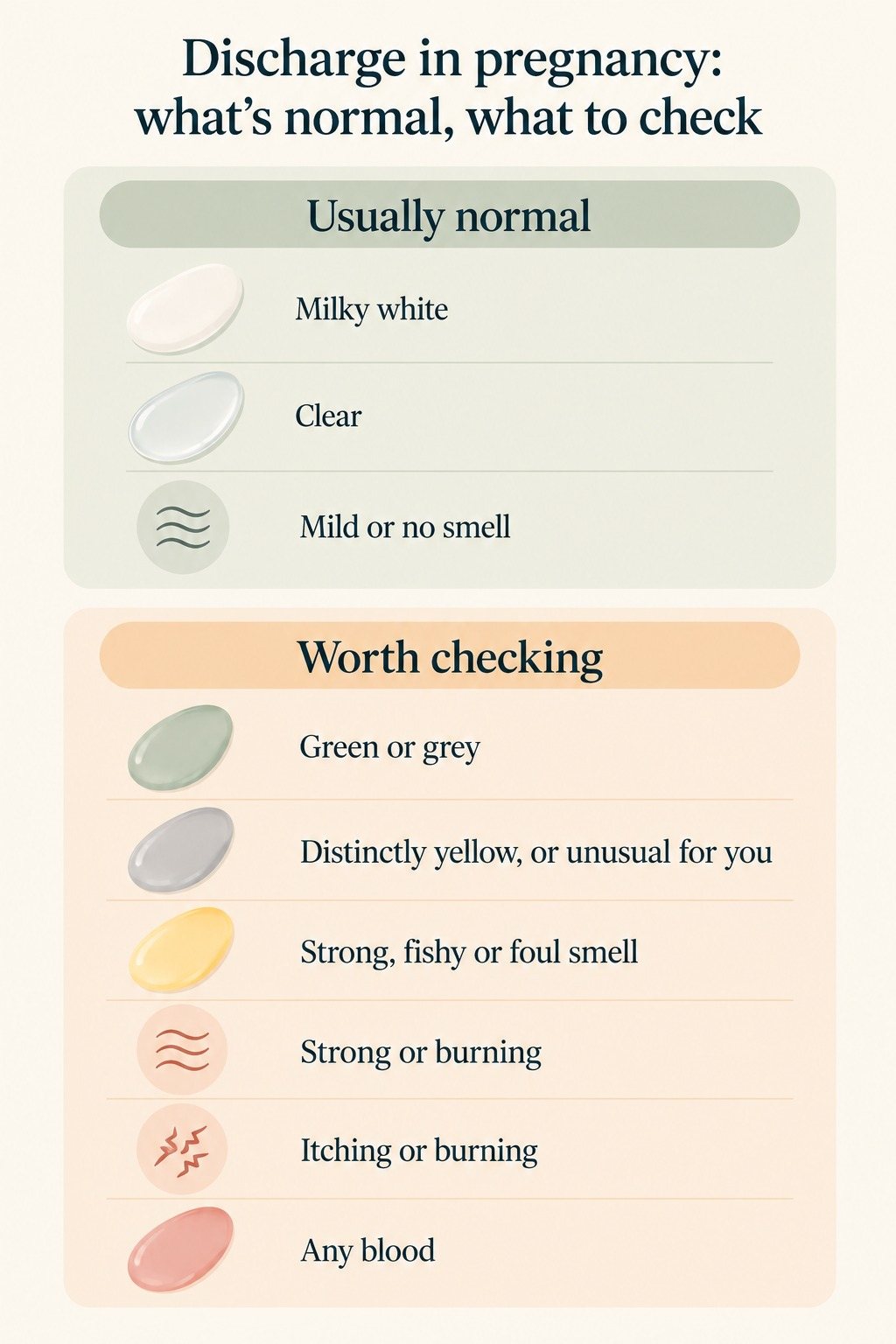
A change in colour or smell, or itching and burning, often points to a common infection such as thrush or bacterial vaginosis. Both are frequent in pregnancy and are usually simple to treat once confirmed. Pain or burning when passing urine can instead suggest a urinary tract infection.
Any bleeding is a separate matter and should always be checked, even when it is light or brown. It is often harmless, but it is not something to interpret on your own, so a call to your midwife is the safe route.
Is it discharge, urine, or your waters?
Later in pregnancy, one common worry is whether extra wetness is discharge, a little urine, or your waters starting to break. Telling them apart is not always obvious, and it is a very ordinary question to have.
Discharge tends to be thicker and stays milky or clear. A small leak of urine often carries a faint ammonia smell, while fluid from your waters is usually watery and clear or pale, and can arrive as a sudden gush or a slow, steady trickle you cannot hold back.
If you think your waters may have broken, especially if you are having a sudden gush or ongoing leakage of clear fluid, contact your maternity team rather than waiting to be certain. They would far rather check and reassure you.
What helps you stay comfortable
A few simple habits keep things comfortable without upsetting the natural balance. Wear breathable cotton underwear, and change it whenever it feels damp.
You can use an unscented panty liner on heavier days, but avoid tampons in pregnancy. Skip douching and perfumed washes or wipes, since the vagina cleans itself and plain water on the outside is all it needs.
If you suspect thrush or another infection, resist treating it yourself. Not all over-the-counter remedies are suitable in pregnancy, so a quick word with your doctor or pharmacist confirms what is safe for you.
Looking ahead
As your pregnancy moves on, expect discharge to increase rather than settle, particularly in the final weeks. That increase is usually normal. Near the end of pregnancy, however, a sudden gush or ongoing watery leakage is different and should be checked.
Near the very end, you may pass a thicker, jelly-like plug of mucus, sometimes tinged pink, known as a show. It can be an early hint that labour is approaching, so getting used to your normal pattern now makes that later change easier to recognise when you watch for the signs of labour.
When to speak to a doctor
Contact your doctor or midwife promptly if you notice any of the following:
- Discharge that is green, grey, or a distinctly yellow or unusual colour, frothy, or cottage-cheese-like
- A strong, fishy, or foul smell
- Itching, burning, soreness, or pain when passing urine
- Any bleeding, whether pink, red, or brown
- A sudden gush or steady trickle of watery fluid, which may mean your waters have broken
Seek urgent, same-day advice if you have:
- Heavy bleeding
- Fluid that suggests your waters have broken before 37 weeks
When you are unsure, it is always reasonable to ask.
References
- National Health Service (NHS UK). Vaginal discharge in pregnancy.
- NCT. Vaginal discharge and bleeding during pregnancy.
- Tommy's. Discharge in pregnancy.
- National Center for Biotechnology Information (NCBI). Vaginal microbiome in pregnancy.