
Few toddler milestones come with as much pressure as this one. A cousin trained at eighteen months, a neighbour's child is already in underwear, and a grandparent gently asks why you have waited. It is easy to feel like you are running behind before you have even begun.
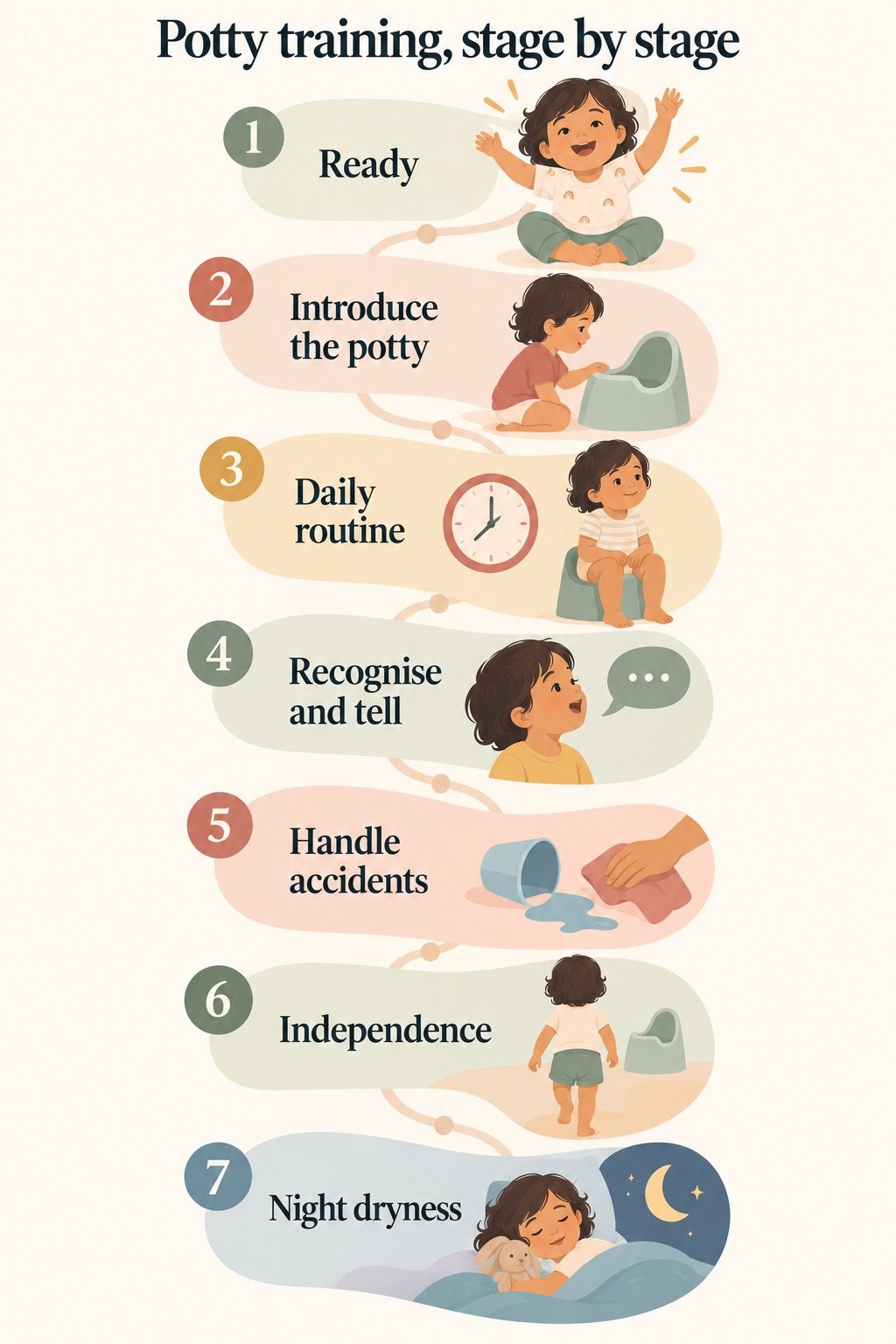
Here is the short version. There is no single right age to potty train, and readiness matters far more than the number on the calendar. Most children show the signs sometime in the second or third year, and once your child is ready, training moves through a series of gentle stages rather than one big leap, from the first potty sit to staying dry through the night.
Key takeaways
- Readiness is a cluster of skills: body awareness, communication, mobility, clothing control, and willingness to take part.
- Once your child is ready, training moves through familiar stages: introducing the potty, building a routine, learning to recognise the urge, then growing independence.
- Starting before those skills are emerging can make the process harder, with more accidents and resistance.
- Accidents are a normal part of learning for many children, and punishment tends to slow progress.
- Daytime control usually comes first, and staying dry at night is a separate milestone that often arrives much later.
This is for education and general understanding. It is not a substitute for personal medical advice. If you have concerns about your child's development, toileting, or bowel habits, please speak with your paediatrician.
Am I behind, or is my child just not ready yet?
Not having started potty training yet does not, by itself, mean your child is behind. In many Indian families, potty training starts early because that is how it has always been done, and because a trained toddler can feel like proof of good parenting. The pressure is real, but it is not the same thing as evidence.
Using the toilet is not one skill but a chain of them. Your child has to notice the body's signal, recognise what it means, tell you, get to the toilet, manage their clothing, sit and position, release, and then do it all again next time. Those skills develop over time, which is why readiness matters more than pressure.
This is why readiness matters more than age. Starting before those skills are emerging can make the process harder, with more accidents, resistance, and frustration for both of you. The useful question is not how old your child is, but which of these skills they can already do.
The readiness signs that actually matter
Readiness shows up as a cluster of small signals, not one dramatic moment. You are looking for several of these to appear together, rather than waiting for every single one to line up.
| Signs your child may be ready | Signs it may be worth waiting |
|---|---|
| Stays dry for around two hours, or wakes dry after naps | Nappy is almost always wet within short intervals |
| Shows awareness through grunting, squatting, or going quiet | Seems unaware of weeing or pooing as it happens |
| Can follow simple, one-step instructions | Struggles to follow a simple request |
| Can walk to the toilet and pull pants up and down | Cannot yet manage clothing or sit steadily |
| Dislikes a dirty nappy, or shows interest in the toilet | Shows no interest, or actively resists the idea |
If most of the left column sounds like your child, it is a good time to start. If the right column fits better, waiting a while will make the whole thing easier for both of you.
Getting ready before the nappies come off
Much of potty training happens before you ever remove a nappy. In the weeks beforehand, you are quietly making the toilet familiar, so that stopping nappies feels like a small step rather than a sudden change.
A few things prepare the ground:
- Talk about wee and poo plainly, without treating them as dirty or shameful.
- Let your child watch how the toilet works, since toddlers learn this mostly by copying.
- Choose your equipment: a simple potty, or a child seat that clips onto the toilet with a step for the feet.
- Switch to clothes that are easy to pull down, so your child can manage them alone.
If possible, pick a relatively settled stretch of days to begin, rather than starting during a major family change such as a new sibling, a move, or the first days of playschool. One new skill at a time is far easier for a young child than several at once.
Introducing the potty for the first time
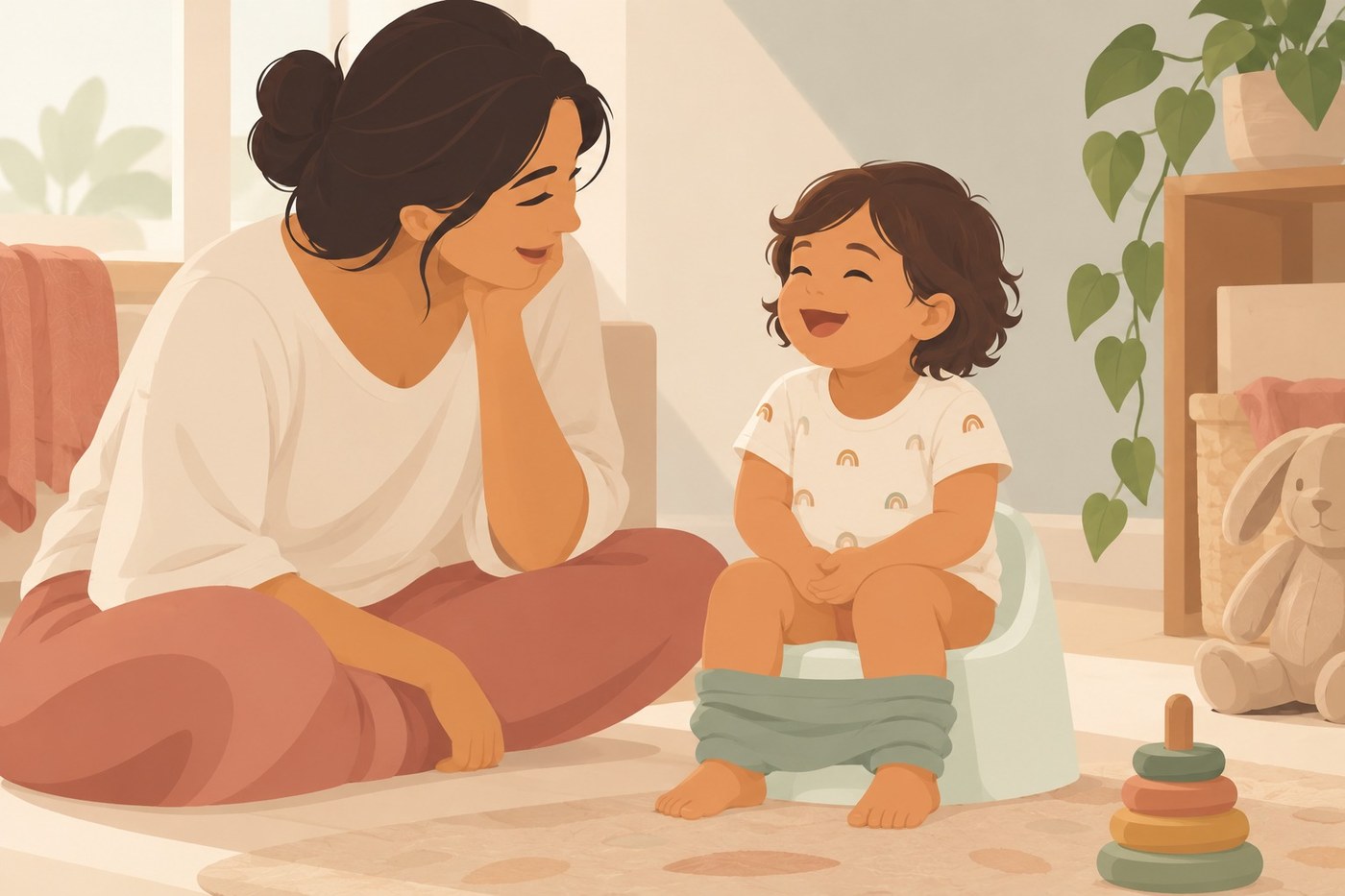
Start by making the potty an ordinary object in your child's day. Let them sit on it fully clothed at first, then without a nappy at natural moments, so it feels normal long before anything is expected of it.
Keep these early sits short and relaxed. A book or a quiet toy nearby can help your child stay seated long enough to get comfortable, and there is no need to insist if they want to get up.
Expect nothing to happen for a while, because at this stage that is entirely normal. The goal right now is comfort and familiarity with the potty, not results, and praising your child simply for sitting sets a gentle tone.
Building a daily potty routine
Once the potty feels familiar, offer it at predictable times: after waking, after meals, before a bath, and before bed. Regular, low-key sits at these natural moments give your child frequent chances to succeed without it feeling like a test.
Consistency is what carries this stage. Try to keep the routine the same wherever your child is, so grandparents, caregivers and daycare can follow the same routine, and keep a potty and a spare set of clothes handy when you are out.
At first, a success is really just lucky timing. Over the following weeks those catches become more deliberate as your child starts to anticipate the feeling, and the routine slowly turns from something you lead into something they do.
How will your child learn to recognise and tell you?
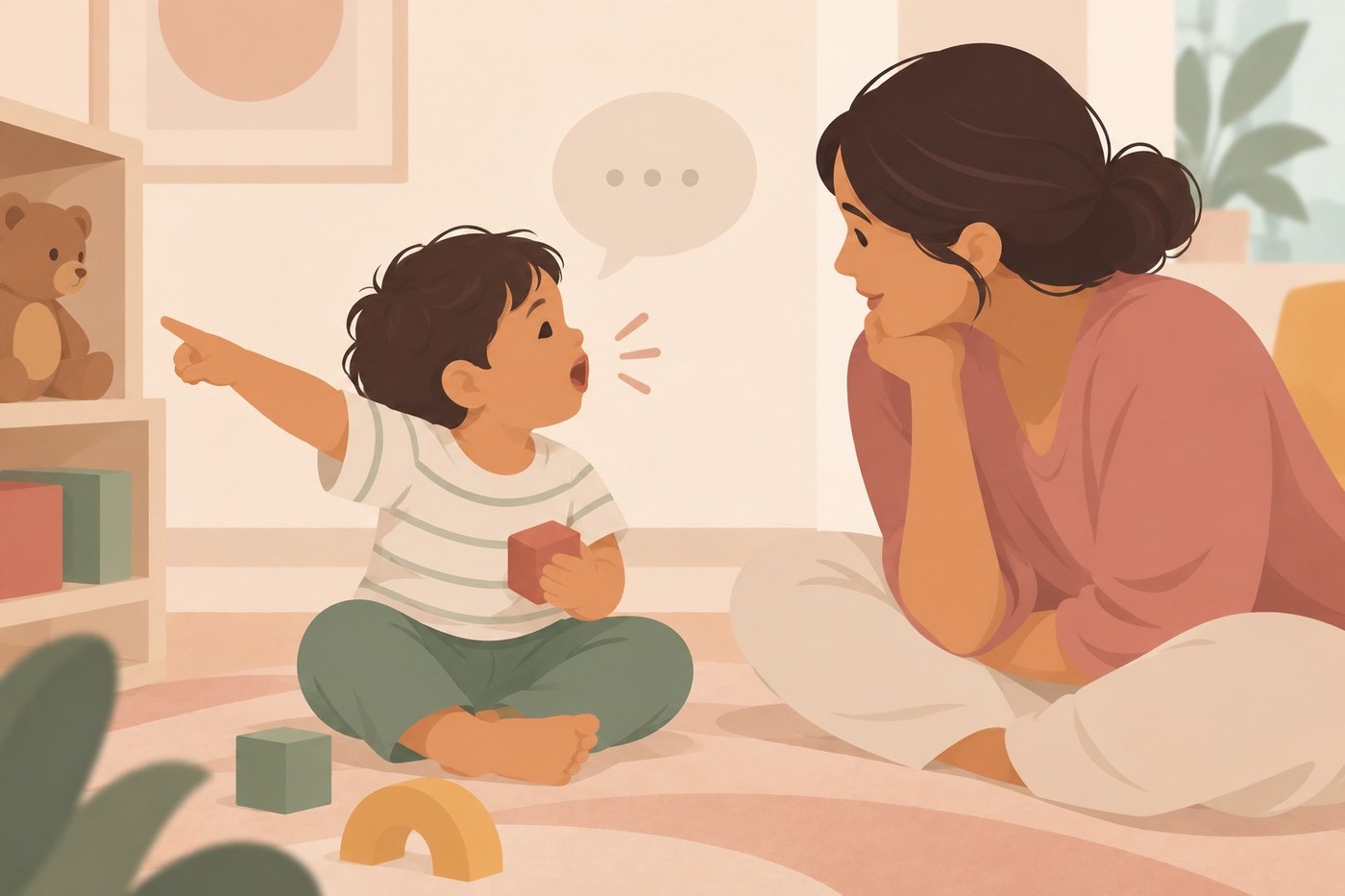
The heart of potty training is your child learning to notice the urge and act on it. You can help by naming the sensation out loud whenever you spot the cues, such as going quiet, squatting, holding themselves, or freezing mid-play.
Give your child simple, consistent words for weeing and pooing, and respond quickly and warmly whenever they signal, even if you do not always make it in time. Linking the feeling to the word and to the potty, again and again, is what eventually makes it click.
Expect that in the beginning you will notice the signs before your child does. Gradually they begin to tell you, though often just as it is happening or slightly too late, and that is real progress. Learning to recognise and communicate the urge is an important step towards more reliable control.
Accidents and resistance are part of learning
Accidents are a normal part of learning for many children. They help a child gradually connect the sensation of needing to go with getting to the toilet in time, and they happen for weeks before it becomes automatic.
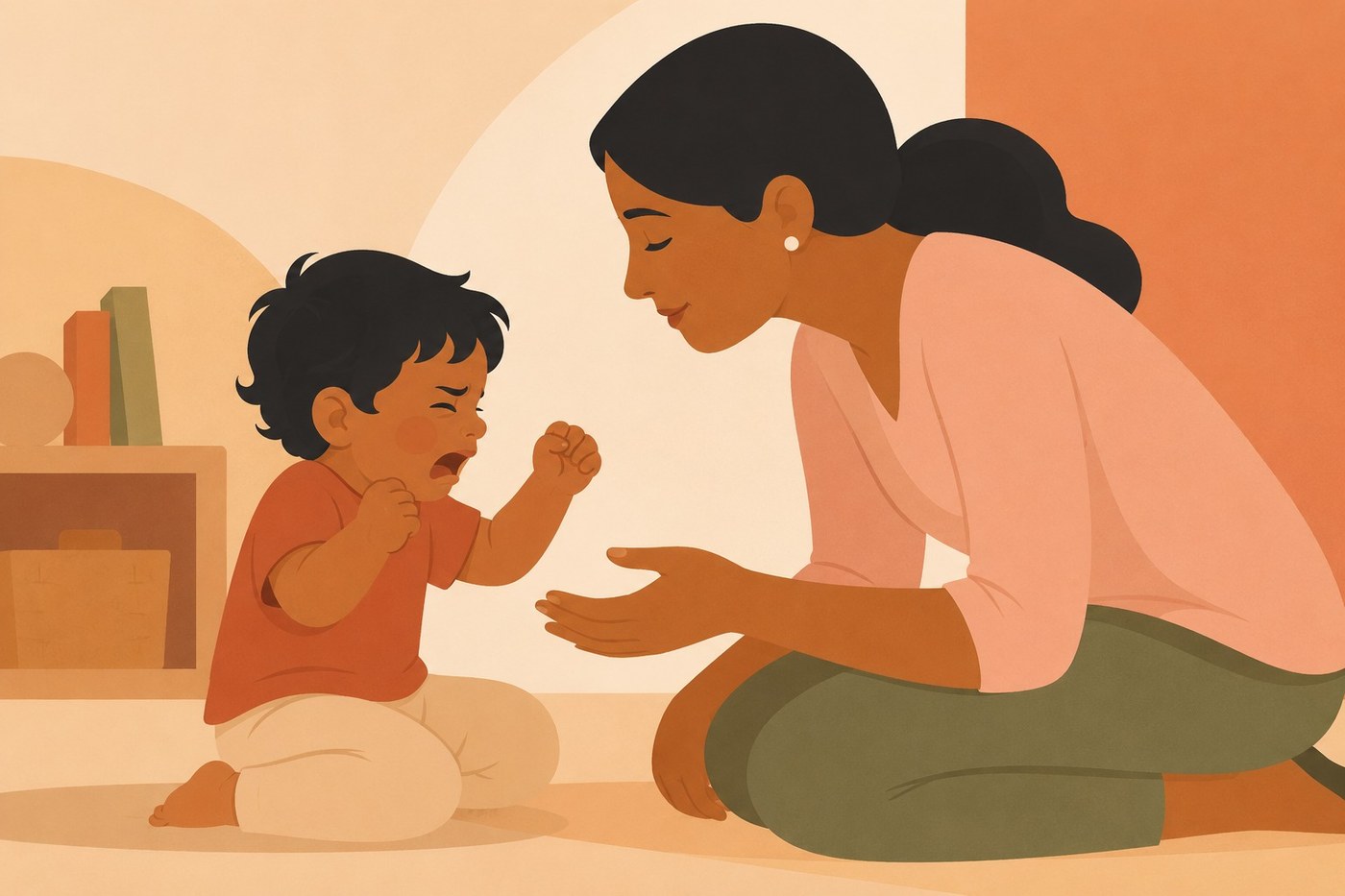
Try to keep your response neutral. Clean up without scolding, reassure your child, and move on, since responding calmly rather than with punishment keeps the whole process from turning into a struggle. Pressure and fear can contribute to withholding, which can make constipation more likely and make toilet training harder.
If your child starts refusing the potty or holding back, that is usually a signal to ease off rather than push harder. Take the pressure off for a while, keep the potty nearby without insisting, and return to it when interest comes back. Persistent holding, hard or painful stools, or a real fear of pooing deserve gentle attention from your paediatrician.
When should your child start doing it independently?
As the basics settle, hand over the steps your child can manage, one at a time. Pulling their own pants down and up, climbing onto the seat, wiping, flushing, and washing hands are all part of using the toilet, and each becomes a small piece of independence rather than something done to them.
Teach wiping gently and thoroughly, from front to back, and expect it to be one of the last skills to become reliable. When your child is steady on the potty and keen to copy the adults around them, you can move to a seat on the main toilet with a step for their feet, which gives them a stable position and makes using the toilet more comfortable.
Expect independence to arrive in pieces rather than all at once. Your child may manage confidently at home long before they can handle an unfamiliar toilet or get themselves to the bathroom in time at playschool, and that unevenness is normal.
What about staying dry at night?
Staying dry overnight develops separately from daytime toilet training, and it can take much longer to arrive. It is not simply the next thing to train once days are dry, so there is no need to rush it.
In the meantime, keep using a nappy or pull-up at night without any sense of shame, protect the mattress, and offer a toilet trip just before bed. There is little to actively do here except wait for your child's body to be ready, and pushing night training early tends to create stress without speeding anything up.
A child can be dry and confident by day and still need a nappy at night for a long time afterward. That gap is common and expected, rather than a sign that something has gone wrong.
Looking ahead
Once daytime training feels steady, the finishing skills follow over months: wiping well, using unfamiliar toilets, and getting to the bathroom in time at playschool. These arrive with practice and your child's growing independence, not with extra pressure.
Seen as a whole, potty training is really one long handover, from you managing your child's body to your child managing it themselves. Every accident and every small success is part of that handover, which is why patience tends to carry you further here than any single technique.
When to speak to a doctor
Potty training is usually a normal part of development, but a few situations are worth raising with your paediatrician:
- Your child is straining, passing hard or pebble-like stools, or holding back poo.
- There is pain, blood, or a burning feeling when passing urine.
- Your child was reliably dry and then starts wetting again, especially with fever, increased thirst or urination, or constipation.
- Toilet training has stalled for a long time, or your child seems frightened or distressed around it.
- You have wider concerns about your child's development, movement, or communication.
References
- American Academy of Pediatrics (HealthyChildren.org). The Right Age to Toilet Train.
- National Health Service (NHS UK). Potty training your child.
- Johns Hopkins Medicine. Toilet Training.
- Nemours KidsHealth. Toilet Teaching Your Child.
- Zero to Three. Potty Training: Learning to Use the Toilet.