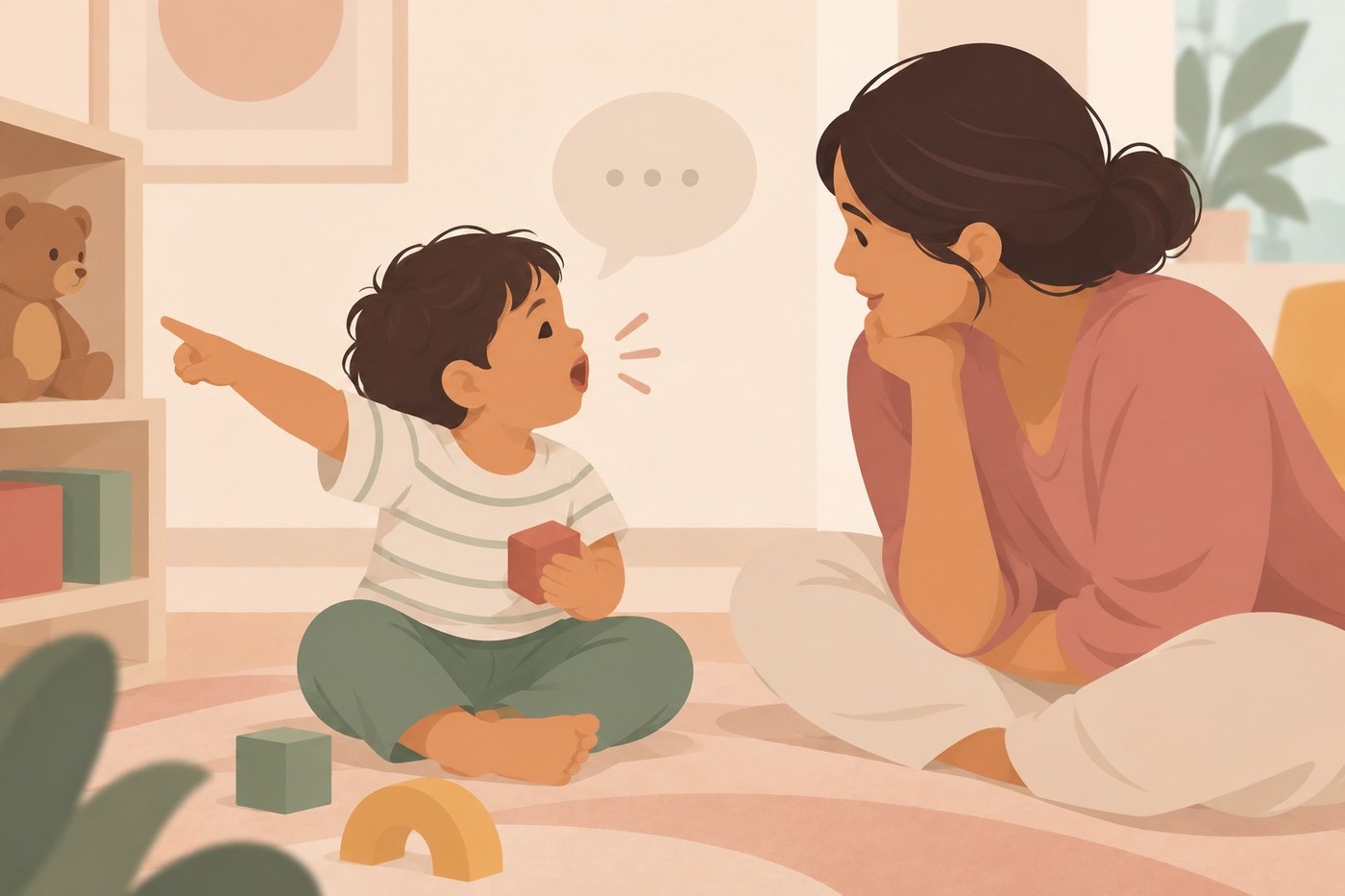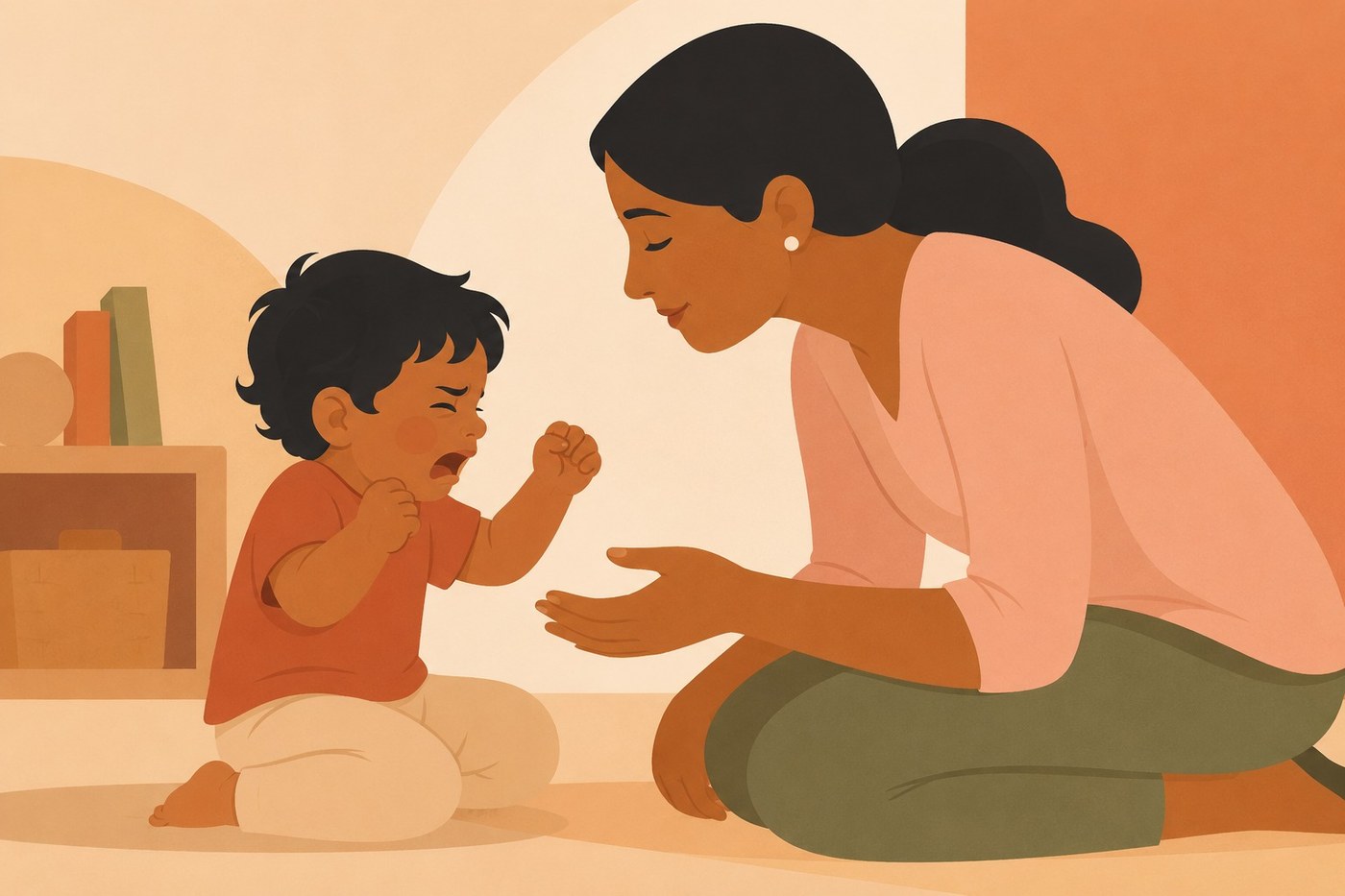


Watching your child grow, it is natural to wonder whether they are keeping pace. Maybe a cousin the same age is already chatting away, or a friend's toddler walked months ago. Somewhere between proud milestones and small comparisons, a quiet question can settle in.
That question deserves a calm, clear answer rather than a late-night scroll through frightening lists. Knowing which signs are worth a closer look, and which are simply the wide range of normal, turns worry into something you can act on.
A developmental red flag is a sign that your child may benefit from a professional check, not a diagnosis on its own. Missing one milestone does not automatically mean there is a developmental problem, though some individual signs are still worth raising. When you notice something, the most useful step is usually the same: mention it to your paediatrician.
Key takeaways
- A red flag is a prompt to check with a doctor, not proof that something is wrong.
- Missing one milestone does not automatically mean a problem, but some individual signs are still worth discussing.
- A pattern across areas can raise concern, and a clear, persistent concern in one area is also worth discussing.
- Development shows up in four areas: movement, communication, social and emotional, and thinking and play.
- Losing a skill your child once had deserves prompt attention.
- When support is needed, starting early can make a meaningful difference, and it can still help when a concern is found later.
This is for education and general understanding, not a diagnosis. Every child develops differently, and only a qualified doctor who examines your child can assess their development.
What does a developmental red flag actually mean?
A red flag is a sign that your child's development in one or more areas may be worth a professional look. It is an invitation to ask, not a conclusion.
Parents often spot the earliest, subtlest changes, long before anyone else. That makes your observations one of the most valuable parts of any developmental check, which is why raising a concern is helpful rather than paranoid.
The four areas where development shows up
Development is usually grouped into four areas, and a child can be racing ahead in one while taking their time in another.
- Movement (motor): rolling, sitting, crawling, walking, and later running, climbing and holding a crayon.
- Communication (speech and language): babbling, first words, following simple instructions, and putting words together.
- Social and emotional: eye contact, smiling back, sharing attention, playing near or with others.
- Thinking and play (cognitive): exploring toys, solving small problems, pretend play, and copying what you do.
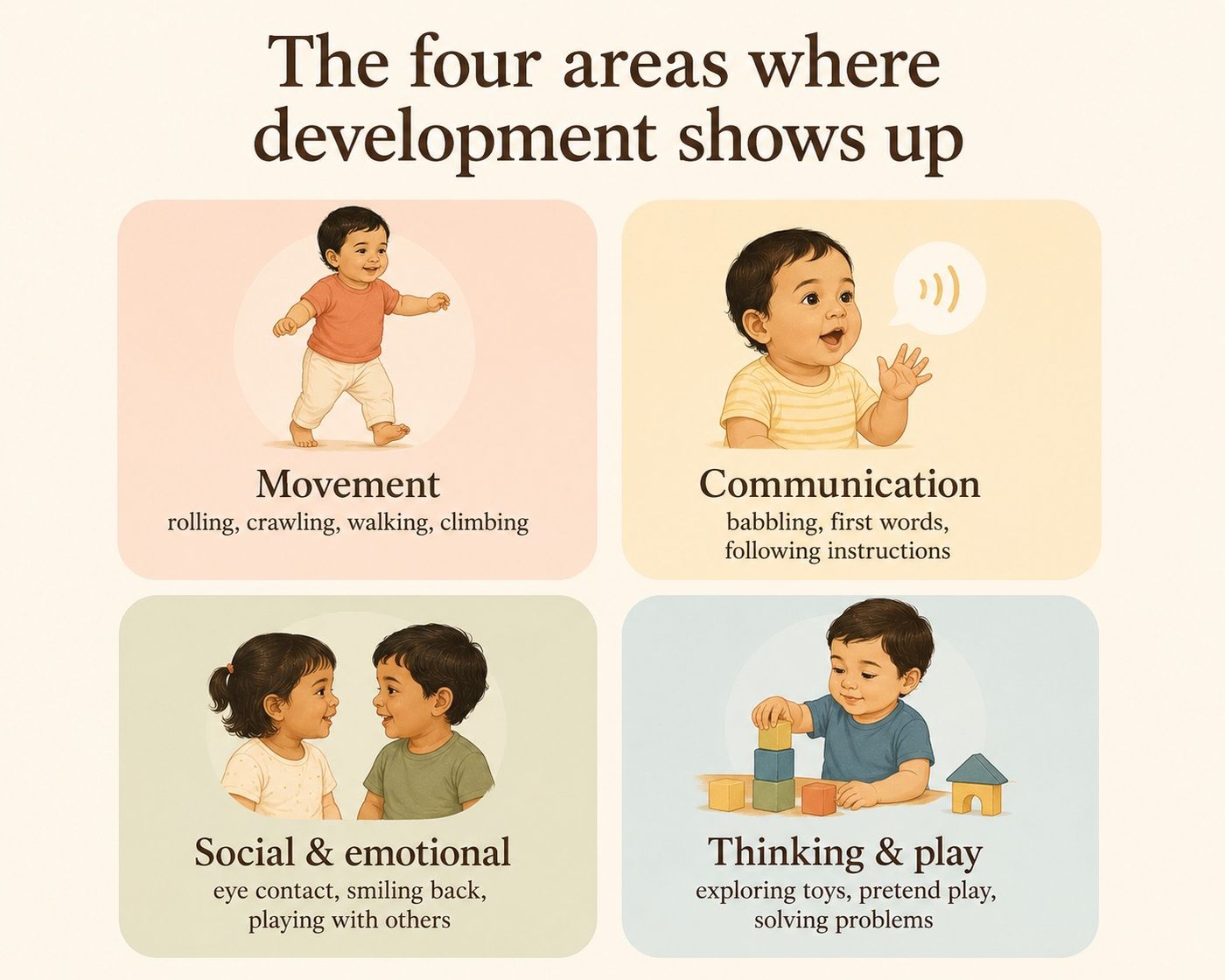
These areas overlap, so a child may show strengths in one while taking longer in another. A difference in one area does not automatically mean there is a broader developmental problem, but a persistent concern in any area deserves attention.
Signs worth mentioning to your doctor, by age
The signs below come from recognised milestone checklists used in developmental monitoring. Any single one is reason enough to ask. You do not need several, and reaching this list does not mean a diagnosis; your doctor interprets each sign alongside the fuller picture.
| By around this age | Worth raising if your child, for example |
|---|---|
| 12 months | Is not babbling; does not respond to their name; does not point, wave or use simple gestures; is not sitting steadily |
| 18 months | Uses no single words; does not point to show you things; does not copy you; is not walking |
| 2 years | Does not use two-word phrases; does not follow a simple instruction; has lost words or skills they once had |
| 3 years | Speaks so unclearly that family struggles to understand; does not play pretend; shows little interest in other children; falls often or struggles on stairs |
For babies born prematurely, doctors may use a corrected age when assessing development in the early years. Ask your child's paediatrician how this applies to the milestones being assessed.
What patterns matter most?
This is where the wider picture counts. A pattern across several areas can raise concern, but a clear concern in a single area can also be worth discussing with a doctor, especially when the gap is significant, persists over time, or comes with the loss of a skill.
A child who is late to one milestone but is otherwise communicating, engaging and learning can still be developing typically. The wider developmental picture matters more than any one milestone in isolation.
Two situations deserve particular attention. One is a child who seems behind in several areas at once. The other is losing a skill that was already there, such as words or gestures that fade.
What to do when something feels off
Start by noting what you have seen and roughly when, in plain words. A short note is easier to share than a worry you are trying to recall at a busy appointment, and it gives your doctor something concrete to work with.
The right next step is not always a specific therapy. An assessment helps identify which areas need attention and whether your child would benefit from monitoring, further evaluation or targeted support.
Then tell your paediatrician or child psychologist, even if the next check-up is weeks away. Development is screened at set ages during childhood, and doctors also watch specifically for signs of autism in the toddler years. The American Academy of Pediatrics recommends autism-specific screening at 18 and 24 months, alongside ongoing developmental checks. A parent's concern is always a good enough reason to look sooner.
In India, public care runs through the Rashtriya Bal Swasthya Karyakram (RBSK), a government child-health programme that screens children and refers those who need support to a District Early Intervention Centre (DEIC) for assessment and services. Whether through a private paediatrician or this public route, support that is needed early can make a meaningful difference, because a young child's brain is still forming connections quickly.
Looking ahead
A developmental check may simply provide reassurance, while also making sure that children who do need support are identified early. When support is needed, starting in the early years can make a real difference, and support can still be valuable when a concern is identified later.
At the next health check, bring the notes you have made and ask about any area that continues to concern you. Our guide on baby milestones month by month sets out what typically appears when, and how wide the normal windows really are.
When to speak to a doctor
Book a routine appointment if your child seems behind in more than one area, or if a single area is not catching up over a few months, or if a persistent feeling tells you something is not quite right.
Seek prompt advice if your child loses a skill they clearly had before, such as words, gestures or steady movement. A skill that fades is one of the more important signs to have checked without waiting.
References
- Centers for Disease Control and Prevention (CDC). Learn the Signs. Act Early.
- Centers for Disease Control and Prevention (CDC). Developmental Milestones.
- American Academy of Pediatrics (HealthyChildren.org). Assessing Developmental Delays.
- American Academy of Pediatrics. Developmental Surveillance and Screening.
- Cleveland Clinic. Developmental Delay in Children.
- Ministry of Health and Family Welfare, National Health Mission (India). Rashtriya Bal Swasthya Karyakram (RBSK).