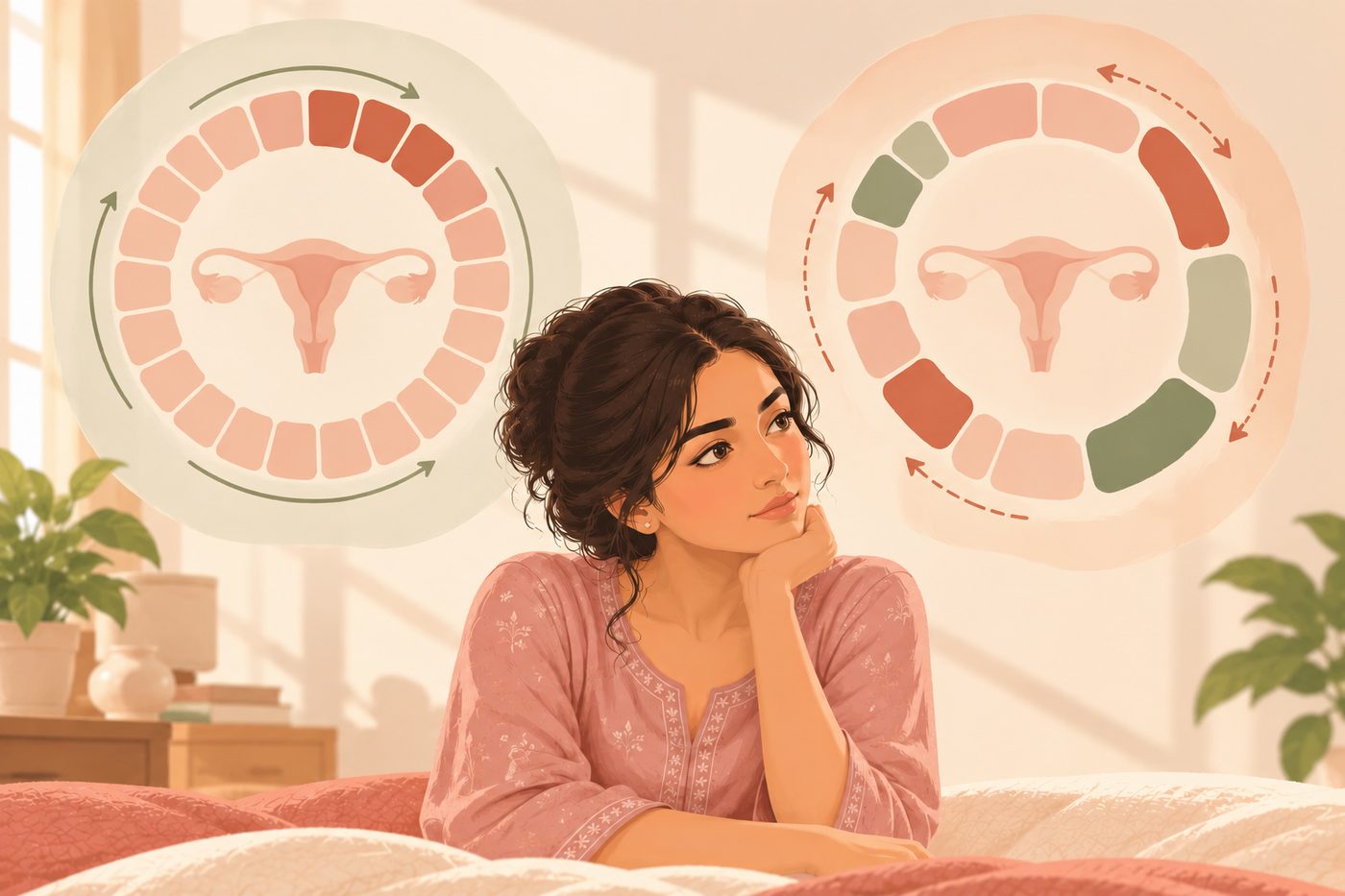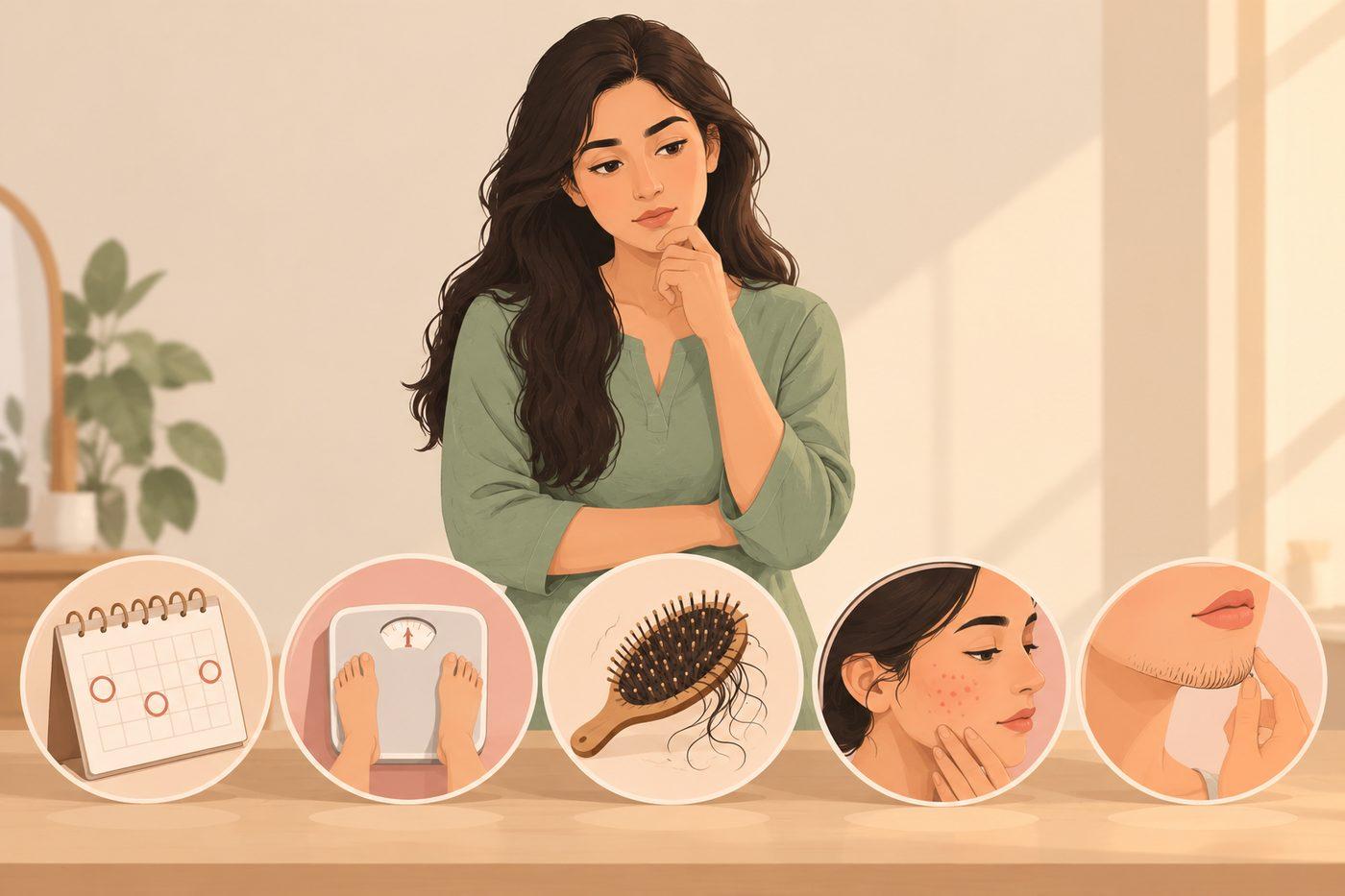
The most common PCOS symptoms are irregular or missed periods, unwanted hair on the face or body, acne, thinning scalp hair and changes in weight. Some signs are easy to miss: dark, velvety skin on the neck, small skin tags, and PCOS in women who are slim.
Each sign can look like a small, separate problem. A late period gets blamed on stress, hair fall on hard water, a dark neck on the sun. Many women in India live with these signs for years before anyone connects them.
This checklist helps a woman see the pattern, understand how doctors confirm it and know what to bring to her appointment. One or two signs on their own do not mean PCOS.
Key takeaways
- PCOS is a hormonal condition that can affect the cycle, skin, hair and metabolism. Insulin resistance is common, but not every woman with PCOS has it.
- Doctors confirm PCOS by combining symptoms, an examination and selected tests, and the rules for teenagers are different.
- A dark, velvety neck is a clue worth mentioning to a doctor, but on its own it does not mean PCOS.
- Being slim does not rule out PCOS.
- Period dates, photos of skin changes and how often she threads make a short appointment far more useful.
This is for education and general understanding, not a diagnosis. Every woman is different, so please speak with your doctor about your own symptoms.
What PCOS symptoms might she notice?
Most signs of polycystic ovary syndrome (PCOS) show up in four places: her cycle, her skin, her hair and her weight. Few women have all of them, and two women with PCOS can look very different.
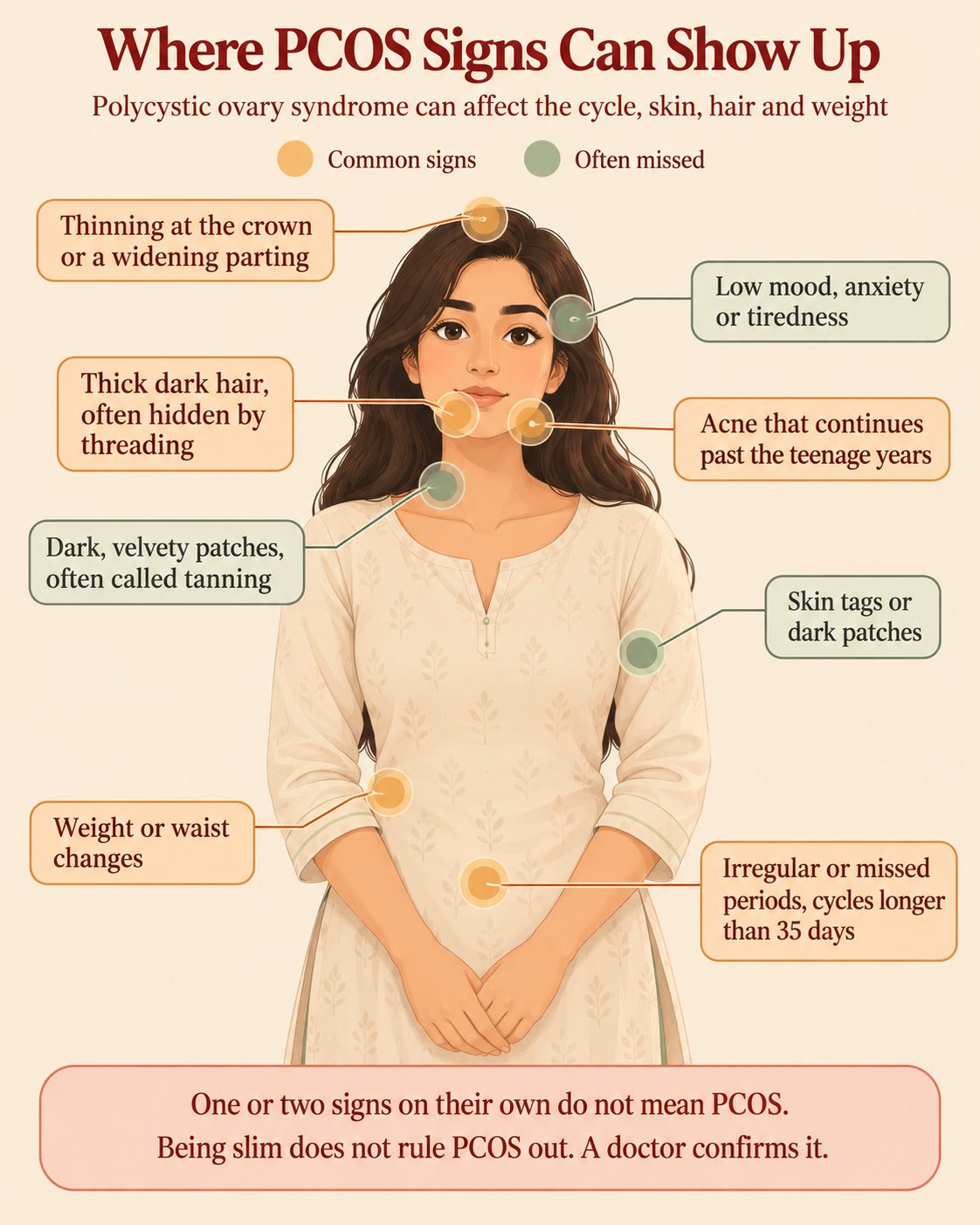
These are features that can occur with PCOS, not a checklist that confirms it. Some of them are common in many other conditions too.
| Sign | What she may notice |
|---|---|
| Irregular periods | Cycles longer than 35 days, fewer than 8 periods a year, or months with none |
| Unwanted hair (hirsutism) | Thick dark hair on the upper lip, chin, chest, belly or lower back |
| Acne and oily skin | Breakouts along the jawline that continue well past the teenage years |
| Scalp hair thinning | A widening parting or thinner hair at the crown |
| Changes in weight or waist size | Weight or metabolic changes can occur, but body size alone does not show whether a woman has PCOS |
| Difficulty conceiving | Trying for months without success |
Why PCOS can look so different from one woman to another
PCOS is a hormonal condition with effects on the ovaries, skin and metabolism. Its signs come mainly from higher levels of male-type hormones (androgens), which can disturb ovulation, thicken body hair and trigger acne.
Insulin resistance, where the body struggles to use insulin well, is common in PCOS, but not every woman has it. When it is present, it can contribute to metabolic changes and is linked with a higher chance of weight gain in some women.
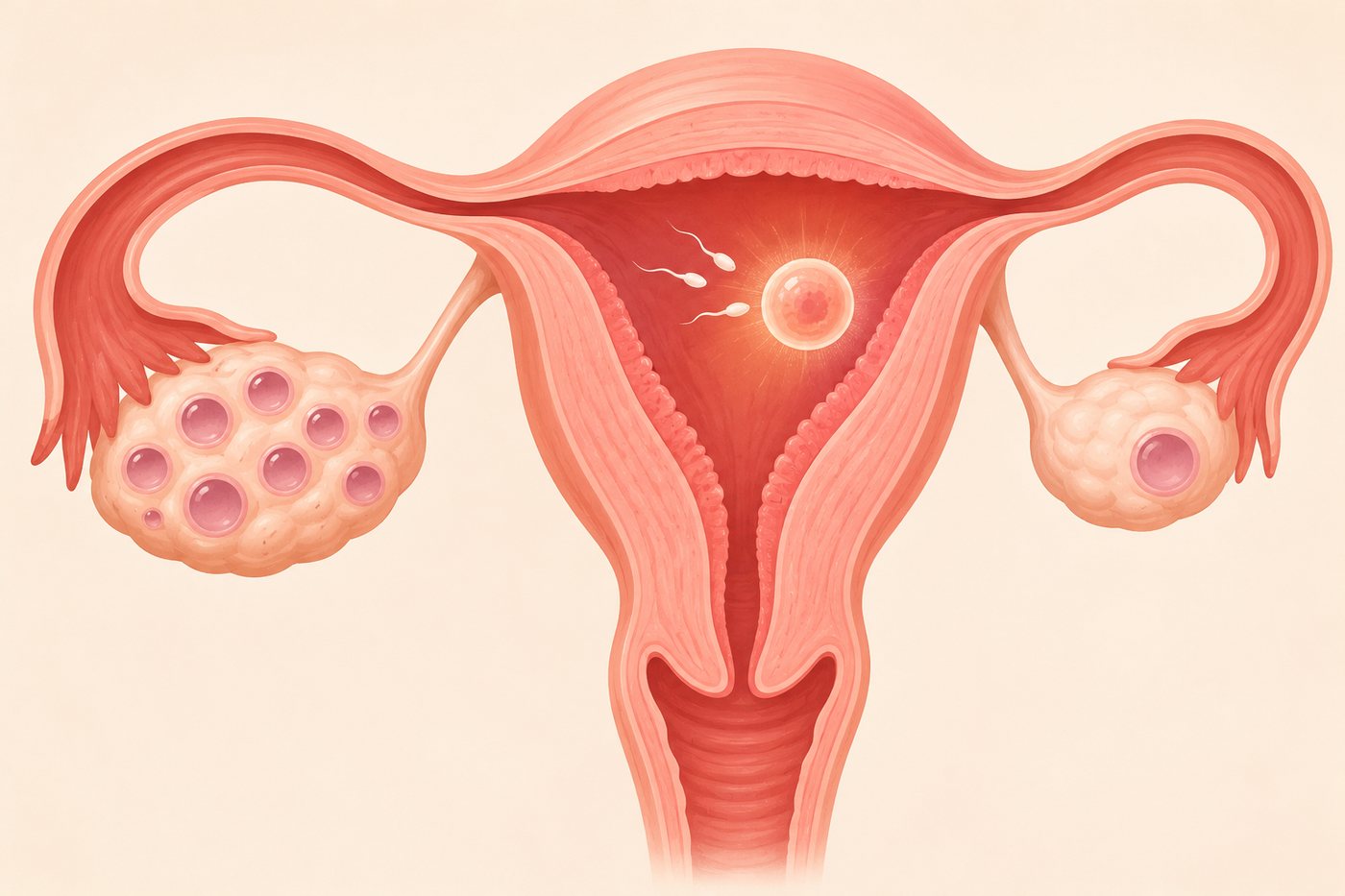
The name misleads many families. The "cysts" are usually small, immature egg follicles, and a woman can have PCOS without them. The World Health Organization (WHO) estimates that up to 70% of women with PCOS do not know they have it.
A note on the name: in May 2026, the international guideline group announced a new name for the condition, polyendocrine metabolic ovarian syndrome (PMOS). This article uses PCOS, the term most people and doctors still recognise.
Some signs are easy to miss
These signs rarely make it into a doctor's notes because women do not think to mention them.
- Dark, velvety patches (acanthosis nigricans): These appear on the back of the neck, the underarms or the knuckles, and families often call them tanning or "maile". They are a clue that may point to insulin resistance and can be seen in women with PCOS, but a dark neck alone does not mean PCOS. FOGSI (Federation of Obstetric and Gynaecological Societies of India) guidance lists it as a sign doctors should look for.
- Skin tags: These are small, soft growths on the neck or underarms, often seen with dark patches.
- Hair hidden by routine: Weekly threading of the upper lip or chin can hide how much hair is really growing.
- PCOS in slim women: Insulin resistance can occur even in women with PCOS who are lean. FOGSI guidance puts it at around 20 to 25% in this group, so a normal weight does not rule PCOS out.
- Low mood, anxiety or tiredness: PCOS is linked with anxiety and depression. Loud snoring or daytime sleepiness can point to sleep apnoea.
- A family history of diabetes: If a parent has type 2 diabetes, these signs are worth checking sooner.
How do doctors know it is PCOS?
There is no single PCOS test. In adults, doctors generally diagnose PCOS when two of three features are present after other causes have been ruled out. The three are irregular or absent ovulation, higher androgen levels (seen on the body or in blood tests), and polycystic ovaries on ultrasound.
The approach is different in adolescents. Doctors look for both persistent period irregularity and signs of higher androgens. Ultrasound and AMH (anti-Müllerian hormone) are not used to diagnose PCOS within eight years of the first period, because healthy teenage ovaries often look "polycystic".
Many labs in India sell a "PCOD panel", but these panels vary and not every test in them is needed. Each test below does a different job, so the right list comes from her doctor.
| Purpose | Test | What it does |
|---|---|---|
| Ruling out other conditions | TSH (thyroid stimulating hormone) | Checks for thyroid problems that can mimic PCOS |
| Prolactin | Checks for a hormone that can disturb periods | |
| 17-hydroxyprogesterone, when indicated | Checks for non-classic congenital adrenal hyperplasia (CAH), an inherited hormone condition | |
| LH (luteinising hormone) and FSH (follicle stimulating hormone), in selected cases | May help assess period or ovulation problems and rule out other causes. Not a PCOS test on their own. | |
| Checking androgen levels | Total or free testosterone | Shows whether androgens are raised in the blood |
| Checking metabolic health | 75 g OGTT (oral glucose tolerance test) | The preferred test of blood sugar in PCOS, whatever her weight |
| HbA1c (glycated haemoglobin) | Sometimes used when an OGTT is not suitable or available | |
| Lipid profile | Checks cholesterol, since PCOS can raise heart-health risk | |
| Used selectively, adults only | Pelvic ultrasound | Looks at the ovaries when needed |
| AMH | An alternative to ultrasound for assessing the ovaries in adults. Not a standalone PCOS test. |
What to take to the appointment
A little preparation turns a ten-minute appointment into a useful one. Doctors in busy Indian outpatient clinics rely heavily on what the woman brings with her.
- Period start dates for the last three to six months, from a phone app or a calendar
- Clear photos of any dark patches or skin tags, since clinic lighting can hide them
- How often she threads, waxes or shaves, and which areas
- Family members with diabetes, thyroid problems or PCOS
- Any weight change, acne flare or hair fall that has lasted more than a few months
Looking ahead
PCOS is a long-term condition, but its symptoms and health risks can be managed. The right approach depends on which symptoms matter most to her and on her goal, whether that is regular periods, metabolic health, symptom relief or pregnancy. ParentVeda's guide to treatment options for PCOS compares what is available in India.
Food choices can play a supportive role, and an Indian PCOS diet usually means adjusting everyday meals rather than giving them up.
PCOS is a common cause of ovulation-related difficulty conceiving, and many women with PCOS conceive with appropriate care. Getting pregnant with PCOS often starts with understanding her ovulation pattern.
When should she seek medical advice?
A routine visit to a gynaecologist is worth booking if she has any of these:
- No period for three months or more, and she is not pregnant
- Fewer than eight periods in a year, or cycles longer than 35 days
- New hair growth on the face, chest or belly, or hair fall lasting months
- Dark velvety patches on the neck or underarms
- Irregular cycles while trying to conceive. She does not need to wait the usual full year before getting checked.
She should see a doctor promptly if body hair grows very fast over a few months, her voice deepens, or bleeding is very heavy. These signs are uncommon and usually point to other causes that need checking quickly.
References
- World Health Organization. Polycystic ovary syndrome: Fact sheet. Updated 22 January 2026.
- Teede HJ, Tay CT, Laven JJE, et al. Recommendations from the 2023 International Evidence-based Guideline for the Assessment and Management of Polycystic Ovary Syndrome. J Clin Endocrinol Metab. 2023;108(10):2447 to 2469.
- Monash Centre for Health Research and Implementation. International Evidence-based Guideline, polyendocrine metabolic ovarian syndrome (PMOS, previously PCOS), 2026.
- FOGSI and ICOG (Federation of Obstetric and Gynaecological Societies of India and Indian College of Obstetricians and Gynaecologists). Update in Managing PCOS in Women. 2024.
- Ganie MA, Vasudevan V, Wani IA, et al. Epidemiology, pathogenesis, genetics and management of polycystic ovary syndrome in India. Indian J Med Res. 2019;150(4):333 to 344.
Common questions
What is the difference between PCOD and PCOS?
In India, PCOD (polycystic ovarian disease) is a common everyday term, and many people use it for the same set of symptoms. PCOS is the term used in international medical guidelines, and it describes a condition that goes beyond the ovaries to affect hormones and metabolism. If her report says PCOD, she can ask her doctor what it means for her specifically and whether her metabolic health has been checked.
Can an ultrasound alone show that she has PCOS?
No. Ovaries with many follicles are also common in women without PCOS, especially in younger women. In adults, a scan counts as only one of the features doctors consider, and it is not used for diagnosis in teenagers. A report saying "polycystic ovaries" is a good reason to see a gynaecologist, but it is not a diagnosis by itself.
Can PCOS affect pregnancy?
PCOS can make conceiving slower, mainly because ovulation does not happen every month. Many women with PCOS conceive naturally, and others need simple medicines that help ovulation. During pregnancy, PCOS raises the chance of gestational diabetes, which is why doctors often check blood sugar early. A blood sugar check before trying gives her the best start.
Can PCOS symptoms start in the teenage years?
Yes, signs often appear in the late teens. Irregular periods are also normal for the first few years after periods begin, which is why doctors are more cautious about diagnosing PCOS in teenagers. If a teenage girl's cycles stay very irregular and she also has acne or unwanted hair, a check-up is sensible. Healthy habits started early help either way.
This article is meant to help women understand PCOS symptoms and prepare for a conversation with their doctor. It is educational and is not a diagnosis or a substitute for personal medical advice. Every woman's hormones, history and needs are different, so any symptom described here is best discussed with a qualified gynaecologist.
 Medically reviewed byDr. Mahender Singh, MBBS, DCH, MD (Paediatrics)A consultant child specialist and neonatologist with over four decades of practice in newborn and child health.
 Written bySarthak ThakurCo-founder, CTO and Chief Marketing Officer of ParentVeda, and the software engineer who builds its app and the pipeline that checks its articles.
This article explains; it doesn’t diagnose. If your doctor has told you something different, your doctor is right.