
Somewhere between the first and third birthdays, many toddlers begin to hit, bite, or throw things. It can appear almost overnight, in a child who seemed gentle the week before. Parents are often caught off guard, unsure whether to feel worried, embarrassed, or simply exhausted.
If this is happening in your home, it helps to understand what sits behind it. A toddler who lashes out is not being cruel or badly raised. In most cases, the behaviour says far more about your child's stage of development than about your parenting.
Hitting, biting and throwing are common between roughly ages 1 and 3. They usually happen because your toddler feels a big emotion but does not yet have the words or the self-control to handle it. The behaviour tends to fade as language and patience grow, especially when your responses stay calm and consistent.
Key takeaways
- Hitting, biting and throwing are a normal part of toddler development, not a sign of a bad child or a failing parent.
- They usually appear because feelings arrive faster than words and self-control.
- Staying calm and setting a clear, gentle limit teaches far more than punishment.
- Hitting or biting your child back tends to make the behaviour more likely, not less.
- If aggression is frequent, intense, causing injury, or lasting well past the preschool years, it is worth speaking to a doctor.
This is for general education and understanding. It is not a substitute for personalised advice from a qualified paediatrician or child health professional.
Is hitting, biting and throwing normal at this age?
Yes. For most children between one and three, this is an ordinary phase rather than a warning sign. Aggression of this kind is one of the most common concerns paediatricians hear from parents of young children.
It often peaks somewhere around eighteen to twenty-four months, when your toddler wants a great deal but can say and control very little. As speech and patience develop, the hitting and biting usually settle on their own.
Knowing this will not stop the behaviour, but it can lower the panic. You are not watching a personality take shape. You are watching a skill that has not arrived yet.
Why your toddler hits, bites or throws
The simplest explanation is that big feelings turn up before the words to manage them. When your toddler feels frustrated, jealous or overwhelmed, the emotion is strong, but the skills to pause, use words, and control an impulse are still developing. So instead of saying "I am angry," your child's body does the talking.
There are usually triggers underneath, such as a snatched toy, hunger, over-tiredness, or too much noise. Throwing is not always aggression, either, since toddlers often throw simply to experiment or test what happens when they let go.
When throwing does happen in frustration, or alongside hitting and biting, it can be one more way of expressing a feeling they cannot yet name. None of this means your child intends harm, and very young toddlers often do not grasp that a bite hurts. Seeing the behaviour as communication, not defiance, changes how you respond to it.
What actually helps in the moment
Your response has two jobs at once: stop the action, and stay calm while you do it. Your tone matters too, and a calm adult response can help bring the moment back down.
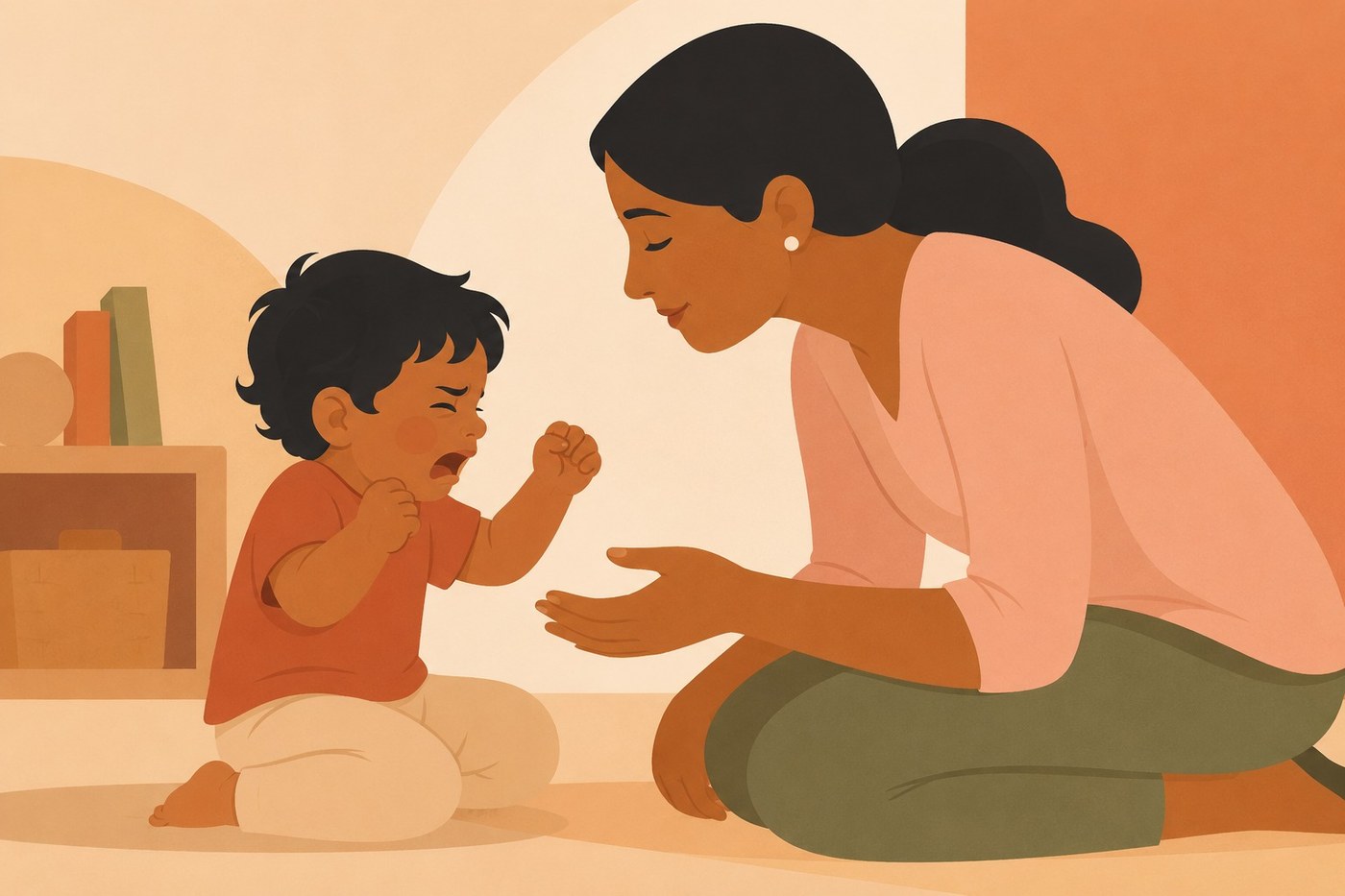
Get down to their level, gently hold or move the hands back, and name the feeling and the limit in the same breath. Something like "You are angry, I will not let you hit" works because it recognises the emotion and draws the line together.
Keep it short and repeat it the same way every time. A calm rule stated consistently reaches a toddler far better than a long explanation in a heated moment. Once the storm passes, you can offer the words they were missing, which is the heart of positive, non-punishing discipline.
The table below sorts the responses that tend to help from the ones that quietly make things worse.
| What tends to help | What tends to backfire |
|---|---|
| Staying calm and steady | Shouting or matching their intensity |
| A short, clear limit: "I will not let you hit" | Long lectures in the heat of the moment |
| Naming the feeling behind the action | Labelling the child as "bad" or "naughty" |
| Redirecting to a safe outlet | Hitting or biting back to "show how it feels" |
| Noticing triggers and heading them off early | Only ever reacting after the behaviour |
Hitting or biting your child back deserves a special note. It can feel instinctive, but it teaches that hurting others is simply something people do, which is the opposite of the lesson you are hoping to pass on.
Does it mean something is wrong?
In most toddlers, occasional hitting, biting or throwing is part of normal development. This is a passing stage that eases with time, language, and consistent responses at home. Occasional aggression can still happen within the normal range, even when a bite or hit leaves a temporary mark.
It is worth paying closer attention when the pattern does not follow the usual path. Aggression that is very frequent or intense, that regularly causes injury, or that continues well past the preschool years can be worth discussing with a professional.
The same is true if it appears alongside noticeably delayed speech, or if your own efforts to manage it are leaving you drained and stuck. Asking for help early is a sensible step, not an admission of failure.
Looking ahead
This phase does not usually end with a single conversation. It fades in uneven steps, as your toddler's language grows and their ability to wait slowly catches up.
You will often notice the shift indirectly: a new word for a feeling, a slightly longer pause before the hand flies, a hard moment that passes without contact. Those small changes are the real milestones here.
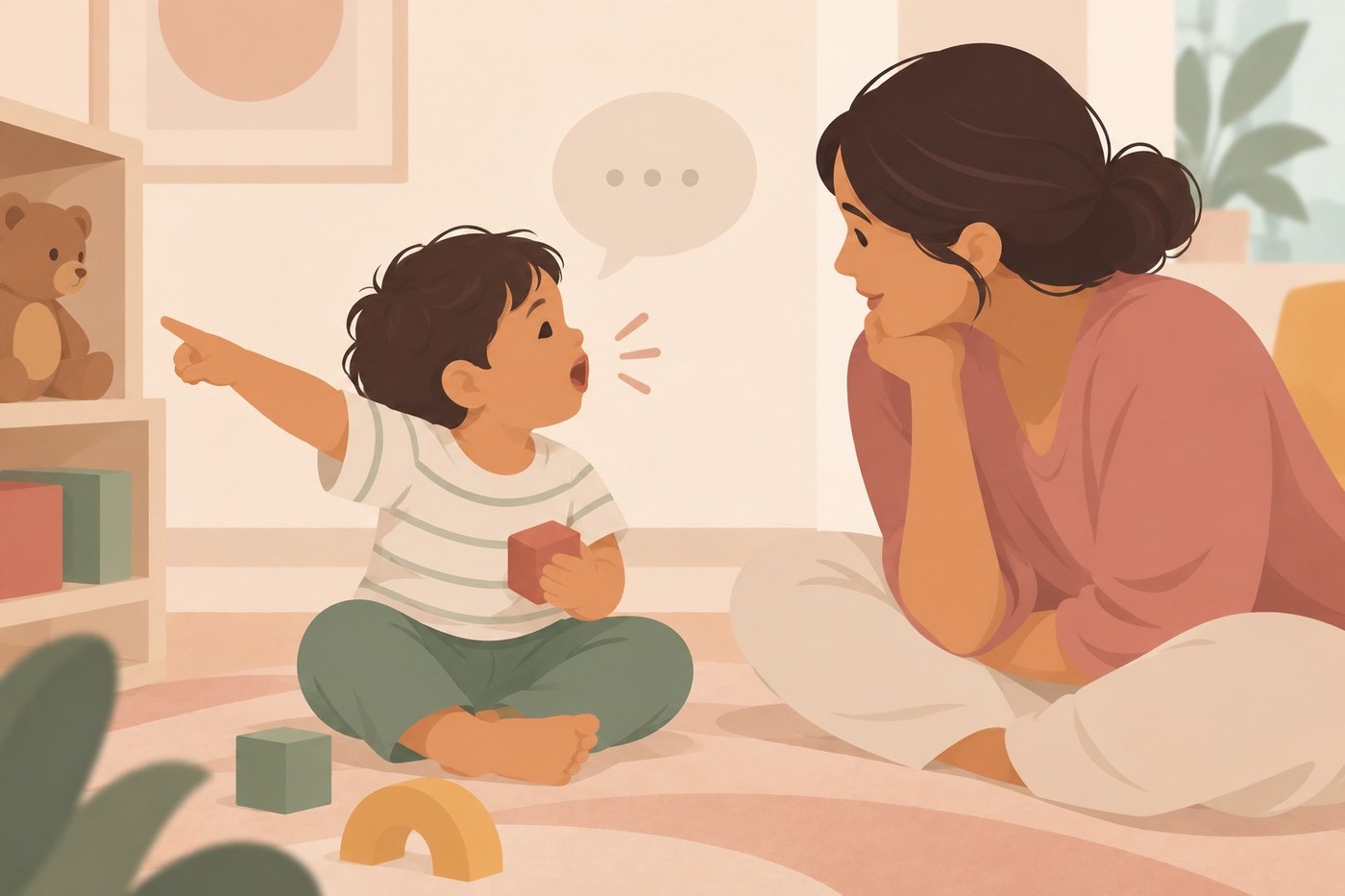
As speech develops, many of these outbursts find a gentler outlet.
When to speak to a doctor
Speak to your paediatrician if the aggression is frequent and intense, regularly causes injury, or does not ease as your child moves through the preschool years.
Also reach out if it comes alongside noticeably delayed speech, if your child often seems withdrawn or distressed, or if managing the behaviour is affecting your family's wellbeing. A doctor can check that development is on track and point you toward the right support. Our guide on developmental red flags covers what is worth raising and when.
References
- American Academy of Child and Adolescent Psychiatry (AACAP). Fighting and Biting.
- American Academy of Pediatrics (HealthyChildren.org). Aggressive Behavior.
- American Academy of Pediatrics (HealthyChildren.org). Disciplining Your Child.
- National Association for the Education of Young Children (NAEYC). Understanding and Responding to Children Who Bite.
- Nationwide Children's Hospital. Why Your Toddler is Biting and Hitting.
- Zero to Three. Aggressive Behavior in Toddlers.