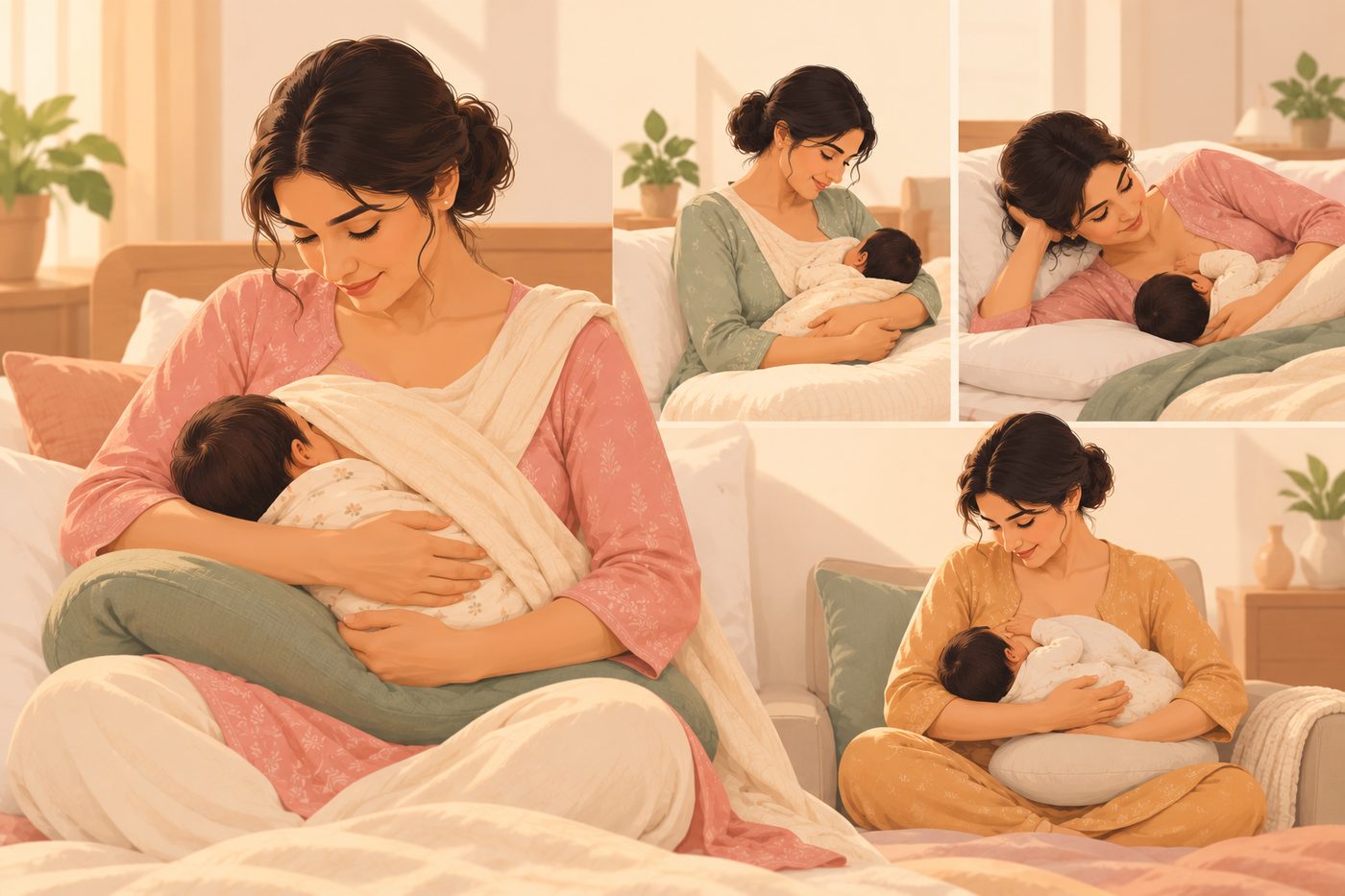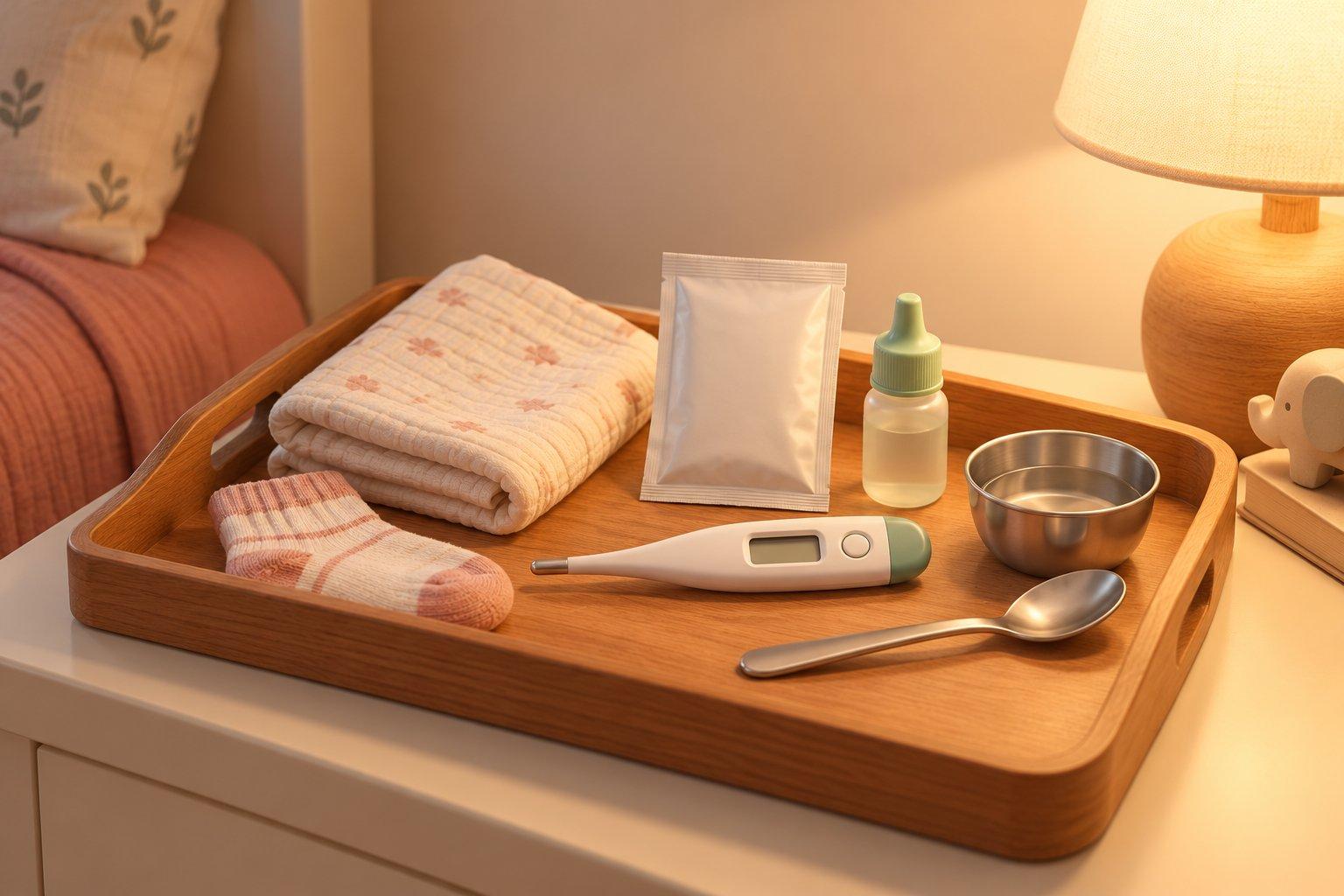
Every baby falls sick, often many times in the first two years. The common baby illnesses in India are fever, cold, cough, loose motion, vomiting, heat rash and ear infections.
Many are caused by viruses and improve with supportive care at home, but some need medical treatment. A baby’s age, symptoms, feeding and breathing help decide when to seek care.
A doctor is needed when the baby looks unwell, stops feeding, breathes fast, seems unusually sleepy, or is under 3 months old with any fever.
Most families know the night well: a hot forehead, a baby who will not settle, and the quiet question of whether this is “just bukhaar” or something more.
This article gives parents a simple way to tell the two apart, season by season, so the next decision feels clearer.
Seek urgent care now. Go to the nearest hospital or call 108 if the baby is under 3 months with a temperature of 100.4°F (38°C) or more, cannot feed, is unusually sleepy or floppy, is struggling to breathe, or has a fit. The full list of danger signs is further down in this article.
Key takeaways
- Many common baby illnesses in India are viral and improve with supportive care at home, but some need medical treatment.
- Temperature is only one part of the picture. Feeding, breathing, alertness, wet nappies and the baby’s age matter too.
- Any temperature of 100.4°F (38°C) or more in a baby under 3 months needs medical assessment straight away.
- Each season brings its own pattern: heat and loose motions in summer, fevers in the monsoon, colds and chest infections in winter.
- Cough and cold syrups should not be given to children under 2 years, as per the Union Health Ministry.
What are the common baby illnesses?
A handful of baby health problems cause most sick days in the early years. Knowing them by name takes away some of the fear when they arrive.
| Illness | What parents usually notice |
|---|---|
| Common cold (zukaam) | Runny or blocked nose, sneezing, mild fever, fussy feeds |
| Cough (khansi) | Dry or wet cough, often with a cold, worse at night |
| Viral fever (bukhaar) | Warm body, sleepy or cranky, eats less |
| Loose motion (dast) | Frequent watery stools, sometimes with vomiting |
| Vomiting | Throwing up feeds, often with a tummy bug |
| Heat rash (ghamoriyan) | Tiny red or clear bumps on the neck, back or nappy area |
| Ear infection | Pulling at the ear, crying when lying down, fever |
| Hand, foot and mouth disease | Fever, mouth sores, spots on palms and soles |
Each season brings its own illnesses
In India, the calendar works as an early warning, as the same illnesses tend to return each season.
| Season | Common in babies | What helps most |
|---|---|---|
| Summer (March to June) | Heat rash, dehydration, loose motion from unsafe water or food | Light cotton clothes, frequent breastfeeds, boiled or filtered water for babies over 6 months, ORS (Oral Rehydration Solution) at the first sign of loose motion |
| Monsoon (July to September) | Viral fever, dengue, malaria, typhoid, stomach infections | Mosquito nets, full-sleeve clothes, no standing water at home, prompt medical advice for fever that persists or comes with warning signs |
| Winter (October to February) | Colds, coughs, bronchiolitis, pneumonia, worse breathing on high-pollution days in north India | Saline nose drops, no smoke or agarbatti near the baby, watching closely for fast breathing |
The monsoon needs extra care. Dengue often begins like any viral fever, so the doctor can decide whether testing for dengue or another infection is needed.
Watch the baby, not just the thermometer
The temperature tells parents the body is fighting something. The baby’s behaviour tells them how well that fight is going.
So a baby’s temperature is only one part of the picture. Feeding, breathing, alertness, wet nappies and the baby’s age all matter.
A baby who is unusually floppy, difficult to wake or struggling to feed needs urgent medical assessment, whatever the temperature.
| Lane | What the baby looks like | What to do |
|---|---|---|
| Care at home (green) | Playful between fevers, feeding well, normal wet nappies, breathing comfortably | Rest, feeds, fluids, keep watching |
| Doctor within a day (yellow) | Not an emergency, but not getting better (see the list near the end of this article) | Book a clinic visit or call the paediatrician |
| Hospital now (red) | Any danger sign in the next section | Go to the nearest hospital or call 108 |
Go to the hospital now if the baby shows these signs
Take the baby to the nearest hospital, or call 108 for an ambulance, if the baby:
- is under 3 months old with a temperature of 100.4°F (38°C) or more
- cannot breastfeed or drink at all
- cannot keep feeds down, or repeatedly vomits everything offered, including ORS when the doctor has advised it
- has a fit (convulsion) or stiffening of the body
- is unusually sleepy, floppy or hard to wake
- breathes very fast, or the skin below the ribs pulls in with each breath
- has lips or tongue turning bluish
- shows signs of dehydration: very few or no wet nappies, no tears, a dry mouth, a sunken soft spot on the head
- has bleeding from the gums or nose, black stools, or severe tummy pain during a fever
These signs draw on guidance from the World Health Organization (WHO), the Indian Academy of Pediatrics (IAP) and the Indian Council of Medical Research (ICMR).
Many parents hesitate at this point, worried about overreacting or being told it was nothing. If a parent is worried about a baby’s condition, seeking medical advice is always reasonable.
What parents can safely do at home
On care-at-home days, gentle home care is often all a baby needs.
Helpful
- Keep breastfeeding, and offer feeds more often during fever or loose motion.
- For loose motion, give ORS and zinc as the doctor advises. Both are sold at chemists and given at government health centres.
- Use saline nose drops before feeds when a blocked nose makes feeding hard.
- Dress the baby in one light layer, as heavy blankets can push the temperature up.
- Give paracetamol only in the dose the doctor sets by weight, and note the time of each dose.
Best avoided
- Cough and cold syrups for children under 2 years. The Union Health Ministry advised in October 2025 that these should not be prescribed or dispensed to this age group.
- Antibiotics bought without a prescription. Most baby illnesses are viral, and antibiotics do not work on viruses.
- Giving gharelu nuskhe by mouth alongside medicine without checking with the doctor first.
Looking ahead
Sick days usually become fewer and shorter as children grow, though there is often a busy spell when play school begins. Keeping vaccines on time under India’s immunisation schedule protects against several serious infections.
With each illness, parents learn their own baby’s signals a little better, and that knowing is what turns a frightening night into a manageable one.
When to take baby to doctor within a day
Some baby sick symptoms are not emergencies but should not wait either. A clinic visit within a day makes sense if the baby has:
- a fever that persists or keeps coming back
- ear pulling, ear discharge or crying when lying flat
- fewer wet nappies than usual
- loose motions with blood or mucus
- a cough that is getting worse, or lasts more than 2 weeks
- a fever with a new rash
- trouble feeding for more than a day
- anything that leaves the parent feeling uneasy
References
- Indian Academy of Pediatrics. Indian Journal of Practical Pediatrics, Vol 23 No 3 (July to September 2021): Topic of Interest, Fever.
- Indian Council of Medical Research and Department of Health Research, Ministry of Health and Family Welfare. Standard Treatment Workflow for the Management of Fever in Children. October 2019.
- National Center for Vector Borne Diseases Control, Directorate General of Health Services, Ministry of Health and Family Welfare. National Guidelines for Clinical Management of Dengue Fever. 2023.
- All India Radio News (Prasar Bharati). Health Ministry advises cough syrups should not be prescribed or dispensed to children below two years. 4 October 2025.
- World Health Organization. Integrated Management of Childhood Illness: Chart Booklet. March 2014.
- World Health Organization. Pneumonia in children (fact sheet). 11 November 2022.
- World Health Organization. Diarrhoeal disease (fact sheet). 7 March 2024.
Common questions
Does teething cause fever in babies?
Teething can bring drooling and fussiness, and a baby may feel slightly warm. A true fever of 100.4°F (38°C) or above is usually not explained by teething alone, so it is worth checking with the doctor for another cause, such as a cold or ear infection.
Can a baby be bathed during a fever?
A brief lukewarm wash is fine if it comforts the baby, but it is not needed to treat fever. Cold water and ice are best avoided, as they can cause shivering. A bath is never a substitute for finding the cause of the fever or seeking care when warning signs appear.
How can parents tell if a monsoon fever could be dengue?
They usually cannot tell by looking, because dengue often starts like an ordinary fever. Warning signs include repeated vomiting, tummy pain, unusual sleepiness or restlessness, and bleeding from the gums or nose. These are warning signs, not a diagnosis. A baby with any of them needs urgent medical assessment, ideally at a hospital, where the doctor can check whether dengue or another illness is the cause. A monsoon fever that persists without these signs still needs a doctor’s check.
This article helps parents understand common baby illnesses and recognise when to seek care. It is for education only and does not replace a paediatrician’s examination, diagnosis or treatment. If a baby seems unwell, or a parent is unsure, please contact a doctor. In an emergency, go to the nearest hospital or call 108.
 Medically reviewed byDr. Mahender Singh, MBBS, DCH, MD (Paediatrics)A consultant child specialist and neonatologist with over four decades of practice in newborn and child health.
 Written bySarthak ThakurCo-founder, CTO and Chief Marketing Officer of ParentVeda, and the software engineer who builds its app and the pipeline that checks its articles.
This article explains; it doesn’t diagnose. If your doctor has told you something different, your doctor is right.