
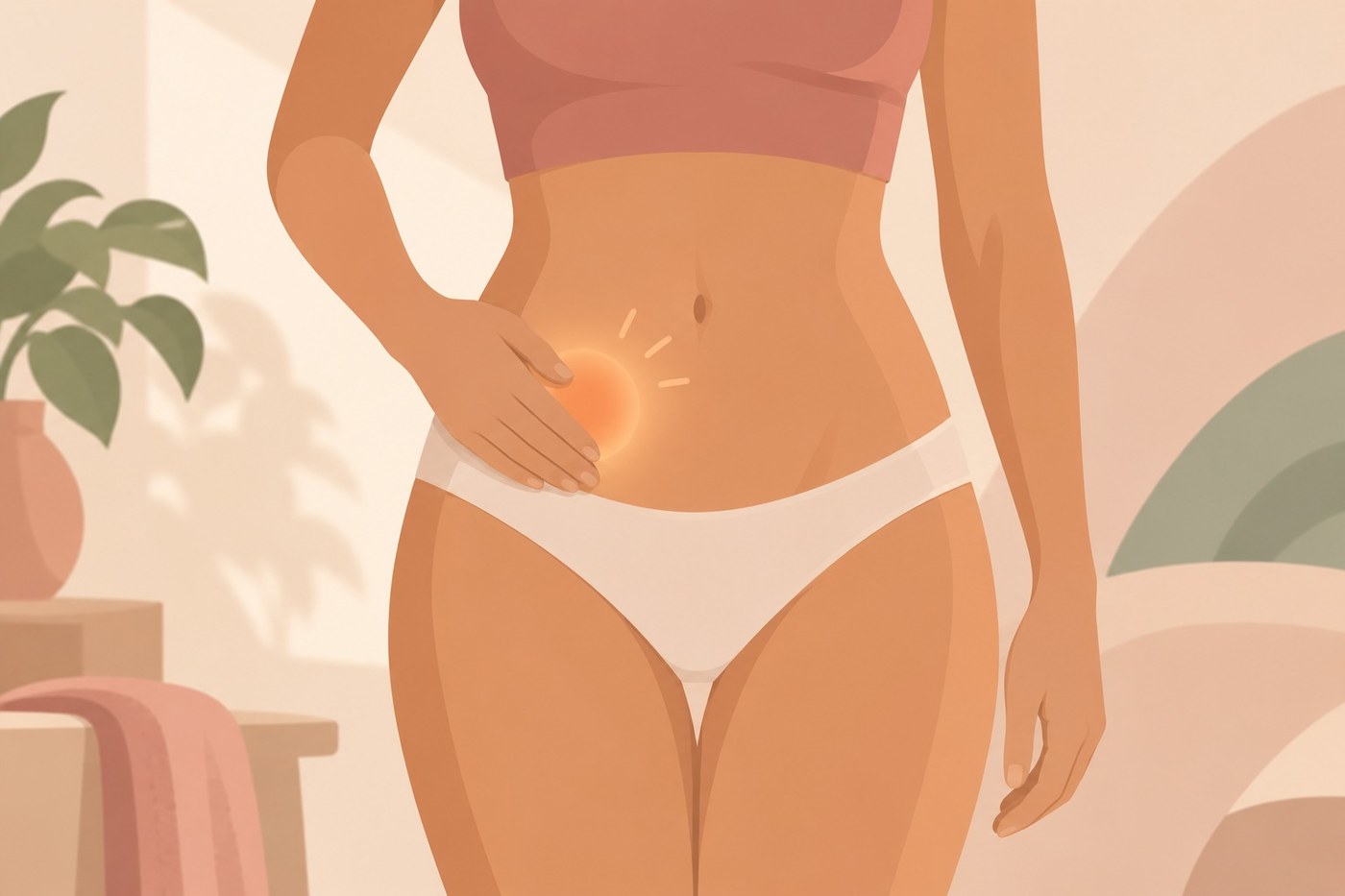
A sharp twinge low on one side, somewhere around the middle of your cycle, can be unsettling the first time it happens. It is natural to wonder what is causing it, and whether it is something to worry about.
In most cases, it is nothing to worry about. Ovulation pain is a mild, usually one-sided ache that shows up around the time an ovary releases an egg. It is generally harmless and short-lived, though a few specific symptoms are worth checking.
Key takeaways
- Ovulation pain, or mittelschmerz, is mid-cycle pain linked to the release of an egg, and it is usually harmless.
- It is common, and how much you notice it varies from cycle to cycle and from one person to another.
- It is typically felt low on one side of the abdomen, though the pattern matters more than the exact spot.
- On its own, ovulation pain cannot confirm that you ovulated or pinpoint your fertile window.
- Severe pain, pain lasting several days, fever, or heavy bleeding are reasons to see a doctor, since other conditions can feel similar.
This is for education and general understanding. It is not medical advice and cannot replace a personal assessment from a qualified doctor.
What is ovulation pain, and why does it happen?
Ovulation pain happens around the time an ovary releases an egg, usually somewhere in the middle of your cycle. It is also called mittelschmerz, which is German for middle pain.
It is also common, and how much you notice it varies. You might feel it most months, only occasionally, or not at all, and any of these is typical.
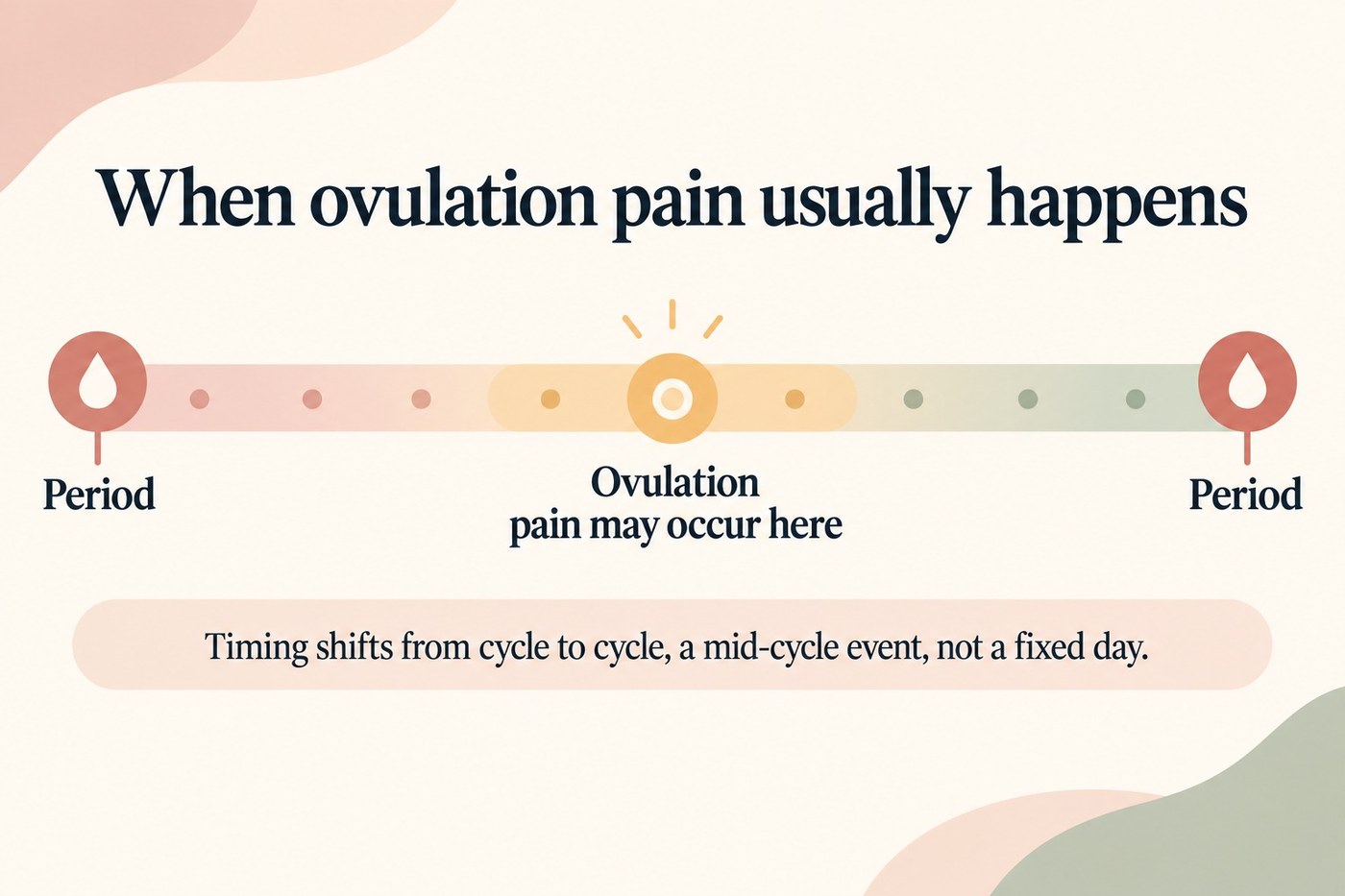
Ovulation often occurs roughly twelve to fourteen days before your next period rather than on a fixed calendar day like day fourteen, and the exact timing shifts from cycle to cycle and from one body to another. So it helps to think of ovulation pain as a mid-cycle event, not a date you can mark in advance.
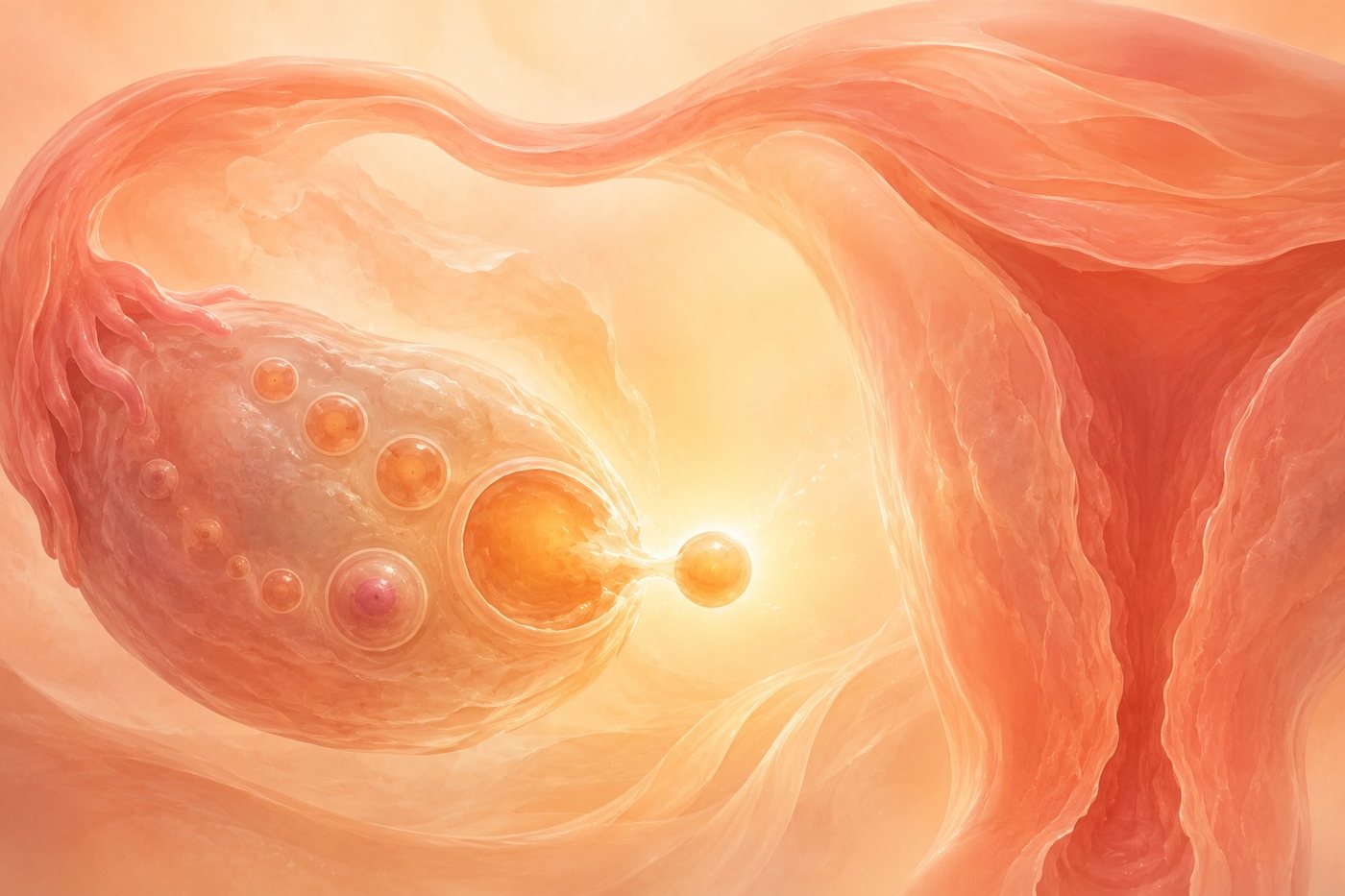
The exact cause is not fully understood, but one likely explanation involves two changes around ovulation. As an egg matures, the growing follicle stretches the surface of the ovary, and when the follicle bursts, released fluid or a small amount of blood may briefly irritate nearby tissue.
Knowing this can be quietly reassuring, because it means the pain is usually a sign of something ordinary rather than something wrong. Our guide on ovulation symptoms gives the fuller picture of how that timing works.
What ovulation pain usually feels like
Ovulation pain has a fairly recognisable pattern. It is usually felt low on one side of the abdomen, and it can range from a quick, sharp pinch to a dull ache that lingers for a while.
It may last from a few minutes to several hours, and sometimes up to a day or two. The side can change from one cycle to the next, so try not to read too much into which side you feel.
What matters far more than the exact spot is the overall pattern: when it comes, how long it lasts, how strong it is, and what comes with it.
| Feature | Typical ovulation pain | Features that may suggest another cause |
|---|---|---|
| Timing | Around mid-cycle, near ovulation | During your period, or with no cyclical pattern |
| Duration | A few minutes to several hours, sometimes a day or two | Several days, or steadily worsening |
| Intensity | Mild to moderate, usually settles on its own | Severe, or enough to stop normal activities |
| Other symptoms | May occur around the same time as light spotting or fertile cervical mucus | Fever, vomiting, heavy bleeding or dizziness |
Can ovulation pain tell you that you are fertile?
Not reliably. Ovulation pain can occur around ovulation, but on its own it cannot confirm that ovulation has happened, and it cannot pinpoint your fertile window.
In fact the pain can come shortly before, during, or just after the egg is released, so the timing alone cannot tell you exactly when ovulation occurred. It is best treated as a loose clue, not proof.
Feeling the pain also does not mean your fertile window has closed. Because sperm can survive for several days, the days around ovulation still hold the best chance of conception.
If you are trying to conceive, it is far more reliable to combine it with a tracking method such as basal body temperature, ovulation kits, and cervical mucus. That is worth knowing before pinning your hopes on a monthly twinge.
Simple ways to ease the discomfort
Most ovulation pain settles on its own and needs nothing more than a little patience. When it is bothersome, gentle self-care is usually the best place to start.
- Apply a warm compress or heating pad to your lower abdomen.
- Soak in a warm bath to relax the muscles.
- Rest, and note the date so you can recognise the pattern next cycle.
- If you need pain relief, ask a pharmacist or doctor which option is appropriate for you, particularly if you are trying to conceive.
When should you check with a doctor?
Ovulation pain itself is not harmful, but some symptoms mean it is worth getting checked, because other conditions can feel similar. Trust your instinct if something feels different from your usual mid-cycle twinge.
Seek urgent medical attention if you have:
- Severe or rapidly worsening pain.
- Pain with fainting or dizziness.
- Heavy or unusual vaginal bleeding.
- Severe pain with a missed period or a positive pregnancy test, which needs prompt review to rule out an ectopic pregnancy.
Arrange a routine appointment if:
- Pain repeatedly lasts several days.
- Pain is becoming more frequent or more severe.
- The pattern feels different from your usual.
- Pain interferes with your daily life.
Repeated pain deserves the same care. Severe or disruptive pain every cycle should not simply be filed away as ovulation, since conditions such as endometriosis or ovarian cysts can share the same timing and need proper assessment. If pain is getting in the way of trying to conceive, it is reasonable to ask for help sooner.
Looking ahead
If you are trying to conceive, the more useful next step is learning how to combine this clue with cervical mucus, ovulation predictor kits and basal body temperature. Together, they give you a much clearer picture than pain alone.
References
- Cleveland Clinic. Ovulation Pain (Mittelschmerz).
- Mayo Clinic. Mittelschmerz.
- MedlinePlus. Mittelschmerz.
- StatPearls, National Center for Biotechnology Information (NCBI). Mittelschmerz.