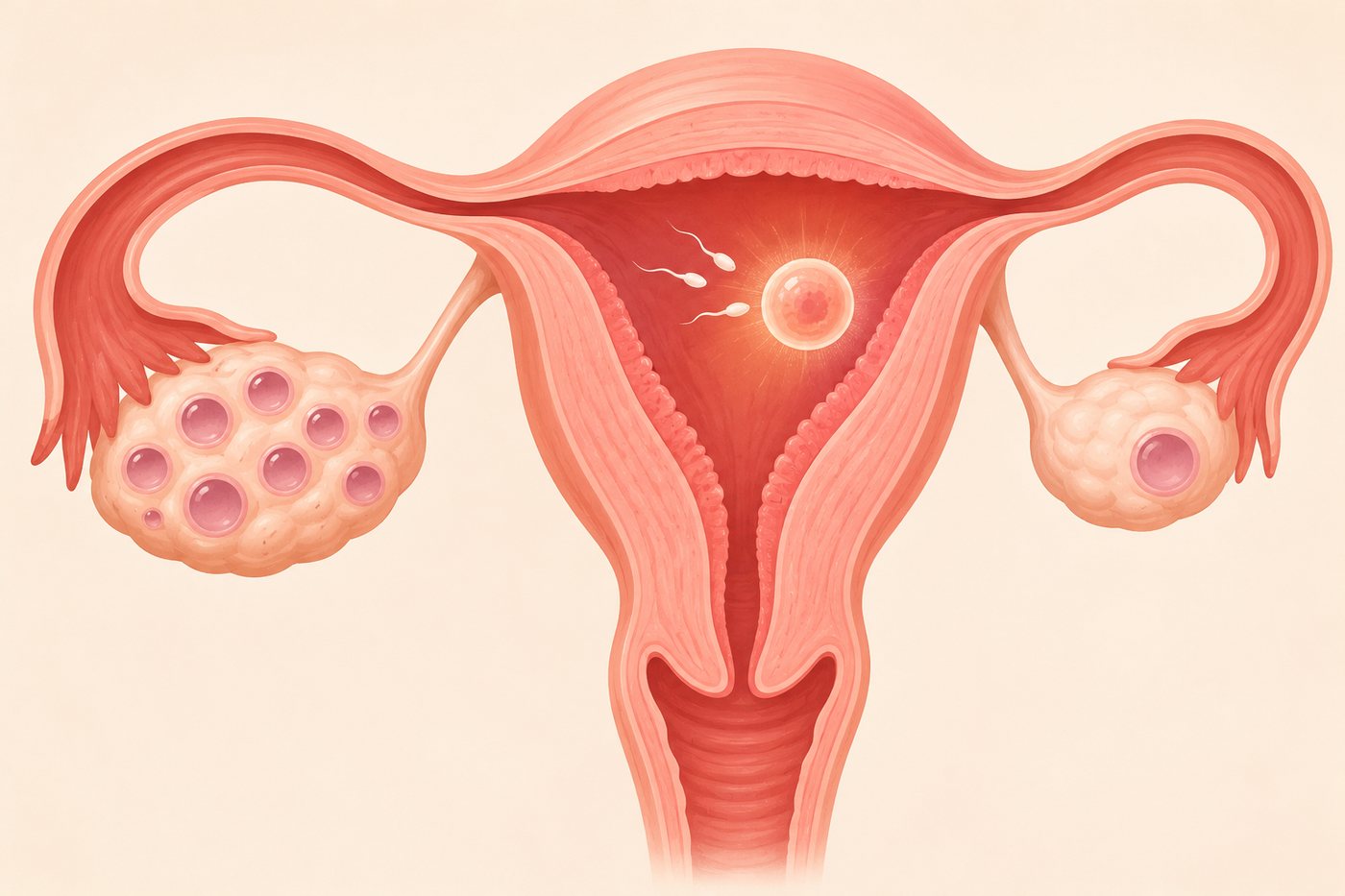
Egg retrieval sits at the heart of an in vitro fertilisation cycle or an egg freezing cycle, and for many people the first question is the most human one: will it hurt?
It helps to know upfront where the discomfort actually lives. The part everyone pictures, the collection itself, is often the part you notice least. This article walks through what each stage really feels like, from the injections to the recovery, so the day holds fewer surprises.
Key takeaways
- Sedation or a light anaesthetic is used for the retrieval, and the aim is to keep you comfortable; many people feel little or no pain during it.
- It is short, usually 15 to 30 minutes, with no cuts and no stitches, and it is guided by ultrasound rather than an abdominal incision.
- Much of what people call egg retrieval pain is the run up (daily hormone injections) and the after (bloating, cramps, light spotting), and this is usually mild to moderate.
- Recovery is quick for many people: soreness usually fades over a few days, and some feel ready for a gentle routine the next day, though others need longer.
- Bloating that builds fast, shortness of breath or severe pain can signal ovarian hyperstimulation syndrome, and heavy bleeding or fever also needs same day medical care.
This is for understanding, not diagnosis. Your own fertility clinic knows your protocol and is the right place to ask about your care.
The quick answer
You are sedated for the retrieval itself, which means you are unlikely to feel pain while it happens, and many people remember little of it. What tends to get called egg retrieval pain is the build up and the after: the daily hormone injections beforehand, then a couple of days of bloating and period like cramps.
For many people this stays mild to moderate and eases off over a few days. Sharp, severe or worsening pain is not the usual pattern and is worth a call to your clinic.
Where the discomfort actually comes from
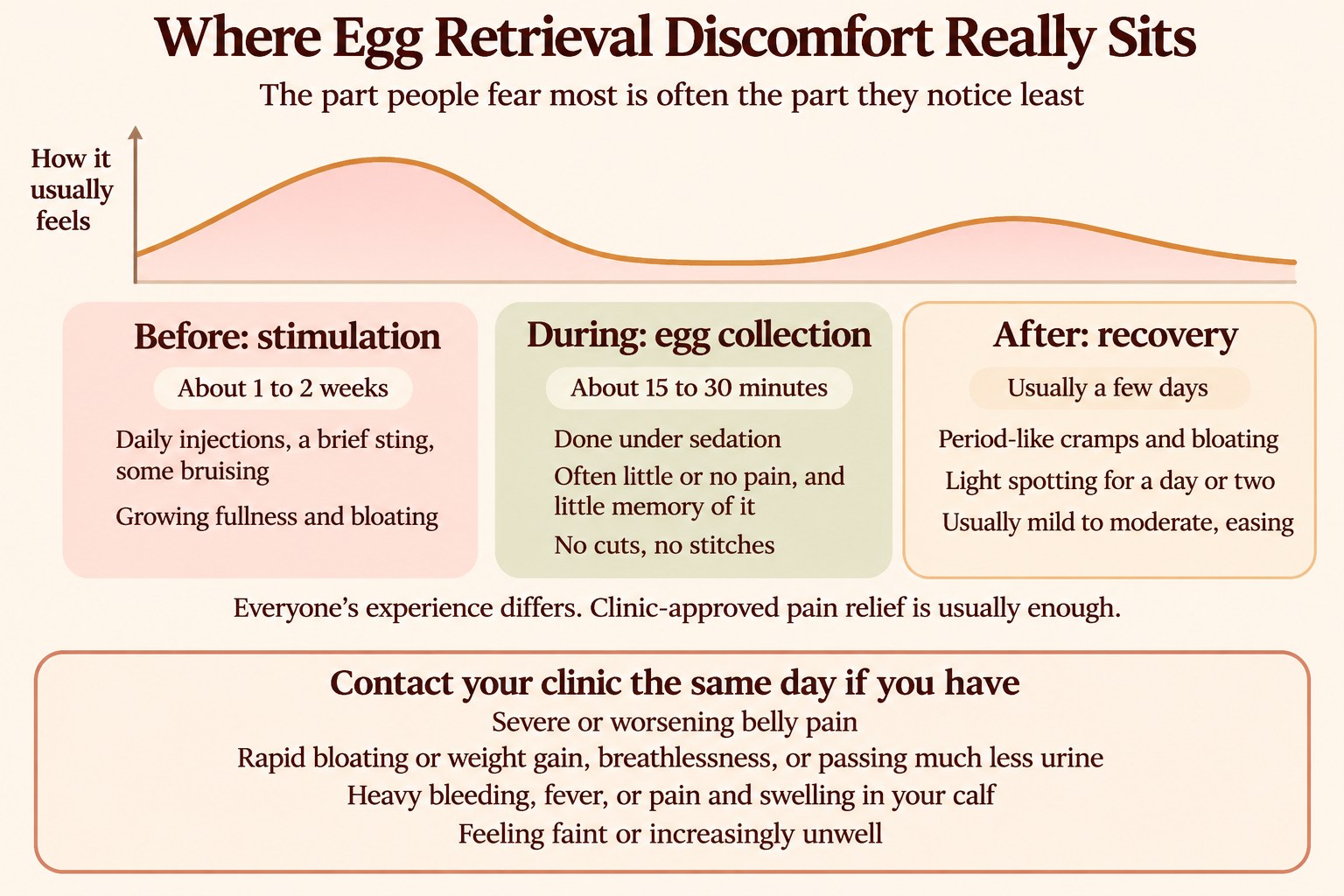
It helps to separate the cycle into three phases, because each one feels different. Only the middle phase is the procedure itself, and that is the one you are least aware of.
| Phase | What happens | What it usually feels like |
|---|---|---|
| Stimulation (before) | Daily hormone injections for around one to two weeks | A brief needle sting, some bruising, and growing bloating and fullness |
| Egg collection (during) | A needle reaches the ovaries under sedation, about 15 to 30 minutes | Often little or nothing, as you are sedated and may not remember it |
| Recovery (after) | The ovaries settle over the following days | Period like cramps, bloating and light spotting, usually mild to moderate |
Does the procedure itself hurt?
During the collection you are given sedation, sometimes called light or conscious sedation, or a short general anaesthetic depending on the clinic. The aim is to keep you comfortable, and many people feel little or no pain, breathe on their own, and recall very little.
There are no cuts and no stitches. The collection is guided by an ultrasound probe and does not involve any abdominal incision, with a needle passing alongside the probe to reach each ovary and draw fluid from the follicles.
It is quick, often 15 to 30 minutes. Afterwards you rest in a recovery area for an hour or two, and you will need someone to take you home.
What the injections feel like
For many people, the injections are the part they think about most, and they are more manageable than expected. These injections are usually given just under the skin, often at a site your clinic has shown you.
You may feel a brief sting and see some bruising. The injections are usually given daily for around one to two weeks, depending on the protocol and how your ovaries respond, while several eggs are grown at once.
The harder sensation is often not the needle but the fullness that builds as the ovaries enlarge. A final timed trigger injection, usually human chorionic gonadotropin, sets the retrieval about 36 hours later.
What does recovery after egg retrieval feel like?
In the hours and days after egg retrieval, mild cramping and a little vaginal spotting are the most common feelings, similar to period pain, once the sedation wears off.
What is normal in the first few days:
- Cramping and a heavy, bloated feeling low in the belly
- Light vaginal spotting for a day or two
- Tender, enlarged ovaries that leave you feeling full
- A period that may arrive a little early or feel different from usual
Soreness tends to fade over a few days, though how long it lasts varies from person to person. Gentle movement is generally fine, but activity advice can differ, so follow what your clinic has told you, and skip strenuous exercise until they say otherwise.
Over the counter pain relief that your clinic approves is usually enough. If the soreness climbs rather than settles, the section below explains when that matters.
When to see a doctor
Some tenderness and bloating are expected. What you are watching for is the pattern turning sharper or heavier instead of easing.
One reason to act is a condition called ovarian hyperstimulation syndrome, where the ovaries overrespond to the hormones and leak fluid into the abdomen. It is often mild and settles on its own, though it occasionally needs treatment. Signs to watch for include a belly that swells quickly, putting on weight fast over a day or two, feeling short of breath, and passing far less urine than normal.
Separately, contact your clinic the same day, or seek urgent care, for any of these after retrieval:
- Severe or worsening belly pain that pain relief does not touch
- Heavy vaginal bleeding, rather than light spotting
- Fever, or pain and swelling in your calf
- Feeling faint, or generally unwell in a way that keeps getting worse
Looking ahead
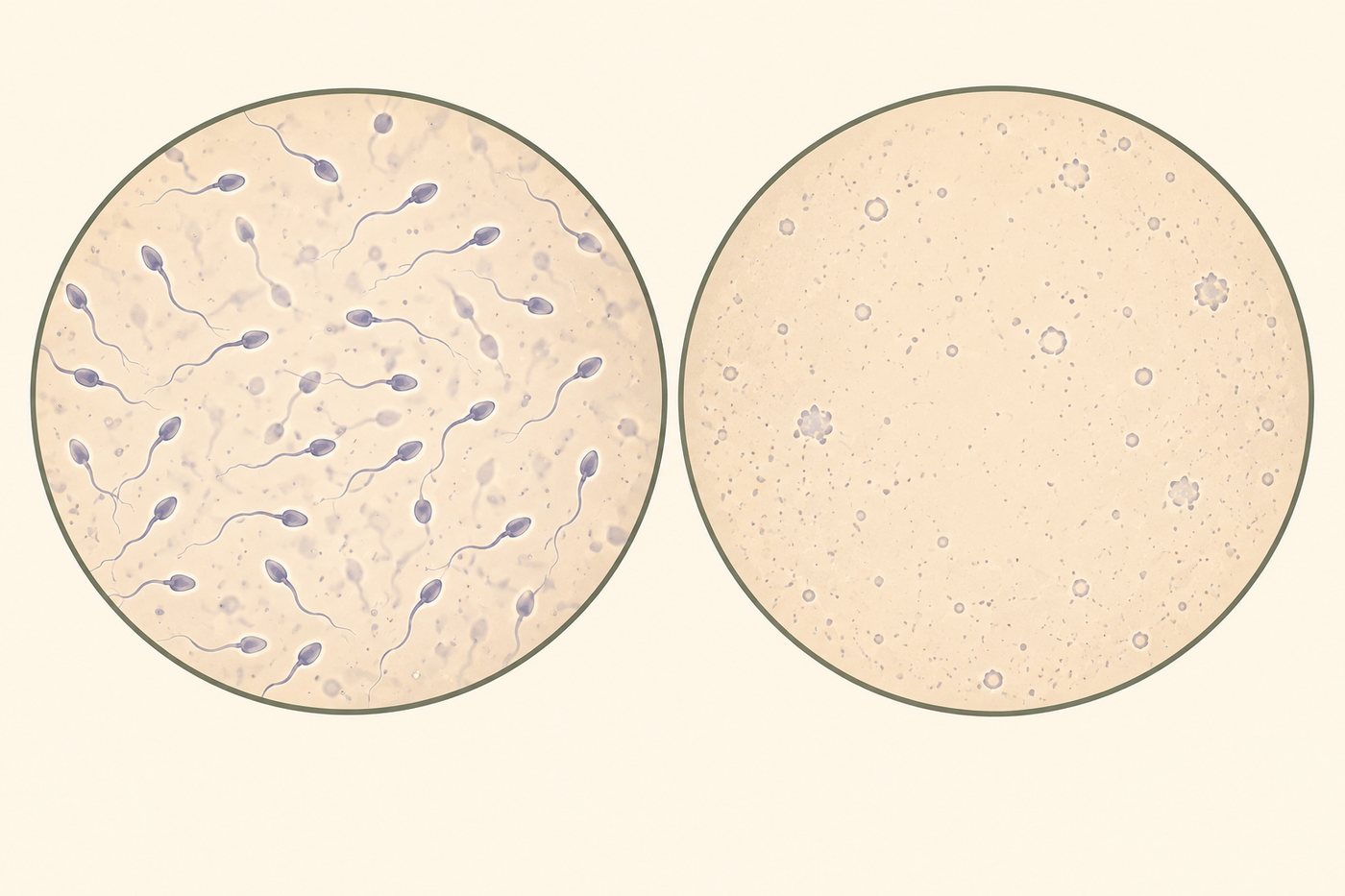
The eggs collected that day are the start, not the finish. In the laboratory they are combined with sperm, and over the next few days the team watches to see which fertilise and grow into embryos.
From there, an embryo may be transferred to the uterus or frozen for later. The number of eggs you hear on the day is only one part of the picture, and quality matters as much as count, so try not to read too much into a single figure.
References
- Guy's and St Thomas' NHS Foundation Trust. IVF treatment, Step 2: Egg collection.
- NHS Greater Glasgow & Clyde. In Vitro Fertilisation (IVF) patient information.
- Mayo Clinic. Ovarian hyperstimulation syndrome: Symptoms & causes.
- Cleveland Clinic. Ovarian Hyperstimulation Syndrome (OHSS).
- Care Fertility. What happens at egg collection.
Common questions
Which is more painful, intrauterine insemination or egg retrieval?
Intrauterine insemination is generally a less invasive procedure. It is a quick, awake procedure similar to a smear test, with no sedation and usually only mild cramping. Egg retrieval reaches the ovaries, so it is more involved, but it is done under sedation, so you feel little while it happens. The trade off is recovery: retrieval is more likely to bring a period of bloating and cramping afterwards.
How many injections will I need before egg retrieval?
It varies by your protocol, but most stimulation cycles involve daily injections for around one to two weeks, followed by one timed trigger injection. That can add up to a couple of weeks of shots. Your clinic sets the exact number and doses based on how your ovaries respond, which they track with scans and blood tests along the way.
Will I be awake during the procedure?
Most people recall little of it. The aim is to keep you comfortable, and many clinics use sedation that lets you breathe on your own while feeling little or nothing, so people often remember little of the collection. The exact medication and depth vary by clinic, and some use a short general anaesthetic. Either way, you are monitored throughout and eased out of it gently afterwards.
Can I go back to work the next day?
Many people can, especially with a desk based job, once the bloating and grogginess have settled. It is wise to keep the retrieval day itself clear for rest, since sedation lingers and you cannot drive. If your ovaries feel very full or a lot of eggs were collected, give yourself an extra day. Listen to your body rather than a fixed rule.
This article is for education and general understanding. It is not medical advice and does not replace guidance from your own fertility clinic or doctor, who know your history and can advise on your care.
 Medically reviewed byDr. Mahender Singh, MBBS, DCH, MD (Paediatrics)A consultant child specialist and neonatologist with over four decades of practice in newborn and child health.
 Written bySarthak ThakurCo-founder, CTO and Chief Marketing Officer of ParentVeda, and the software engineer who builds its app and the pipeline that checks its articles.
This article explains; it doesn’t diagnose. If your doctor has told you something different, your doctor is right.