
Your body gives quiet signals around the time an egg is released, and most of them are easy to miss until you know what to look for. Some people notice a change in discharge, a one sided twinge, or a shift in energy. Others feel nothing at all, and that is completely normal too.
You might be reading this while trying to conceive, while avoiding pregnancy, or simply because you want to understand your own cycle better. Whatever brought you here, the short answer is the same. The clearest sign of ovulation is a change in cervical mucus, which turns clear, slippery and stretchy like raw egg white in the day or two before an egg is released.
The other signs, temperature, mild pain, libido and a few more, add useful context. On their own they are not proof. Read together, and tracked across a few cycles, they help you recognise your own pattern with far more confidence.
Key takeaways
- The single most useful sign is cervical mucus turning clear, slippery and egg white like just before ovulation.
- A mild, one sided ache can appear around release, but its timing varies too much to rely on alone.
- Basal body temperature rises slightly after ovulation, so it confirms rather than predicts.
- Ovulation predictor kits detect a hormone surge roughly 24 to 36 hours before release.
- Not everyone gets symptoms, and their absence does not mean something is wrong.
This is for education and general understanding, not a diagnosis. Your cycle and body are unique, so please speak to a qualified doctor about your own symptoms, fertility questions or any concern about irregular or absent periods.
What ovulation actually is
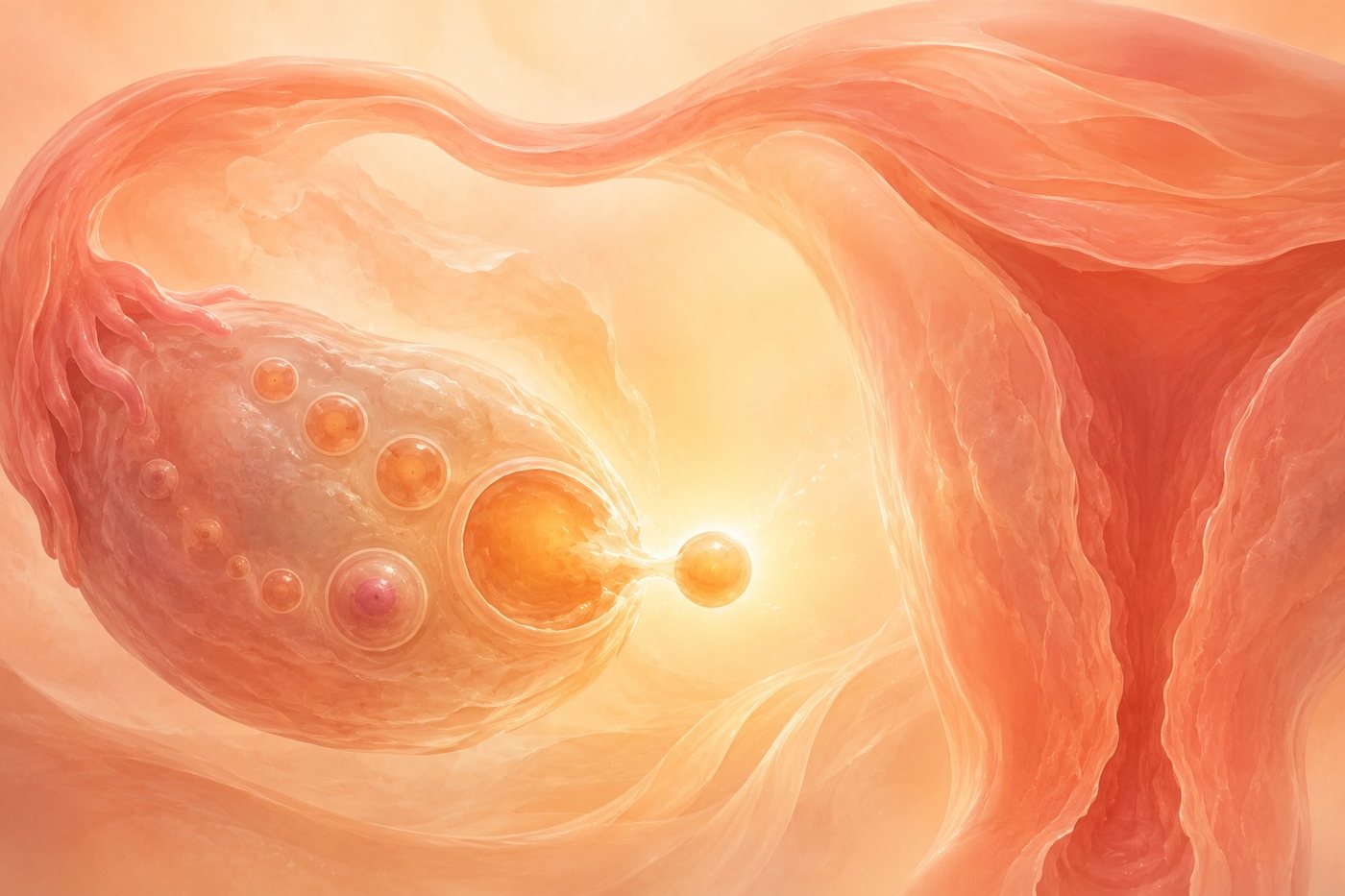
Ovulation is the moment one of your ovaries releases a mature egg. Each month your body ripens a single egg and then sets it free, usually somewhere around the middle of your cycle. In a 28 day cycle this often falls near day 14, though the exact timing shifts from person to person and month to month.
Once released, the egg drifts into the fallopian tube and survives for only about 12 to 24 hours. Sperm, however, can live inside the body for up to about five days. That mismatch is what stretches a single release into a fertile window of roughly six days, ending on ovulation day.
The fertile window opens before ovulation, not on the day itself. By the time the egg is actually released, some of the best chances of conception may already have passed.
Cervical mucus: the sign worth watching
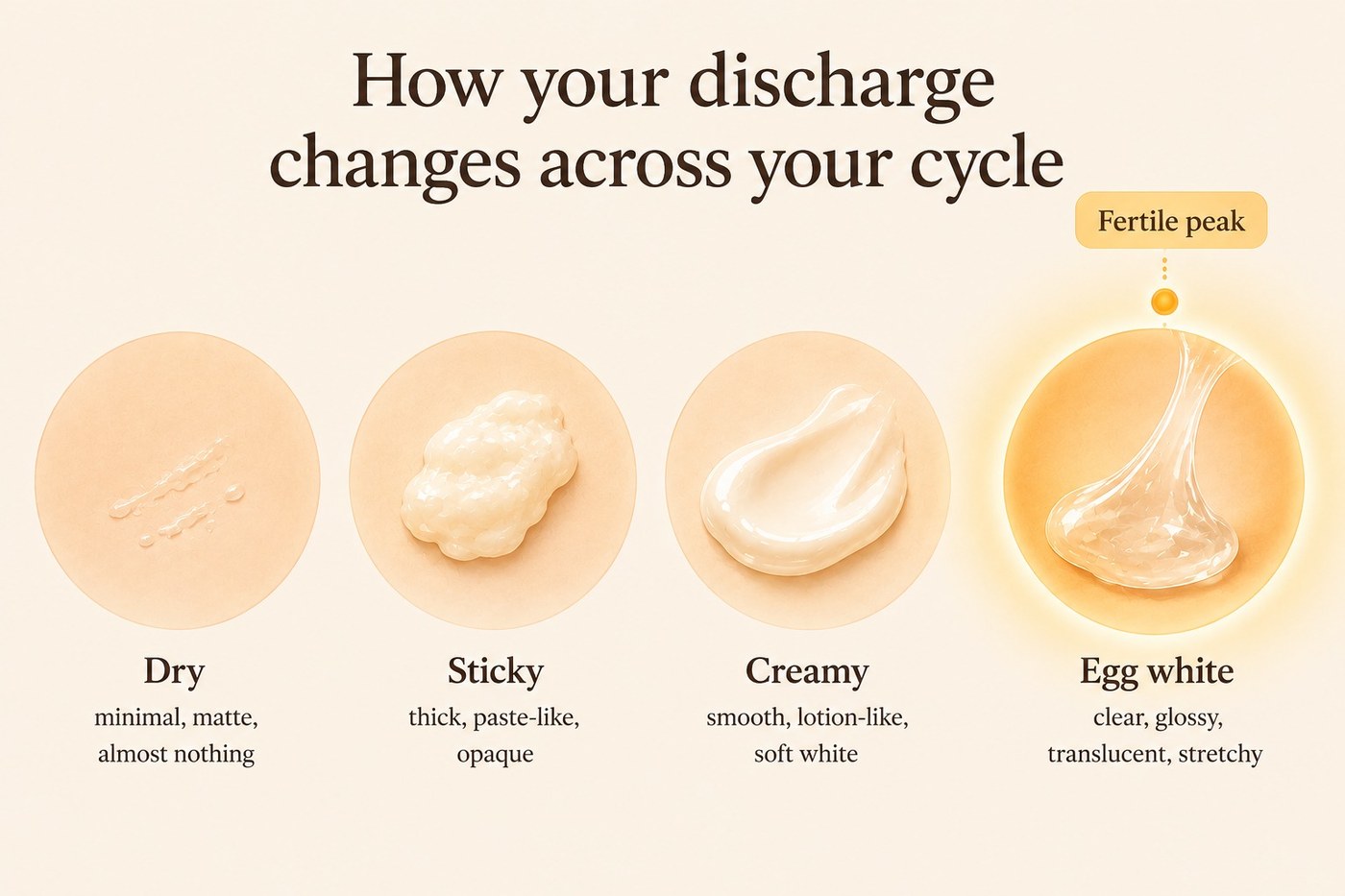
If you learn to read one sign, make it your cervical mucus. As oestrogen rises before ovulation, discharge becomes clearer, wetter and stretchier, often compared to raw egg white. This slippery texture helps sperm travel more easily toward the egg.
After ovulation, progesterone takes over and the mucus turns thicker, drier and more paste like. That shift from slippery to sticky is one of the most useful everyday clues your body offers. It costs nothing and needs no device.
The National Health Service (NHS) lists wetter, clearer, more slippery mucus around the middle of your cycle as one of the more dependable signs to watch for.
Does ovulation cause pain?
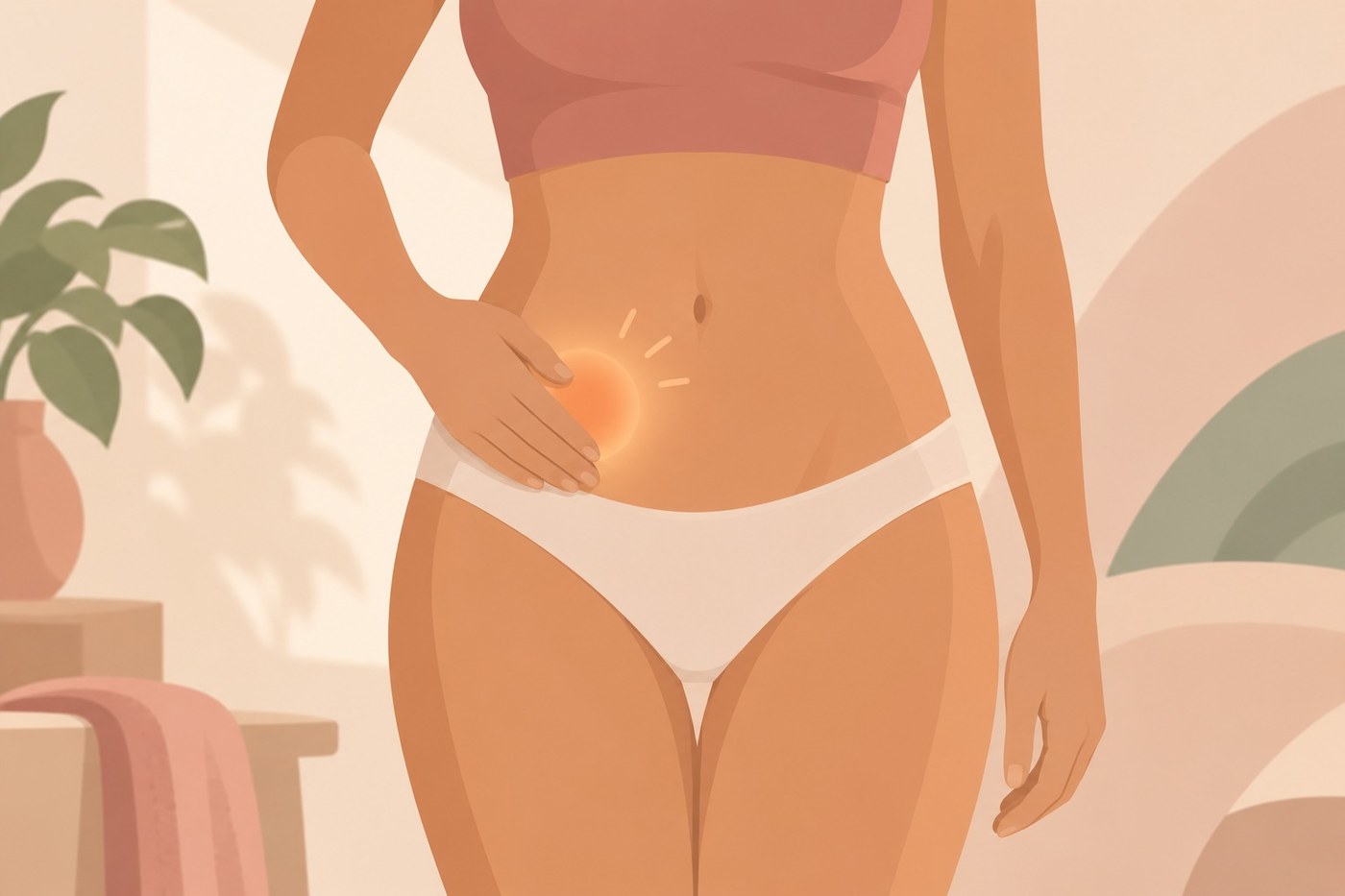
Around the time an egg is released, some people feel a mild ache low on one side of the lower abdomen. It usually lasts from a few hours to a day, and it can swap sides between cycles depending on which ovary is active that month.
This ache is not a precise timer. It may arrive shortly before, during or just after ovulation, so it works better as a loose clue than a countdown. Pain that is sharp, severe or lasting is a different matter, and worth raising with a doctor.
What your basal body temperature tells you
Temperature is the sign that speaks last. Your basal body temperature (BBT) is your body fully at rest, measured first thing in the morning before you move or speak. After ovulation, progesterone nudges it up by around 0.3 degrees Celsius, and it stays raised until your next period.
Because that rise appears only once the egg is gone, temperature confirms ovulation rather than predicting it. On any single morning it tells you very little. Charted across a couple of months, though, it quietly reveals when you tend to ovulate.
That is why temperature is most useful looking backwards, not for timing anything on the day itself.
Other signs you might notice
Beyond mucus, ache and temperature, your body may offer a few softer clues. None of these confirm ovulation on their own, but together they can round out the picture.
Common secondary signs include:
- A higher sex drive in the days just before ovulation
- Tender or fuller breasts
- Light spotting for a short time
- Mild bloating or fluid retention
The NHS is clear that signs like breast tenderness, bloating and mild tummy discomfort are not a reliable way to predict ovulation. Treat them as supporting hints, never as headlines.
Which signs predict, and which only confirm?
Not every sign does the same job. Some point forward to ovulation coming soon, which is what helps with timing. Others only tell you it has already happened.
| Sign | What it tells you | Timing | How reliable |
|---|---|---|---|
| Cervical mucus (egg white) | Ovulation is approaching | 1 to 2 days before | Good everyday sign |
| Ovulation predictor kit (LH surge) | Ovulation likely soon | 24 to 36 hours before | Reliable for timing |
| One sided ovulation ache | Around the time of release | Varies | Rough guide only |
| Basal body temperature rise | Ovulation has happened | 1 to 2 days after | Confirms, not predicts |
| Libido, breasts, spotting | Possibly near ovulation | Varies | Weak on their own |
An ovulation predictor kit (OPK) works differently from the signs your body shows. It detects the surge in luteinising hormone (LH) that triggers release, usually 24 to 36 hours ahead.
What if you don't notice any signs?
A quiet cycle is not a broken one. Plenty of people ovulate with no signs they can feel, and noticing nothing tells you very little on its own.
Irregular cycles make the picture harder to read, since ovulation itself becomes less predictable. This is common with polycystic ovary syndrome (PCOS).
Regular cycles can be a useful clue that ovulation is happening, but they do not confirm it in every cycle.
Looking ahead
Now you know what to watch for. The next step is learning how to combine those signs to identify your fertile window.
When to speak to a doctor
Consider a consultation if:
- Your periods are absent or very irregular
- You have been trying to conceive for 12 months, or 6 months if you are 35 or older, without becoming pregnant
- Ovulation pain is severe, one sided and lasting, or comes with fever or heavy bleeding
- You suspect a condition such as PCOS or a thyroid problem
References
- National Health Service (NHS UK). How can I tell when I am ovulating?
- Cleveland Clinic. Ovulation.