The ninth month of pregnancy
Your baby is adding the finishing touches. You're into the last stretch now.
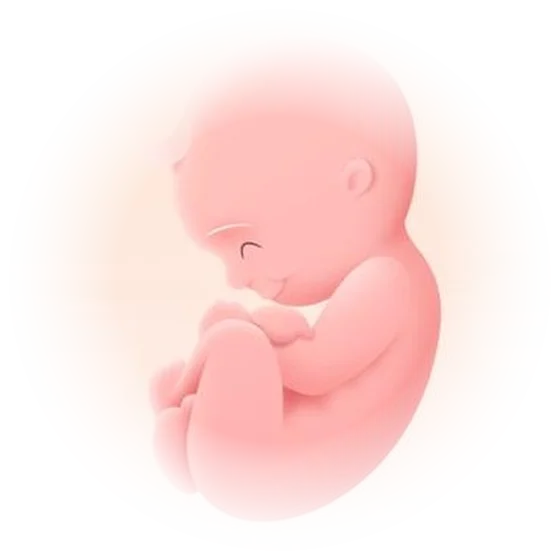
- Your baby grows from
- a papaya to a small watermelon
- By week 40
- about 51.2 cm, about 3500 g
- Usually this month
- Birth planning visit, Group B Strep test (if advised)
- Milestones
- Full-Term Is Near · Full Term · Ready To Meet You · Waiting For You · The Day We Meet
Week by week
 Week 36
Full-Term Is Near
About the size of a papaya · about 47.4 cm, about 2700 g
Your baby is adding the finishing touches. You're into the last stretch now.
Your baby
My lungs are almost fully mature, my brain keeps growing fast, and I'm practising the reflexes I'll use after birth, like sucking and gripping.
Your body
Your baby may start moving lower into your pelvis. That adds pressure down there, but can make breathing a little easier.
- Pelvic pressure
- Waddling walk
- Frequent urination
- Braxton Hicks contractions
For you: Keep your hospital bag ready, and keep your days as light as you can.
 Week 37
Full Term
About the size of a winter melon · about 48.6 cm, about 2900 g
Congratulations. Your baby now counts as full term and could arrive any day.
Your baby
My lungs are ready for life outside the womb, my brain keeps growing, and I'm practising the reflexes I'll need after birth. Most of my growing now is about getting stronger and storing energy.
Your body
You may feel more pressure in your pelvis, need to pee more often, and have some contractions as your body gets ready for labour.
- Pelvic pressure
- Braxton Hicks contractions
- Frequent urination
- Difficulty sleeping
For you: Rest, drink water and save your energy. Labour may start at any time.
 Week 38
Ready To Meet You
About the size of a pumpkin · about 49.8 cm, about 3100 g
Your baby is fine-tuning important systems and getting ready for birth. The wait is almost over.
Your baby
My lungs are ready, my brain is still growing fast, and I keep building strength and energy. Most of my work now is getting ready for birth and life outside the womb.
Your body
Your baby may have dropped lower into your pelvis. That adds pressure down there, but can make breathing easier.
- Pelvic pressure
- Braxton Hicks contractions
- Difficulty sleeping
- Frequent urination
For you: Rest whenever you can. Your body is getting ready for one of the hardest and most beautiful days of your life.
 Week 39
Waiting For You
About the size of a watermelon · about 50.7 cm, about 3300 g
Your baby is fully developed, and waiting for the right moment to come into your arms.
Your baby
My lungs are ready for my first breath, my reflexes are in place, and I keep storing a little fat and energy. Most of what I'm doing now is waiting for labour to begin.
Your body
Your body is making its last preparations for labour. You may feel more pressure in your pelvis, contractions that come and go, and changes in your energy.
- Pelvic pressure
- Braxton Hicks contractions
- Difficulty sleeping
- Burst of nesting energy
For you: Rest whenever you can. Labour takes stamina, so saving your energy now really helps.
- Week 40
The Day We Meet
About the size of a small watermelon · about 51.2 cm, about 3500 g
This is your due week. Whether your baby comes today, tomorrow or a few days later, what started 40 weeks ago is about to change everything.
Your baby
My lungs are ready for my first breath. My heart, brain and body are ready for life outside the womb. Right now I'm waiting for the right moment to come into your arms.
Your body
Your body is working hard to get ready for labour. Contractions may come and go, sleep may be hard, and every twinge can feel like it means something.
- Pelvic pressure
- Irregular contractions
- Difficulty sleeping
- Emotional ups and downs
For you: Think only about today. Rest, drink water, eat well, and trust your medical team.
Scans and checks this month
- Birth planning visit
A chance to talk through what you'd like for the birth and what to expect in the last weeks.
- Group B Strep test (if advised)Week 36–37
A simple swab near your due date checks whether you carry Group B Strep, so your team can protect your baby during birth if needed. Carrying it is common and harmless to you.
Eating well this month
Your baby keeps putting on weight and storing nutrients for the first weeks after birth.
Your body needs steady energy as it gets ready for labour and birth.
- Paneer
- Rajma
- Moong Dal
- Spinach
- Curd
- Oats
- Brown Rice
- Banana
- Coconut Water
Gives you protein and calcium for the last stage of growth.
Paneer bhurji, paneer tikka or paneer curry.
Gives you quick energy and potassium, and it's easy to digest.
As a snack, in a smoothie, or with peanut butter.
Worth doing
- Finish your hospital bag, plan how you'll get to the hospital, and make your list of important numbers.
- Keep your phone charged, your hospital bag ready, and your travel plan settled.
- Keep your hospital bag, medical papers and travel plan ready at all times.
- Rest, drink water, keep moving gently, and keep your mind as calm as you can.
- Rest, drink water, stay in touch with your doctor, and trust your body.
Worth skipping
- Travelling far from your doctor without their advice.
- Watching every tiny symptom, or comparing your timing with anyone else's.
- Starting big jobs at home, or wearing yourself out.
- Checking all the time for signs that labour is about to start.
- Trying every internet trick to make labour start.
When to call your doctor
Call your doctor straight away if you have bleeding, fluid leaking, painful regular contractions, your baby moving less, a severe headache, changes in your vision, or anything that worries you.
Myth or truth
Myth When labour starts, you'll always know straight away.
Truth You won't always know straight away that labour has started. Early labour can start slowly, and it can feel different from what you expected.
Myth The due date is the exact day the baby will come.
Truth Your due date is a guide, not the exact day your baby will come. Most babies come within a range of days before or after it.
For your partner
Help keep things calm at home, and take care of last-minute arrangements.
Every pregnancy moves at its own pace. Sizes and changes are typical ones, not targets, and the scans listed are the usual pattern; your doctor may add, move or skip tests for you. If something feels wrong, call your doctor rather than waiting for the next visit.