The second month of pregnancy
The second month covers weeks 5 to 8, and it is one of the busiest stretches of your whole pregnancy. Your baby's major organs begin forming, and this is often when early symptoms like nausea and tiredness become more noticeable.
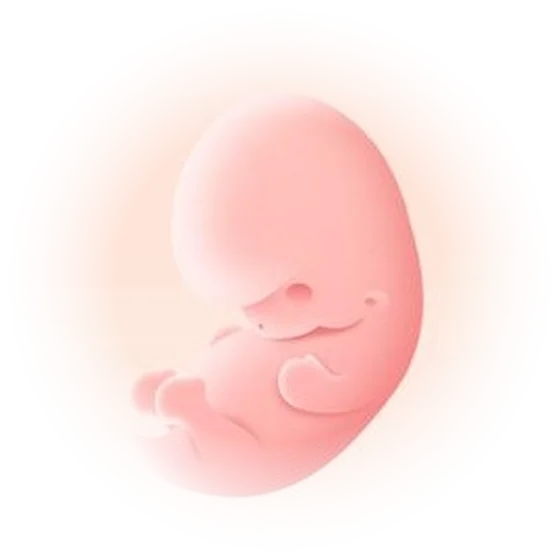
- Your baby grows from
- a sesame seed to a raspberry
- By week 8
- 1.3 to 1.6 cm, about 1 g
- Usually this month
- First ultrasound
- Milestones
- A Tiny Heart Begins · The Beating Heart · Tiny Features Begin · Every Organ Has Begun
Week by week
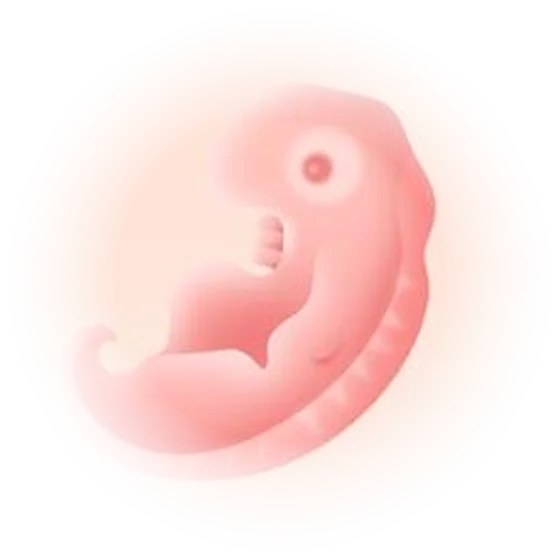 Week 5
A Tiny Heart Begins
About the size of a sesame seed · 0.2 cm, <1 gm
Your baby is about the size of a sesame seed. This week the heart, brain and spine are beginning to form.
Your baby
I'm growing fast. The tube that will become my brain and spine is forming, and a tiny tube that will become my heart is starting to take shape. Soon it will begin to beat. The early buds of my face and body are just beginning.
Your body
Your period is late, and pregnancy hormones are rising quickly. Nothing shows on the outside yet, but you may feel tired, have sore breasts or need to wee more often.
- Missed period
- Tiredness
- Sore breasts
- Needing to wee more
- Mild nausea
- Mild cramping
For you: Take a folic acid tablet every day, rest when you're tired, and sip water through the day. Small, frequent meals help if you feel queasy.
 Week 6
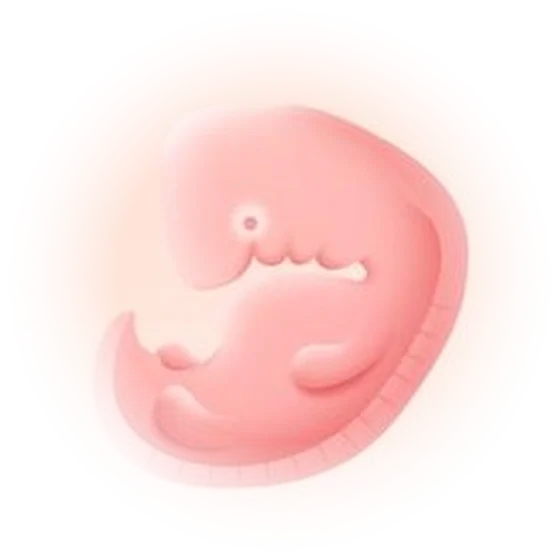
The Beating Heart
About the size of a pea · 0.6 cm, <1 gm
Your baby's heart is beating in a steady rhythm, and the main organs are starting to take shape.
Your baby
My heart beats in a regular rhythm and my brain is growing fast. The first parts of my eyes, ears, arms and legs are starting to form. I'm tiny, but lots of important parts of me are already being built.
Your body
Your pregnancy hormones are rising fast, and your body is working hard in the background for your baby.
- Morning sickness
- Food aversions
- Smell sensitivity
- Extreme fatigue
For you: Take it one day at a time. Resting is real work in pregnancy.
 Week 7
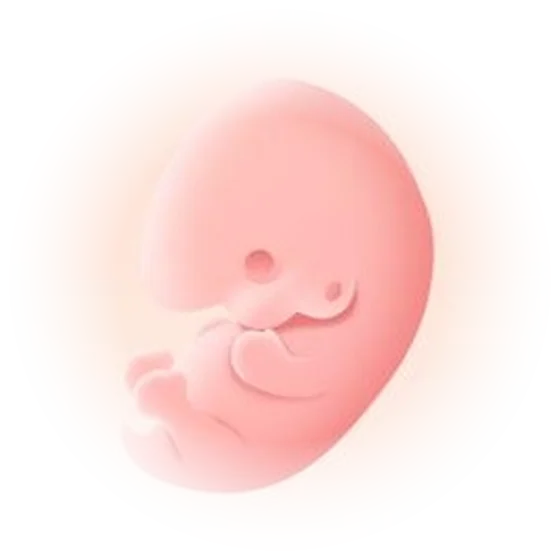
Tiny Features Begin
About the size of a blueberry · 0.9 to 1.3 cm, <1 gm
Your baby's face is starting to take shape, and tiny arms and legs keep growing.
Your baby
My brain is growing fast. Tiny buds that will become my arms and legs are growing, and my eyes, ears and nose are taking clearer shape. My heart keeps beating strongly.
Your body
Your uterus is growing, even if nothing shows yet. Hormones are still changing your energy, digestion and appetite.
- Nausea
- Food cravings or aversions
- Frequent urination
- Fatigue
For you: Keep drinking water, and don't feel guilty about needing more rest.
- Week 8
Every Organ Has Begun
About the size of a raspberry · 1.3 to 1.6 cm, about 1 g
All of your baby's main organs have started to form. In about two weeks, your baby will be called a fetus.
Your baby
My fingers and toes are starting to form, my face is easier to recognise, and all my main organs have begun growing. The groundwork is ready for my next stage.
Your body
Your uterus is now about the size of an orange. Hormones are still changing your digestion, energy and appetite.
- Nausea
- Breast tenderness
- Fatigue
- Bloating
For you: Aim to feed yourself well, not perfectly. Small healthy choices add up.
Scans and checks this month
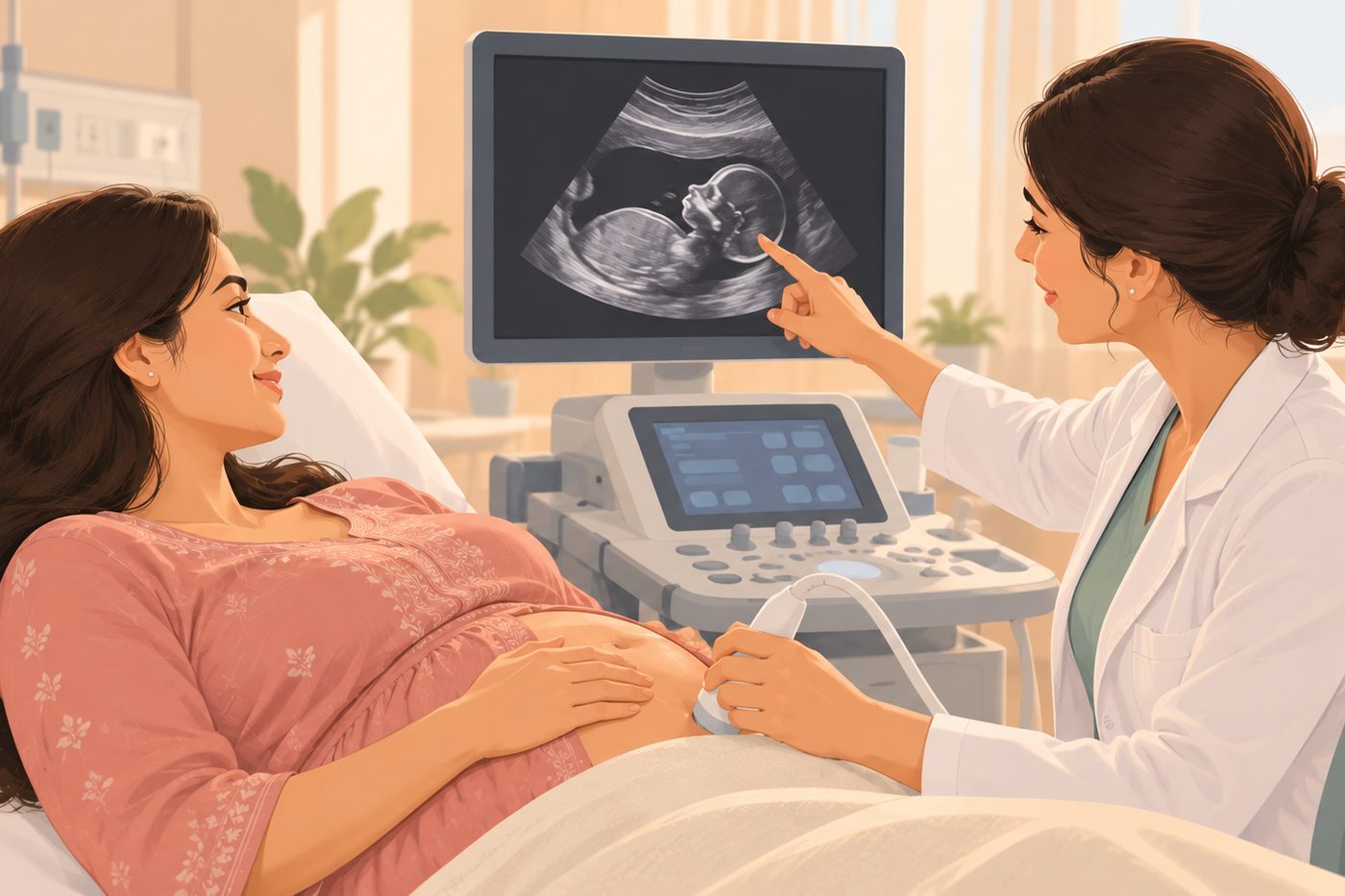
- First ultrasoundWeek 6–8
The first scan confirms the pregnancy and usually shows your baby's heartbeat and how many weeks you are.
Eating well this month
Your baby's brain and spine are forming right now, and folate (folic acid) helps them form well. Keep taking your folic acid tablet and add folate-rich food.
Nausea often peaks around now, while your baby's organs keep forming fast.
- Spinach & leafy greens
- Moong & other dals
- Citrus & amla
- Whole grains & oats
- Paneer & dairy
- Nuts & seeds
- Chana & rajma
- Banana
- Oats
- Peanuts
- Coconut Water
- Plain Crackers
A good source of folate and iron, both needed in these early weeks.
Try palak dal, palak paratha or a little palak in your khichdi. Wash it well and cook it through.
Gives you protein, iron and steady energy when you don't feel like eating.
Mix it with water, lemon and roasted jeera for a cool drink.
Worth doing
- Book your first visit with a doctor, keep taking folic acid every day, and tell your doctor about any medicines you take.
- Keep dry snacks close by, eat small meals often, and keep sipping water.
- Keep drinking water, keep taking your prenatal supplements, and take short walks if you feel up to it.
- Write down questions for your next visit, keep eating well, and rest when you can.
Worth skipping
- Alcohol, smoking and any medicine your doctor hasn't said is safe, including herbal ones.
- Forcing down big meals, or ignoring signs that you're dehydrated.
- Comparing your symptoms or your pregnancy with anyone else's.
- Deciding that every symptom, or no symptom, means something is wrong.
When to call your doctor
Call your doctor if you have heavy bleeding, severe pain in your tummy, vomiting that leaves you dehydrated, fever, or severe dizziness.
Myth or truth
Myth If you don't feel sick, something must be wrong.
Truth Not feeling sick doesn't mean something is wrong. Many healthy pregnancies come with little or no nausea, and how sick you feel says nothing about how your baby is doing.
Myth Feeling very sick means a healthier baby.
Truth Feeling very sick doesn't mean your baby is any healthier. Nausea depends on your hormones, and it differs a lot from woman to woman.
For your partner
Help her book the first doctor's visit, remind her about folic acid, and take on more of the cooking and housework if she's tired or queasy.
Questions in the second month
How is my baby developing in the second month?
The second month, weeks 5 to 8, is when your baby changes from a tiny cluster of cells into a recognisable embryo with the beginnings of a heart, brain, limbs and major organs. By the end of it, your baby is around the size of a black bean.
My morning sickness is at its worst now. What helps?
Morning sickness often peaks around weeks 8 to 10, so feeling at your worst in the second month is completely normal. It is usually harmless, and for most women it starts easing by the end of the first trimester, around weeks 12 to 14.
When is morning sickness more than normal (hyperemesis gravidarum)?
Most pregnancy nausea is ordinary morning sickness, but a small number of women develop a more severe form called hyperemesis gravidarum, where the vomiting is so frequent that you cannot keep food or fluids down. It is far less common, and it is very treatable with the right care.
What are the signs of a miscarriage, and what should I do?
A miscarriage is the loss of a pregnancy in the first 20 weeks, most often in the early weeks. The most common signs are vaginal bleeding and cramping, though it is important to know that light bleeding is common in early pregnancy and does not usually mean a miscarriage.
I'm pregnant after a miscarriage. How do I cope with the worry?
Feeling anxious, guarded, or unable to fully celebrate when you are pregnant again after a loss is completely normal. Many women feel this way, and it does not mean anything is wrong with you or the pregnancy.
Can I eat papaya, pineapple and other "heat" foods in pregnancy?
Ripe papaya and pineapple are both safe to enjoy in moderation during pregnancy. The one to avoid is raw or unripe (green) papaya. The wider belief that these are dangerous "heat" foods is largely a myth.
Is ghee good during pregnancy, and how much?
Ghee is safe and nourishing during pregnancy in moderation, as part of a balanced diet. What is not true is the popular belief that eating extra ghee, especially late in pregnancy, eases labour or ensures a normal delivery.
How much weight should I gain in pregnancy?
How much weight to gain depends on your weight before pregnancy. As a general guide, a woman starting at a healthy weight gains around 11 to 16 kilograms over the whole pregnancy, with only about 1 to 2 kilograms in the first trimester.
Which exercises and yoga are safe in early pregnancy, and what should I avoid?
In a healthy pregnancy, gentle exercise and prenatal yoga are not only safe but encouraged, aiming for about 150 minutes of moderate activity a week. The key is to choose low-impact movement and avoid a short list of risky poses and activities.
Is it safe to travel during pregnancy?
In a healthy pregnancy, travel is generally safe, and the second trimester is usually the most comfortable time. Early pregnancy travel is fine too, though nausea and tiredness can make it less pleasant, so shorter trips are easier for now. Do check with your doctor before long, international or high-altitude travel, or if your pregnancy is high-risk.
Every pregnancy moves at its own pace. Sizes and changes are typical ones, not targets, and the scans listed are the usual pattern; your doctor may add, move or skip tests for you. If something feels wrong, call your doctor rather than waiting for the next visit.