The eighth month of pregnancy
The eighth month, weeks 32 to 35, is a stretch of rapid growth and real preparation. Your baby crosses the 2 kilogram mark by the end of it, your visits become more frequent, and your own body starts visibly gearing up for what's ahead.
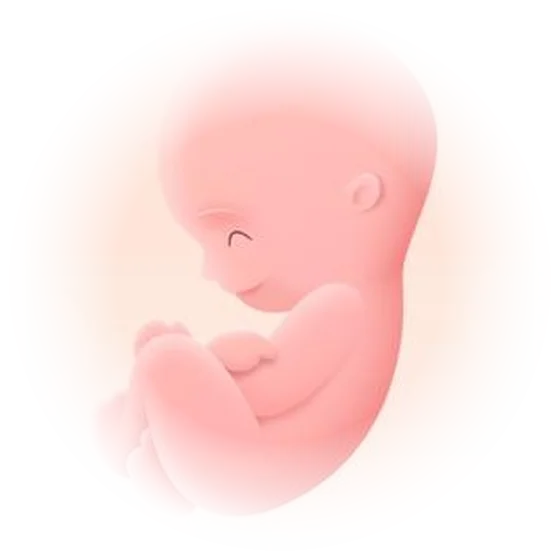
- Your baby grows from
- a jicama to a honeydew melon
- By week 35
- about 46.2 cm, about 2500 g
- Usually this month
- Growth scan (if advised)
- Milestones
- Practicing For Birth · Building Immunity · Almost Ready · Getting Into Position
Week by week
 Week 32
Practicing For Birth
About the size of a jicama · about 42.4 cm, about 1900 g
Your baby is practising breathing and sleeping, and getting ready for life outside the womb.
Your baby
I'm practising breathing movements, sleeping in cycles, and my lungs and nerves keep maturing. I'm also storing nutrients and energy for life after birth.
Your body
Your baby is taking up more room than ever. You may feel more pressure on your ribs, bladder and pelvis.
- Frequent urination
- Shortness of breath
- Back discomfort
- Difficulty sleeping
For you: Take breaks through the day, and rest in positions that feel comfortable.
 Week 33
Building Immunity
About the size of a pineapple · about 43.7 cm, about 2100 g
Your baby is putting on weight steadily and getting important protection against infection from you.
Your baby
My brain and lungs keep maturing, and I'm getting antibodies from you that will help protect me after birth. I'm putting on fat and getting stronger every day.
Your body
As your baby grows, movements may feel stronger but less like somersaults, because there's less room in the uterus.
- Pelvic pressure
- Shortness of breath
- Back discomfort
- Fatigue
For you: Rest whenever your body asks for it. Energy often goes up and down in these last weeks.
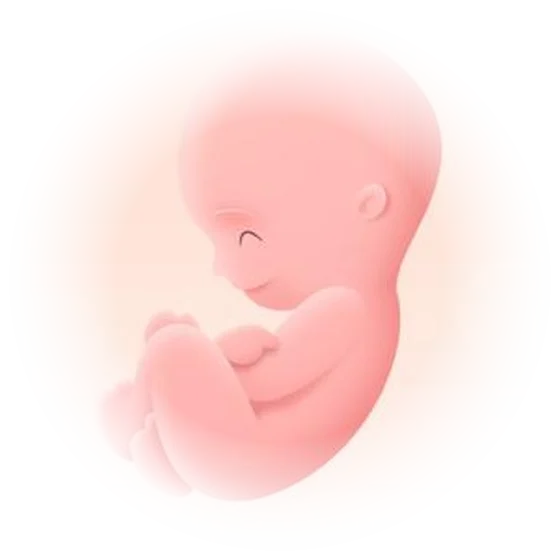 Week 34
Almost Ready
About the size of a cantaloupe · about 45 cm, about 2300 g
Your baby is in the last stage of getting ready for birth, and most major organs are now well developed.
Your baby
My lungs keep maturing, my brain is growing fast, and I'm putting on body fat that will help keep me warm after birth. Most of me is now getting ready for life outside the womb.
Your body
Your baby takes up a lot of room now. You may feel more pressure in your pelvis, stronger movements and more tiredness.
- Pelvic pressure
- Back pain
- Heartburn
- Fatigue
For you: Listen to your body, and slow down whenever you need to.
- Week 35
Getting Into Position
About the size of a honeydew melon · about 46.2 cm, about 2500 g
Your baby is probably turning head-down and getting ready for birth.
Your baby
My lungs are nearly mature, my brain keeps growing fast, and I'm putting on body fat every day. Many babies start settling head-down around now.
Your body
You may feel more pressure in your pelvis, need the toilet more often, and feel stronger stretching as your baby grows.
- Pelvic pressure
- Frequent urination
- Back pain
- Braxton Hicks contractions
For you: Keep drinking water, and rest whenever your body asks for it. Saving your energy matters now.
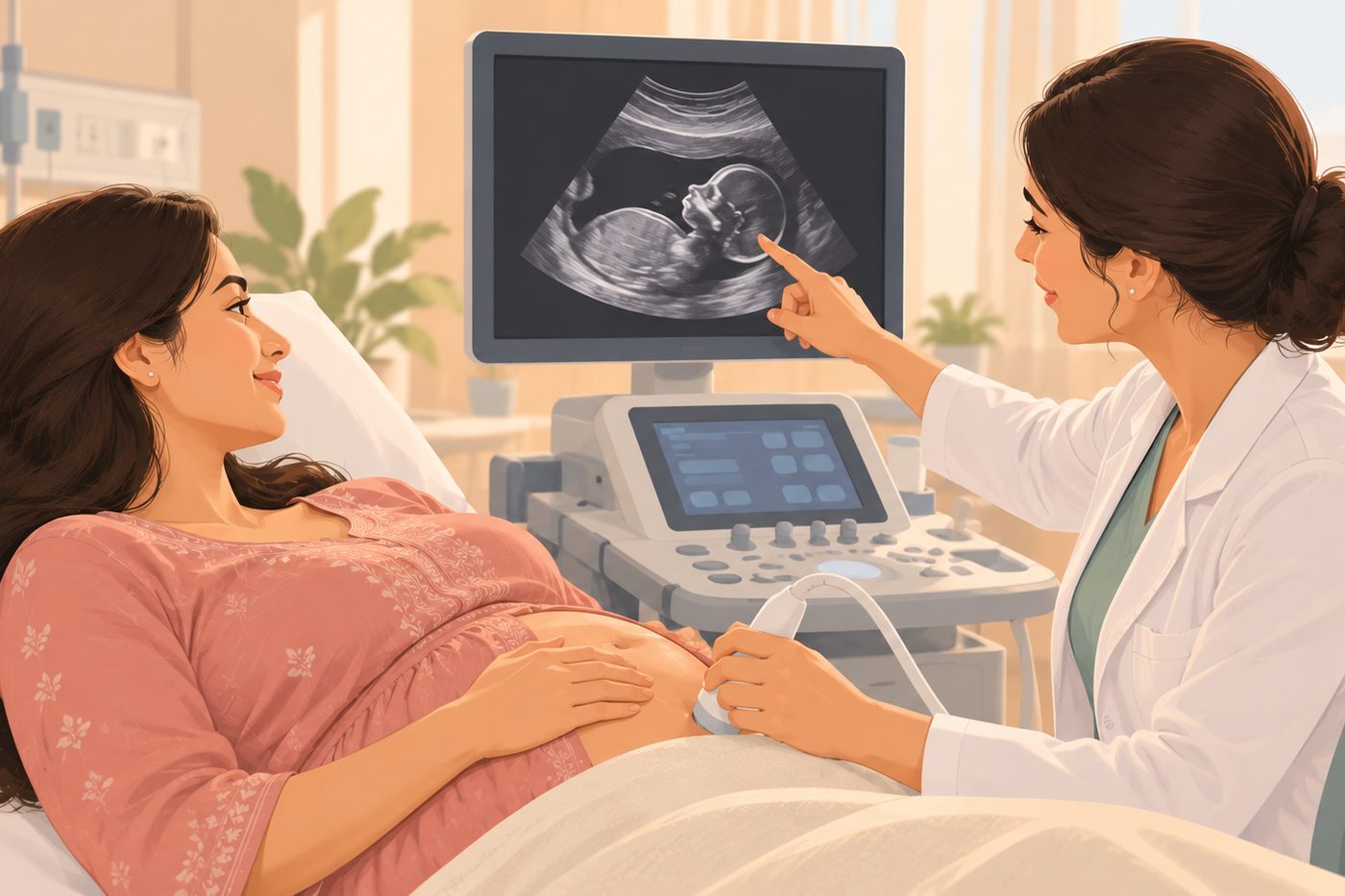
Scans and checks this month
- Growth scan (if advised)
If your doctor advises it, this scan checks your baby's size, position and growth as your due date gets closer.
Eating well this month
Your baby is storing iron and nutrients to help them grow in the first months after birth.
Your baby is getting important protection from you and is still growing fast.
- Spinach
- Rajma
- Kala Chana
- Paneer
- Moong Dal
- Amla
- Orange
- Guava
- Curd
- Oats
- Brown Rice
Gives you iron, folate and antioxidants that help make healthy blood.
Palak dal, palak paneer or spinach soup.
Full of vitamin C, which supports immunity and helps your body take in iron.
Fresh, as juice, or in a homemade chutney.
Worth doing
- Start packing your hospital bag, and keep your important papers somewhere easy to reach.
- Finish your hospital bag, and look over your birth plan if you have one.
- Finish your hospital bag, put your important papers together, and go over the signs of labour.
- Learn the difference between practice contractions (Braxton Hicks) and real labour contractions.
Worth skipping
- Waiting until labour starts to get your hospital things together.
- Thinking you must buy every baby item before the birth.
- Taking on big new commitments or tiring physical jobs.
- Panicking every time your tummy tightens.
When to call your doctor
Call your doctor if you have fluid leaking, regular painful contractions, bleeding, a severe headache, changes in your vision, sudden swelling, or your baby moving less.
Myth or truth
Myth Babies only start getting ready for birth during labour.
Truth Your baby has been getting ready for birth for months, not just during labour. They've been practising breathing, growing and building their organs.
Myth The baby's immune system only starts after birth.
Truth Your baby's protection against illness starts in pregnancy, not after birth. Antibodies pass from you to your baby while they're in the womb.
For your partner
Help pack the hospital bag and sort out the practical things.
Questions in the eighth month
How is my baby developing in the eighth month?
In the eighth month, your baby gains weight rapidly, adding roughly half a pound each week, while nails, hair, and softer, smoother skin all become visible. Their lungs and brain continue maturing quickly, and they start settling into position for birth.
What is a caesarean (C-section) delivery, and how is it different from a vaginal birth?
A caesarean, commonly called a C-section, is when your baby is delivered through a surgical cut in your abdomen and womb, rather than through the birth canal. It's a common, generally very safe surgery, performed either as a planned procedure or as a decision made during labour.
Is my husband or partner allowed inside the delivery room?
Honestly, it depends entirely on which hospital you choose. Some hospitals allow it, many don't, and India has no single uniform rule that applies everywhere, so this is genuinely a "check for your specific hospital" question rather than one with one right answer.
What are the early signs that labour may be approaching?
There isn't one single sign; labour tends to announce itself through a combination of changes over hours to weeks. The main ones to know are lightening (your baby dropping lower), losing your mucus plug, increasingly regular contractions, and your waters breaking, each covered in more detail in its own FAQ.
Is prenatal yoga safe and helpful in the third trimester, and what should I focus on now?
Yes, generally safe and genuinely helpful, with some sensible modifications as your bump grows. In the third trimester, the focus shifts from building strength to gentle stretching, hip and pelvic opening, and breathing practice that can genuinely help during labour.
What is a Non-Stress Test (NST), and why might I need one?
A Non-Stress Test (NST) is a simple, painless test that checks how your baby's heart rate responds to their own movements, done using two soft belts with sensors around your belly. It's usually recommended in the third trimester if there's a specific reason to monitor your baby a little more closely, not as a routine test for every pregnancy.
Why is my skin darkening in patches (melasma, sometimes called the pregnancy mask)?
This is melasma, sometimes called chloasma or "the pregnancy mask," dark, symmetrical patches usually on your forehead, cheeks, nose, or upper lip. It's caused by pregnancy hormones and is completely harmless, though genuinely common, affecting a large share of pregnant women, especially those with more melanin in their skin.
Why do I feel a mix of impatience and fear as my due date gets closer?
This particular mix, wanting it to be over and feeling nervous about what "over" actually involves, is extremely common as your due date approaches. Both feelings are genuinely allowed to exist at once; neither cancels the other out.
What's the difference between a planned and an emergency C-section?
A planned, or elective, C-section is scheduled in advance, usually because a medical reason is already known before labour begins. An emergency C-section is decided during labour itself, when something changes that means continuing with a vaginal birth is no longer the safest path.
Normal delivery vs C-section: how is the decision actually made?
For most women, this isn't really a choice made in advance; it's guided by how your pregnancy and labour are actually progressing, based on your doctor's assessment. A smaller number of women do discuss their preference with their doctor in advance, and in some private settings a planned C-section by choice is possible to discuss, though it isn't the default path.
Every pregnancy moves at its own pace. Sizes and changes are typical ones, not targets, and the scans listed are the usual pattern; your doctor may add, move or skip tests for you. If something feels wrong, call your doctor rather than waiting for the next visit.