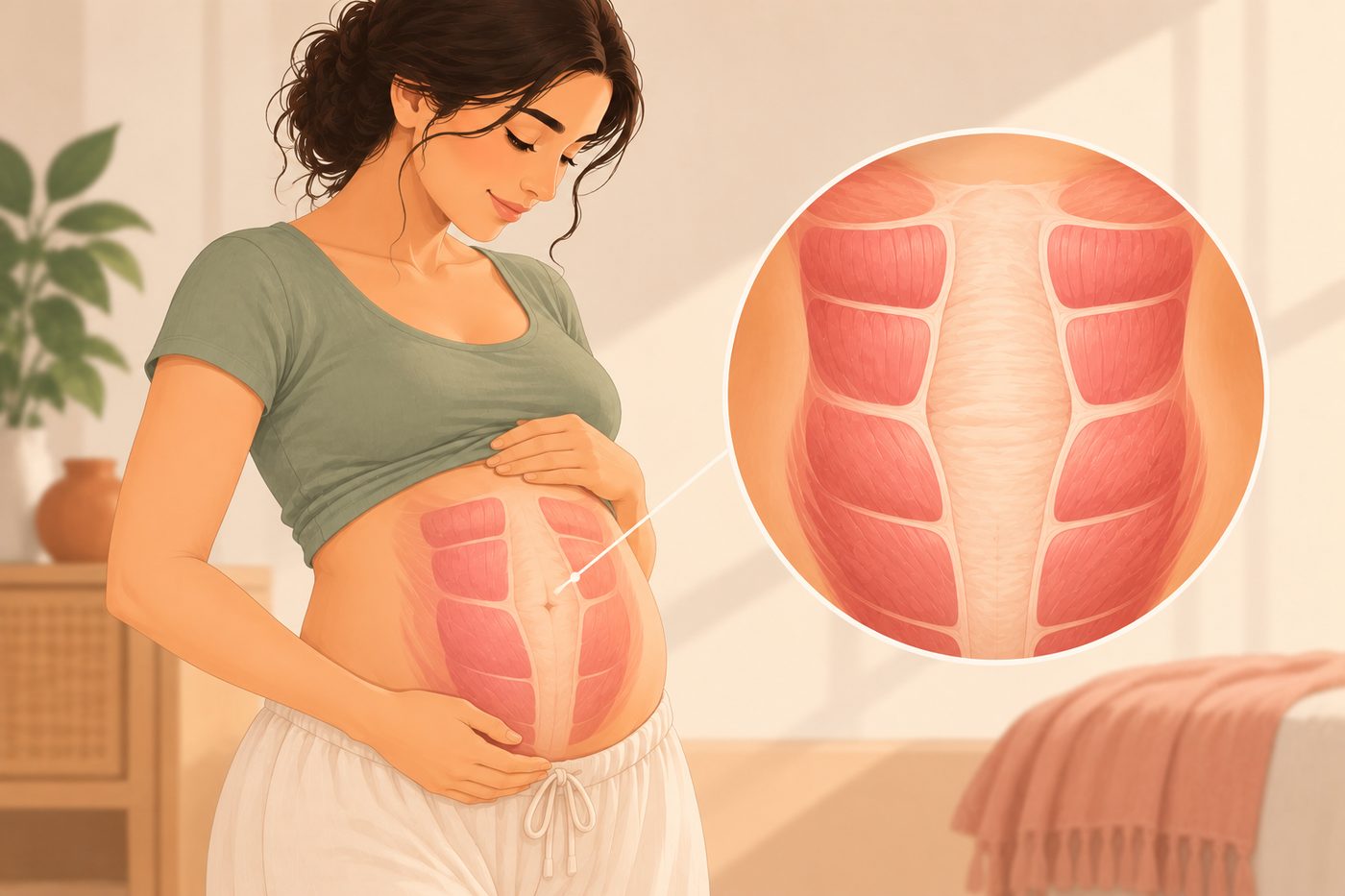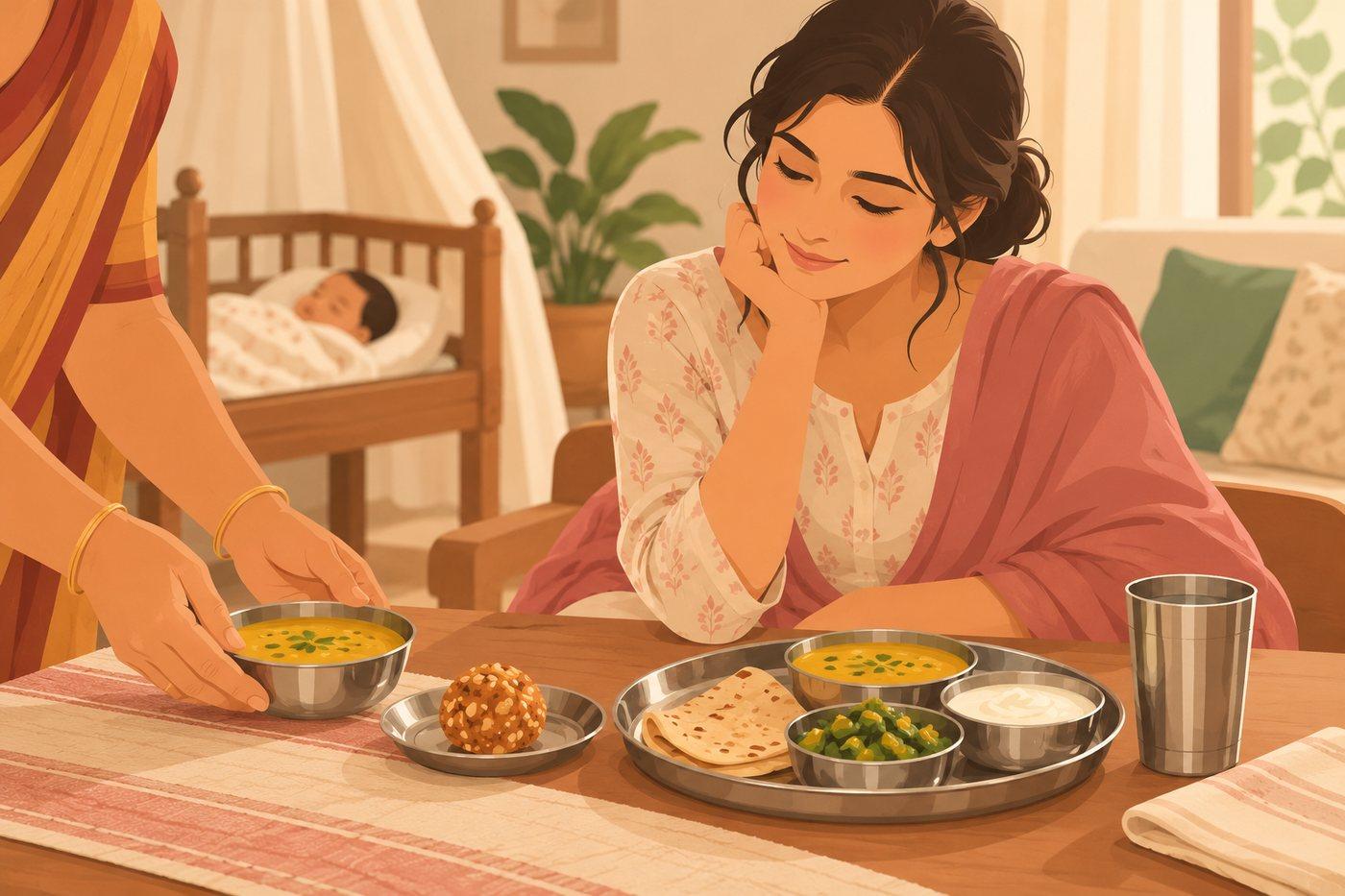
In most Indian homes, the kitchen starts preparing for a new mother long before the baby arrives. Gond ke laddoo, panjiri and ajwain water appear, along with a long list of rules from every aunt and grandmother.
For many new mothers, the hardest part is not the food itself. It is knowing which advice to follow when the family and the doctor seem to say different things.
Key takeaways
- Most confinement foods, such as dalia, moong dal, ajwain and haldi doodh, are sensible; problems usually come from portion size and restriction.
- A breastfeeding mother needs about 600 extra kilocalories and 13.6 grams of extra protein a day in the first six months, according to the Indian Council of Medical Research, National Institute of Nutrition (ICMR-NIN).
- Limiting water, fruits or vegetables can worsen constipation. There is no good evidence that these particular restrictions help a mother recover.
- Gond ke laddoo and panjiri are energy-dense, so the portion matters more than the food. Mothers with gestational diabetes or other dietary needs should ask their doctor what suits them.
- If iron, folic acid or calcium tablets have been prescribed after delivery, a rich traditional diet does not replace them. The doctor decides what each mother needs and for how long.
This is for understanding, not personal medical advice. Every mother's recovery is different, so please follow the doctor who knows her and her baby.
The quick answer
A good Indian postpartum diet keeps most traditional confinement foods, adjusts a few, and drops the rules that restrict water, fruits or vegetables. In the weeks after delivery, her body needs extra energy, protein, iron, calcium and fluids for healing and breastfeeding, and a varied home-cooked thali provides most of it.
Every confinement food was made for a reason
The 40 days after birth, often called jaapa or japa in North India, come with a diet designed for four goals. Replace the blood lost at delivery, keep digestion gentle, support breastfeeding and keep the mother rested.
Current postpartum care shares much of this concern for rest, nourishment and breastfeeding. Where advice sometimes differs is the method.
One simple test helps with any food or rule from the family. Welcome what adds to her plate, and question what takes something away. A food that adds energy, protein or fluid usually helps. A rule that removes water, fruit or vegetables usually does not.
Which traditional foods are worth keeping?
Most of them. For each food, the useful questions are what it adds, what it cannot do, and when she may need to take care.
| Food | What it contributes | What not to expect | Take care if |
|---|---|---|---|
| Ajwain water (ajwain ka pani) | A warm drink many mothers find soothing for gas | Little research shows it speeds recovery | It starts replacing plain water |
| Gond ke laddoo (dinkache ladoo in Marathi homes) | Concentrated energy from ghee, jaggery and nuts | Gond itself has no proven healing effect on the back or bones | She has gestational diabetes or high blood sugar, since it is easy to eat a lot |
| Panjiri | Energy, plus some protein from whole wheat, nuts and seeds | It does not reliably increase milk | Large servings start crowding out dal and vegetables |
| Dalia, khichdi, moong dal | Protein and fibre that are gentle on digestion | No special healing power; they simply make good everyday meals | They are served plain; adding vegetables makes them more balanced |
| Haldi doodh | Calcium and protein from the milk | Turmeric's healing benefit after delivery is unproven | She is offered turmeric capsules or concentrates, which differ from a pinch in milk |
| Methi in laddoo, paratha or sabzi | Fibre and some iron | Evidence for more milk is weak and mixed | She takes powders or large amounts, especially with diabetes or blood-thinning medicines |
| Saunth (dry ginger), jeera, saunf | Flavour and familiar comfort for digestion | No proof they speed recovery | They come as strong kadhas rather than cooking amounts |
| Ghee | Concentrated energy when appetite is small | It does not "lubricate" joints or speed healing | Large amounts push out protein and vegetables |
| Dates, til, jaggery, dry fruits | Some iron, fibre and energy | Not enough to correct anaemia or replace prescribed iron | She needs to watch sugar, as jaggery and dates add a lot |
Every region has its own version, from Gujarati katlu to Tamil pathiya samayal and Punjabi panjiri. The same questions work for all of them.
Which postpartum food restrictions can be reconsidered?
These rules come from love and long habit, but current guidance does not support them.
| The restriction | Why it can be reconsidered |
|---|---|
| Drink very little water | ICMR-NIN advises more than two litres of fluid a day while breastfeeding; less water worsens constipation and tiredness |
| No fruits or vegetables, especially papaya, brinjal or greens | They supply fibre, vitamins and iron; ripe papaya and brinjal are fine |
| No curd, rice or "cold" foods | No evidence of harm; curd adds calcium and protein, and can be served at room temperature |
| Mostly ghee, sugar and laddoos | Crowds out protein and vegetables, and can raise blood sugar |
| Unlabelled herbal kadhas or tonics | Some herbs pass into breast milk; check with the doctor first |
ICMR-NIN finds no need to avoid foods because of taboos. Yet in one Andhra Pradesh study, many new mothers skipped papaya and brinjal, and some drank under 500 millilitres of water a day.
Many new mothers quietly eat what is served because refusing it feels like refusing the care behind it. Changing the plate does not have to mean refusing the dish.
For example, she can thank her mother-in-law for the evening panjiri, take a small bowl, and ask for dal or curd alongside it at dinner. The tradition stays on the plate, and the day becomes more balanced. Families usually accept "more" far more easily than "less".
What does a good Indian postpartum diet look like in a day?
Put together, the kept foods and relaxed rules make a simple day. In the early weeks, eating a little every few hours often sits better than three big meals.
Think of the plan below as a sample, not a rule. Her hunger, the family budget, what is cooking at home, any health condition and breastfeeding will all shape it.
| Part of the day | Familiar options |
|---|---|
| Soon after waking | A glass of lukewarm water or ajwain ka pani, with a few dates or a fistful of roasted chana or peanuts |
| First proper meal | Dalia cooked with vegetables, poha with peanuts, or a moong cheela |
| Between feeds | Any fruit in season, and milk or haldi doodh if she enjoys it |
| Midday thali | Roti or rice with dal, a sabzi of the season and a bowl of dahi |
| Late afternoon | A small portion of gond laddoo or panjiri, and not too much chai |
| Night meal | Khichdi cooked with lauki or carrots, or roti with dal, chana, egg, chicken or fish where the family eats them |
| Whenever she feeds the baby | A bottle of water within reach |
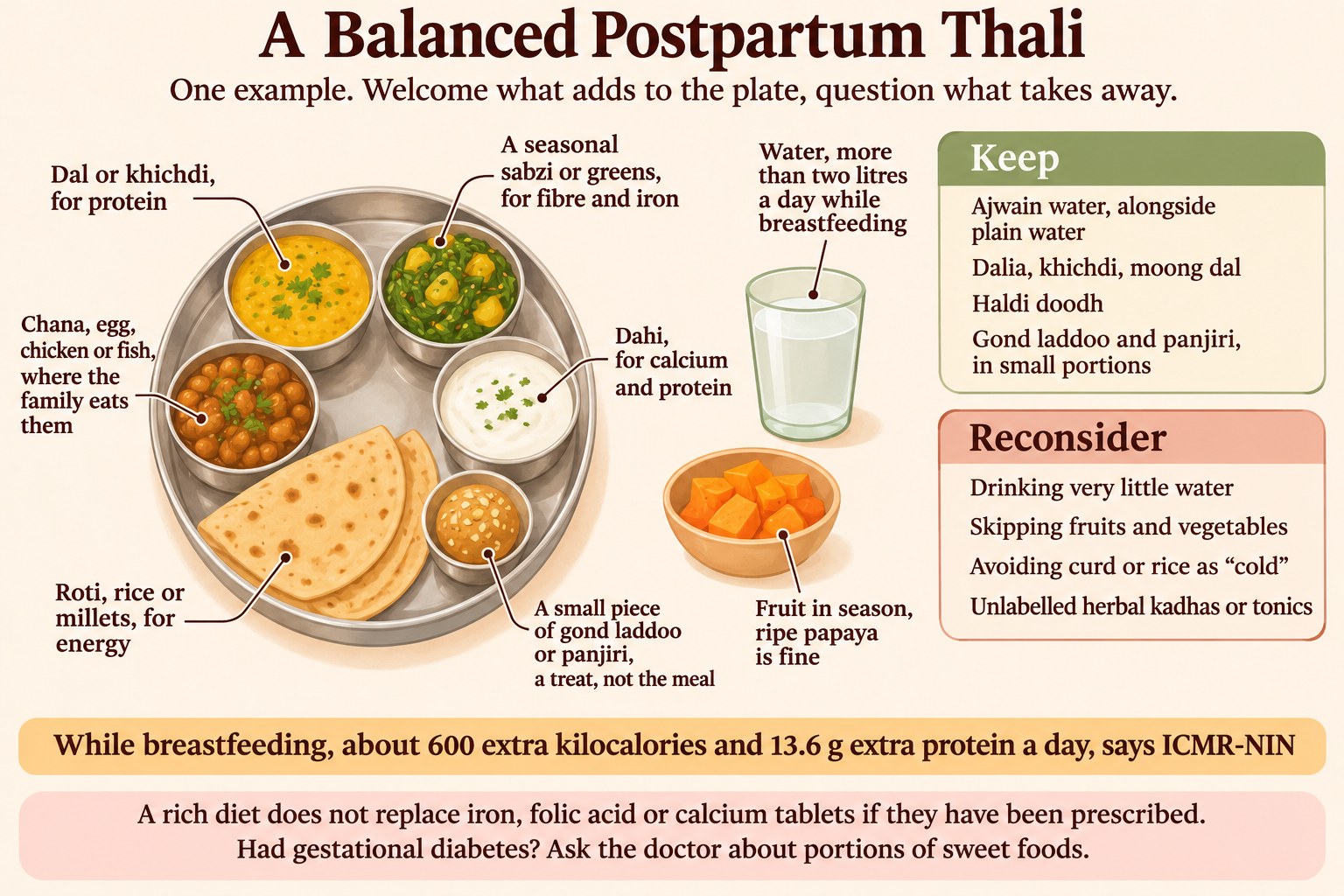
Dry fruits and paneer are nice to have but not essential. Dal, chana, peanuts, dahi, eggs and local vegetables give enough protein and fibre at a lower cost. ICMR-NIN also suggests keeping tea and coffee in check while breastfeeding, because caffeine reaches breast milk.
After a C-section, the plate changes a little
For what to eat after a C-section (caesarean section) for fast recovery, the base is the same diet with a few adjustments. The hospital team guides the first meals; the wider journey is in recovering from a C-section.
- Protein from dal, paneer, curd, eggs or fish supports wound healing.
- Fibre, fluids and short walks help with the gas and constipation that are common after surgery.
- Many mothers find lighter meals easier while gas settles, and bring heavier fried foods and rich laddoos back gradually as digestion returns to normal.
Will these foods increase breast milk?
Not much on their own. Milk supply depends mainly on how often and how well the baby feeds.
Methi is the best-known traditional galactagogue (a food believed to increase milk), but research on it is weak and mixed. Frequent, effective feeds matter most.
Enough food and water keep her well, but they do not guarantee supply on their own. If supply seems low or the baby is not gaining weight, a doctor or lactation consultant can check how feeding is going. Read how to tell if a baby is getting enough milk.
Does she still need tablets if she eats well at home?
Often, yes. Food alone may not replace the iron lost at delivery.
Ministry of Health and Family Welfare (MoHFW) guidance includes iron and folic acid tablets after delivery, and calcium tablets while breastfeeding. The World Health Organization (WHO) also recommends iron for a few weeks after birth where anaemia in pregnancy is common.
Whether a mother needs them, the dose and the duration depend on her blood tests, her health and her doctor's advice. Any tablets she has been prescribed are best continued as advised, even when the diet at home is rich.
When to see a doctor
Get medical help urgently, the same day, if she has:
- breathlessness, chest pain, a racing heart, or dizziness bad enough to make her feel faint
- fever or chills, foul-smelling discharge, or a wound that is red, swollen, hot or leaking
- vomiting that stops her keeping fluids down
Contact her doctor within a day or two if she has:
- no bowel movement for more than three days, with pain or bloating
- ongoing tiredness or mild dizziness, which may point to anaemia
Raise it at a routine visit if she:
- had gestational diabetes, to ask about portions of sweet foods and the blood sugar test usually advised around six weeks after delivery
- has thyroid, kidney or heart conditions and the family diet is high in salt or herbs
- follows a strict vegetarian or vegan diet and is unsure about protein or vitamin B12
- wants to take methi powders, herbal tonics or other supplements
Looking ahead
Around six weeks, after the postnatal check-up, the confinement rhythm usually loosens. Appetite often stays high while breastfeeding continues, and that is expected.
To see how the body heals across these weeks, read postpartum recovery week by week.
The plate slowly shifts from rebuilding to sustaining. The laddoo can become an occasional treat while the dal, vegetables and water stay daily.
This is also when many mothers start thinking about baby weight. Because breastfeeding still needs extra food, crash dieting is best avoided; slow, steady change protects both energy and milk.
References
- Indian Council of Medical Research, National Institute of Nutrition (ICMR-NIN). Dietary Guidelines for Indians. 2024.
- Ministry of Health and Family Welfare, Government of India. Guidelines for Calcium Supplementation During Pregnancy and Lactation. 2014.
- Federation of Obstetric and Gynaecological Societies of India (FOGSI). General Clinical Practice Recommendations: Management of Iron Deficiency Anemia in Pregnancy.
- World Health Organization. WHO recommendations on maternal and newborn care for a positive postnatal experience. 2022.
- Drugs and Lactation Database (LactMed). Fenugreek. National Institute of Child Health and Human Development.
- Venkateswarlu M, Pasha MAM, Fatima A. Assessment of cultural beliefs and practices during the postnatal period in an urban field practice area of SRMC, Nandyal, Kurnool, Andhra Pradesh. Int J Community Med Public Health. 2019;6(8):3378-3383.
- Ministry of Health and Family Welfare, Government of India. Diagnosis and Management of Gestational Diabetes Mellitus: Technical and Operational Guidelines. 2018.
- Ministry of Health and Family Welfare, Government of India. Anemia Mukt Bharat: Operational Guidelines for Programme Managers. 2018.
Common questions
Delivery ke baad kya khaye? What should a mother eat after delivery?
A normal, varied Indian diet with extra servings. Dal, roti or rice, vegetables, curd, fruit, and eggs or fish where the family eats them, cover most needs, with dalia, khichdi, ajwain water and a little gond laddoo fitting in easily. Alcohol and rules that restrict water, fruits or vegetables are best avoided.
Is ajwain water good after delivery?
Ajwain water is generally safe after delivery when made at food strength, and many families use it to ease gas. Research on its specific benefits after childbirth is limited, so it is best seen as a comforting drink that adds to fluid intake, taken alongside plain water rather than instead of it.
How many gond ke laddoo can a new mother eat in a day?
There is no fixed or evidence-based number. A small piece as part of a balanced day is a common family practice, but needs vary. Rich in ghee, jaggery and nuts, gond ke laddoo pack a lot of energy into a small bite, and several a day can crowd out dal, vegetables and fruit, and raise blood sugar. Mothers with gestational diabetes or other dietary needs should ask their doctor what suits them.
This article is for education and general information. It is not a substitute for personal medical advice. Every mother's recovery is different, so please follow the guidance of the doctor who knows her and her baby.
 Medically reviewed byDr. Mahender Singh, MBBS, DCH, MD (Paediatrics)A consultant child specialist and neonatologist with over four decades of practice in newborn and child health.
 Written bySarthak ThakurCo-founder, CTO and Chief Marketing Officer of ParentVeda, and the software engineer who builds its app and the pipeline that checks its articles.
This article explains; it doesn’t diagnose. If your doctor has told you something different, your doctor is right.