
If you're recovering from a caesarean, or you have a date coming up, you may already have noticed how little anyone talks about this part. The birth gets all the attention. The weeks after, far less.
Here's the honest headline. A caesarean is major surgery, and you're being asked to heal from it while learning to care for a newborn: two enormous jobs, at the same time, on almost no sleep. If it feels like a lot, that's because it genuinely is.
So this isn't a checklist of how fast to bounce back. It's a walk through what these weeks actually ask of you, in body and in heart, and how to be gentle with yourself through both.
What matters most
- A caesarean is major surgery, so real healing takes months, even when the scar looks settled in weeks.
- There's no "right" speed to recover, and healing slowly is still healing.
- You're recovering and becoming a mother at once, and needing help with one isn't failing at the other.
- For about six weeks, the heaviest thing you lift is your baby.
- Breastfeeding is safe and encouraged, though the milk may take a little longer to arrive.
- Your body heals in its own time, and so does your heart. Both deserve patience.
This is for understanding, not diagnosis. Timings are general guides, and your own doctor knows your situation and your incision best.
What happened to your body
How long will this really take?
There's no fixed schedule, and that's the first thing worth making peace with. Some mothers move comfortably within two weeks; others feel pain and stiffness for much longer. Both are normal.
It depends on whether the surgery was planned or an emergency, whether labour came first, and simply on your body. Here's a rough shape to expect, a guide rather than a deadline:
| Timeframe | What's usually happening | What helps |
|---|---|---|
| Days 1 to 3 | In hospital; first walks, catheter out, afterpains, trapped gas | Move early, warm fluids, stay ahead of pain relief |
| Week 1 | Home; tender, tired, short on sleep | Rest, keep essentials within reach, accept help |
| Weeks 2 to 6 | Skin knitting; slowly more mobile; no lifting beyond baby | Short walks, protect the scar, no heavy lifting |
| 6-week check | Skin largely healed; doctor reviews the incision | Ask before resuming exercise, driving, intimacy |
| Months 2 to 6+ | Deeper layers and nerves still healing; core rebuilding | Gentle core and pelvic-floor work, once cleared |
The one signal that matters through all of it: easing pain is a good sign, worsening pain is worth a call.
It's easy to treat that six-week mark as a finish line. It isn't one. It's the point where the visible healing is mostly done and the quieter, deeper healing simply carries on.
Why do I feel worse than I look?
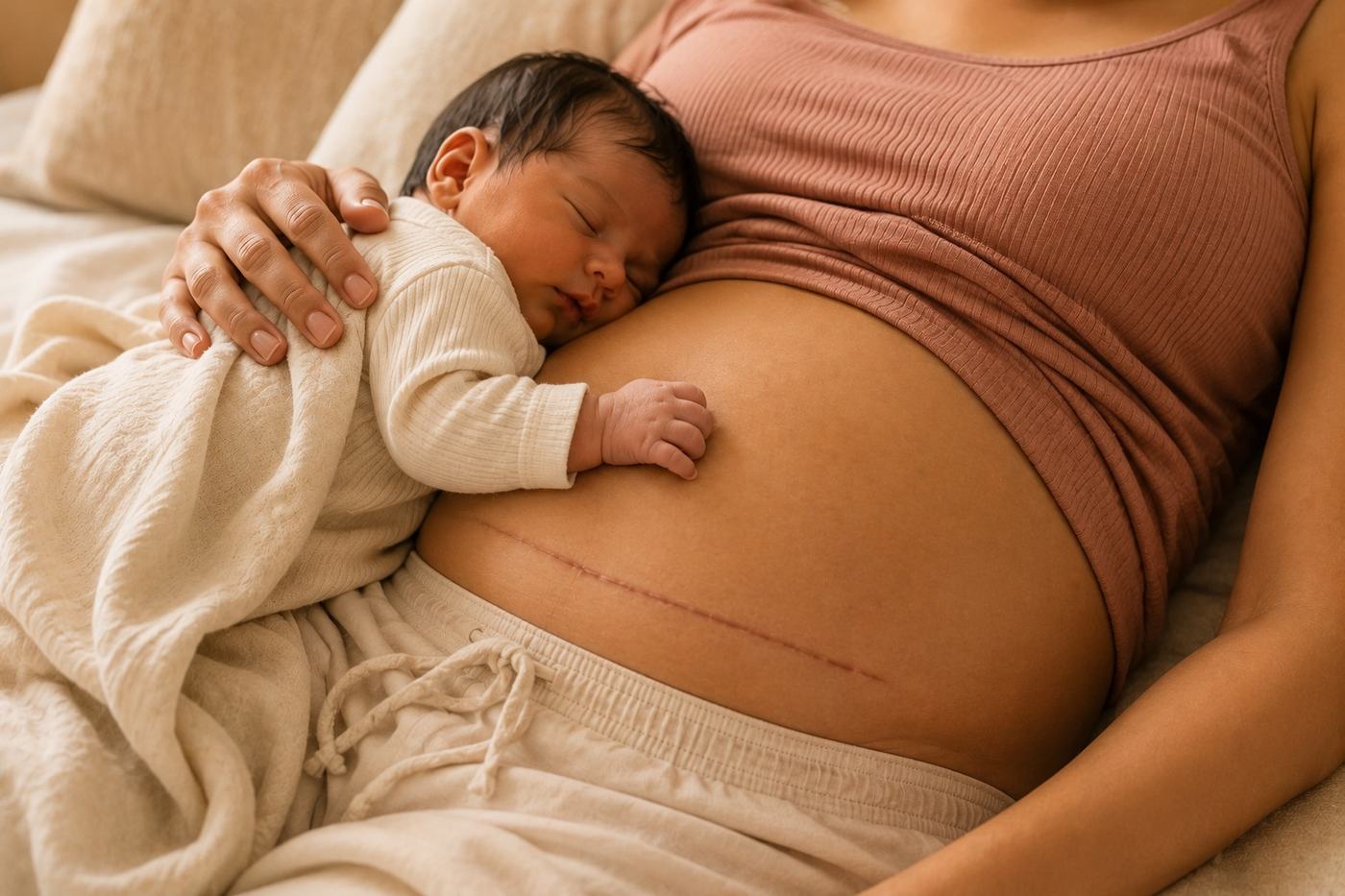
Because the line on your skin is the shallowest of several layers the surgeon moved through: skin, fat, the sheet of tissue over the muscles, the muscles themselves (parted, not cut), and the womb.
Here's the part worth holding onto. The skin heals in weeks. The layers beneath keep healing for months. That's why you can look almost recovered at six weeks and still feel tender inside, and it's not a sign anything is wrong.
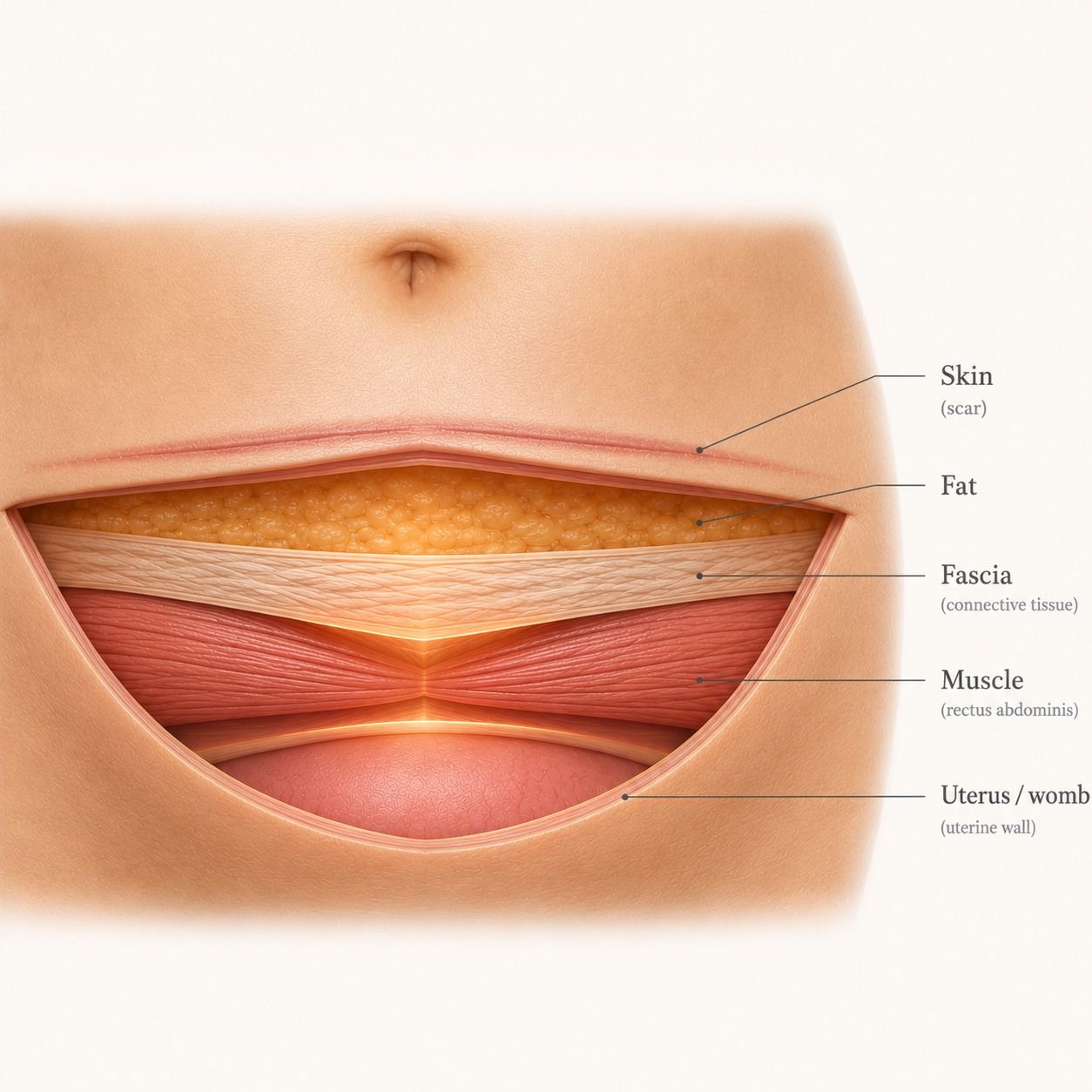
The scar can't show the whole of what's mending. Most of your healing is happening exactly where no one, including you, can see it. So if people start expecting you to be "back to normal," it's fair to remember that the version of recovery they can see is the smallest part of it.
The first few days
The early days in hospital can feel strange, because you're caring for a newborn while barely able to sit up. A few things are worth expecting, so they don't catch you off guard: early walking (hard, but it lowers clot risk), a catheter that comes out in a day or so, afterpains as the womb shrinks, and trapped gas that walking and warm fluids ease.
None of this means recovery is going badly. It's the ordinary, awkward start that almost every caesarean recovery moves through and past.
Living while healing
Caring for your baby while your body mends
This is the strange heart of caesarean recovery: you're the patient and the round-the-clock carer at once. No one else recovering from major surgery is also feeding someone every two hours. So the goal isn't to push through. It's to care for your baby in ways that also protect your healing body.
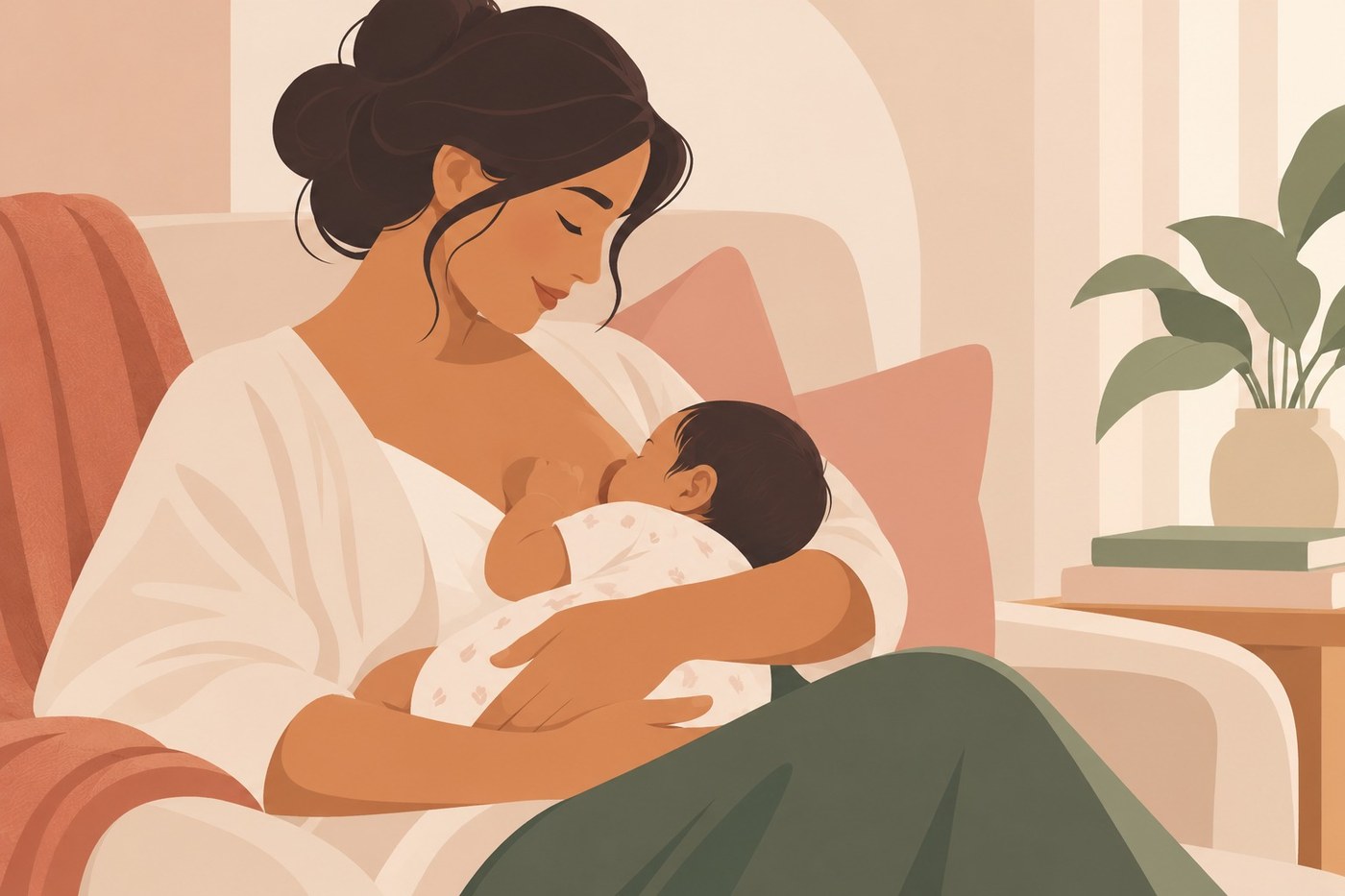
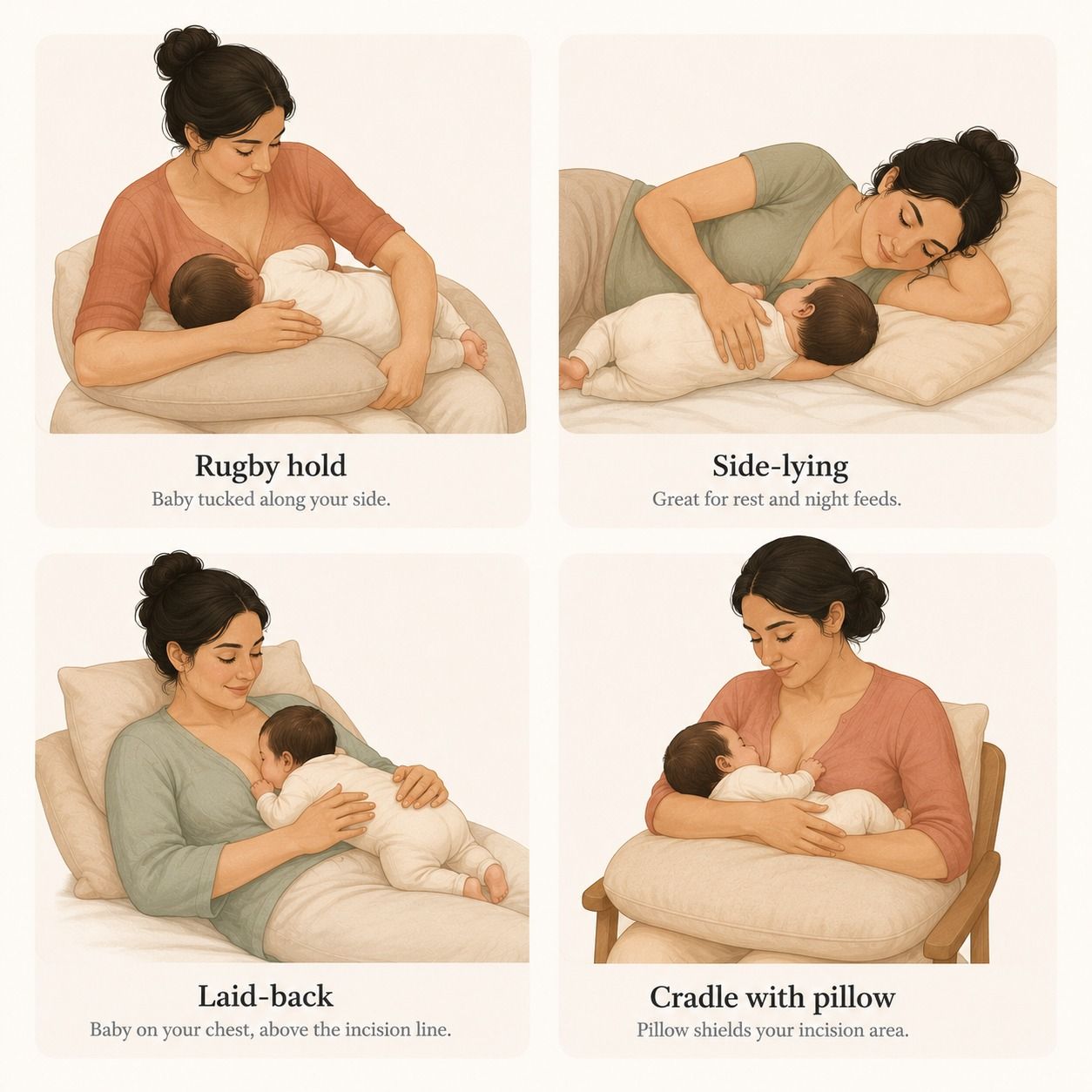
Feeding positions that keep weight off the scar:
- Rugby hold: baby along your side, under your arm, so nothing rests on the incision.
- Side-lying: both of you on your sides, facing each other; ideal for night feeds.
- Laid-back: reclining slightly, a pillow across your lap as a cushion.
- Cradle with a pillow shield: the position most mothers reach for instinctively, made safe by a firm pillow across your lap, cushioning the incision before the baby goes on.
Moving and lifting without strain:
- Rise sideways: roll onto one side, then push up with your arms, not your stomach.
- Brace the scar: a hand or pillow over it eases coughing or sneezing.
- Lift light: nothing heavier than your baby for the first weeks.
- Keep essentials close, and accept help.
That last point deserves a sentence of its own. It's easy to mistake needing help for recovering badly. It's the opposite: letting people carry things, cook, and hold the baby so you can rest is doing recovery, not avoiding it.
Why is my milk taking so long?
Of all the ways caring-while-healing shows up, none feels as tender as wondering whether there's enough milk, so it helps to know how normal a slow start is.
After a caesarean, milk often comes in later. The fuller feeling many expect by day three can take longer, in about one in three mothers, more so after a first baby (International Breastfeeding Journal). It isn't a sign that anything is wrong.
In those first days your body is making colostrum, the concentrated early milk, exactly what your newborn needs in tiny amounts.
What helps the fuller milk arrive:
- Feed often: frequent feeding or expressing signals the body to make more.
- Skin-to-skin: calms you both and supports let-down.
- Ask for help: a lactation consultant, if feeding feels hard.
The delay is common, temporary, and no one's fault.
When will I feel like myself again?
This is the real question underneath "what about my belly?", and it's a better one.
The belly first. Early on, the rounded tummy is mostly swelling, a still-shrinking womb, and muscles that separated during pregnancy, not fat. It softens with time, not with crash diets or hard workouts, which only slow a body that's healing and making milk. Once your doctor clears it, gentle breathing and pelvic-floor work rebuild the core far better than any sit-up.
But feeling like yourself is about more than the mirror. It's the sleep, the hormones, the newness of it all. And here it helps to know: "yourself" isn't a place you go back to. Recovery isn't a return to who you were before. It's arriving, slowly, as who you are now. That version comes back in pieces, on no particular schedule, and usually when you've stopped checking for her.
Healing the parts no one sees
Is it normal to feel like my body let me down?
Yes. And it's one of the least-spoken feelings after a caesarean.
Especially after an emergency, it's common to feel that your body somehow fell short, that it couldn't do the thing it was "supposed" to. Many mothers carry that quietly, sometimes for years.
Here's the truth worth saying plainly. Your body didn't fail. A caesarean is not a lesser birth. Very often it's the exact reason two people came through safely, your body and your team protecting your baby the surest way available that day.
You grew a whole person. The door they came through changes none of that.
Why doesn't the love feel the way I expected?
Alongside the birth itself, this is the feeling mothers most often hide: the baby is here, and the rush of love everyone promised hasn't arrived, or arrives, then disappears under exhaustion.
That's far more common than anyone admits. After surgery, pain, and broken sleep, bonding often builds slowly, in quiet ordinary moments rather than one cinematic wave. Feeling tenderness one hour and numb detachment the next isn't a verdict on you as a mother. It's a depleted body doing an enormous thing.
For most, the early tearfulness, the "baby blues," settles within about two weeks as hormones recalibrate. What deserves attention is low mood, anxiety, or distance from your baby that lingers past that, or deepens. That isn't a character flaw and it isn't rare. Postpartum depression is common and treatable, and reaching out early is a strength.
The love, for almost everyone, does come. It's often quieter than the films promised, and it tends to arrive not as a wave but as a habit you look up one day to find you've formed.
When to call a doctor
General information, not medical advice. It's worth contacting a doctor promptly for:
- A wound that grows redder, swollen, or warm, or leaks fluid or pus.
- An incision that opens, or pain that worsens instead of easing.
- Fever, or bleeding that soaks a pad in an hour or passes large clots.
- Leg pain, redness, or swelling, or any breathlessness, which need urgent care.
- A low mood that won't lift, or a sense of distance from your baby.
That last one matters as much as the rest.
Looking ahead
Most recoveries unfold fully, even when they're slower than expected. The scar fades, the milk settles, bonding deepens, and the cautious early days quietly become a memory.
Right now, healing can feel like the whole of your days. It won't for long.
There's an ordinary afternoon coming when you'll realise you've spent the whole day thinking about your baby, and not once about your scar. That's the quiet moment recovery becomes motherhood. Your body did something remarkable, and it's healing just as remarkably now, and so is the mother inside it.
References
- American College of Obstetricians and Gynecologists (ACOG). Cesarean Birth, Patient FAQ; Vaginal Birth After Cesarean Delivery (VBAC).
- International Federation of Gynecology and Obstetrics (FIGO). Good Practice Recommendations on VBAC.
- Mayo Clinic. C-section, Recovery and What to Expect.
- Cleveland Clinic. Cesarean Birth (C-Section), Recovery.
- International Breastfeeding Journal. Delayed onset of lactogenesis II after caesarean birth.
- Federation of Obstetric and Gynaecological Societies of India (FOGSI). Recommendations on Caesarean Section and VBAC.
- National Family Health Survey (NFHS-5), India. Caesarean delivery rates.