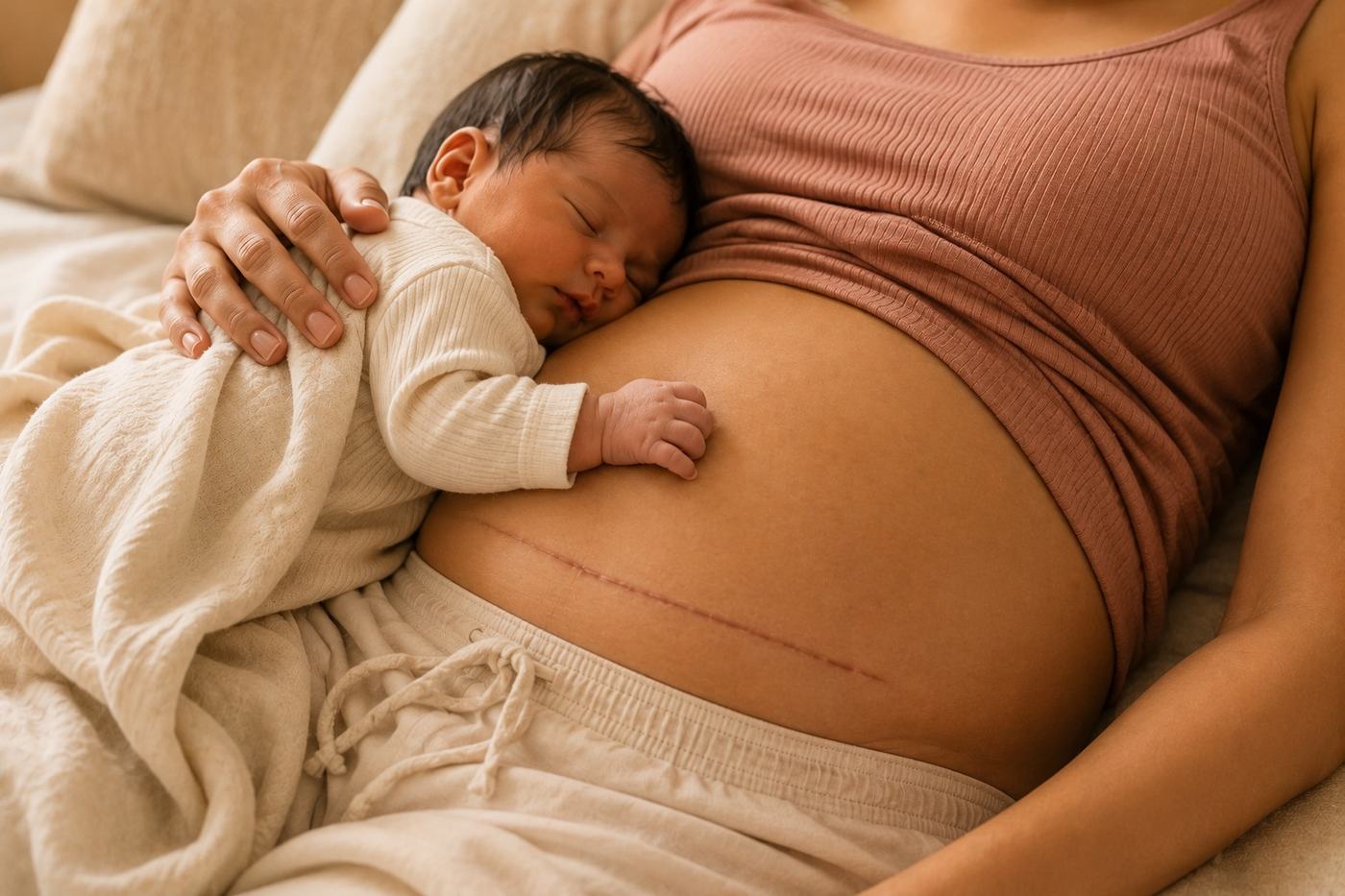


Getting back to intimacy after a baby arrives comes with more questions than most expect. You might be wondering when it is actually safe, whether it will hurt, or how to avoid another pregnancy sooner than planned. Your partner might be the one reading this, unsure how to raise the subject gently.
There is no single right timeline, and no version of this that is unusual. You may feel ready within a few weeks, or you may need several months, and both are completely normal. What matters far more than the calendar is that your body has healed and you feel ready.
Here is the short version. There is no universal medical date for restarting sex after birth. Many people choose to resume vaginal sex once postpartum bleeding has settled and any tear, episiotomy or caesarean wound has healed, provided they feel physically and emotionally ready.
It can feel different at first, and you can conceive again before your period returns, so it helps to choose contraception before you resume sex if you want to avoid another pregnancy.
Key takeaways
- There is no fixed date. Many people resume vaginal sex once bleeding has settled and any tear, episiotomy, or caesarean (C-section) wound has healed, but comfort and individual recovery matter too.
- The often-quoted "six weeks" is a general postpartum milestone, not a strict medical deadline.
- Healing timelines usually refer to vaginal penetration. Other closeness and affection do not have to wait for the same point.
- Discomfort or dryness the first few times is common, especially while breastfeeding, and often improves with time, patience, and lubricant, though ongoing pain deserves assessment.
- You can ovulate and conceive again before your first period arrives, even while breastfeeding, so contraception matters from early on.
This is for education and general understanding, not personal medical advice. Your recovery is unique, so please speak with your doctor or midwife about your own situation, especially before starting any contraception.
So when is it actually safe to have sex again?
There is no single medical deadline. Many people choose to resume vaginal sex once postpartum bleeding, called lochia, has settled and any tear, episiotomy, or caesarean wound has healed, whether you had a vaginal birth or a caesarean. There is no universal rule, and comfort, your own recovery, and how ready you feel matter just as much, because pain, dryness, or pelvic-floor tension can linger even once healing looks complete.
It also helps to separate two things. When healing timelines are discussed, they usually refer to vaginal penetration. Other forms of intimacy and affection do not have to wait for the same point if you both feel comfortable.
There is no need to rush, and no problem at all with waiting longer than average. Your body sets the pace here, not a date on the calendar.
Why the six-week mark is a guide, not a rule
You have probably heard that you should wait six weeks. Six weeks is often used as a general postpartum milestone, and it lines up with the routine postpartum check, but it is not a universal deadline for restarting sex.
Some feel ready before then, and some need longer, particularly after a difficult birth or a caesarean. Both are fine. The check-up is a good moment to raise anything that still feels uncertain.
Why it can feel uncomfortable at first
It is common for the first few times to feel different, and sometimes sore. After a vaginal birth, healing perineal tissue and dryness are often behind it. After a caesarean, a tender scar and pelvic-floor tension can contribute even without a perineal tear.
Breastfeeding adds another layer. It lowers oestrogen, which often leaves the vaginal tissues drier than usual, so sex can feel uncomfortable without extra lubrication. This dryness is a common hormonal effect while breastfeeding. It may improve as your hormonal patterns change, but persistent discomfort deserves attention rather than simply being tolerated.
Where the pain sits gives useful clues. Discomfort at the vaginal opening often relates to dryness, scar tissue, or muscle tension, while deeper pain has other possible causes and deserves assessment if it persists.
What actually helps it feel better
Small adjustments make a real difference, and there is never a need to push through pain.
- Go slowly, and give yourself plenty of time to relax first.
- Use a water-based lubricant, which is especially helpful while breastfeeding.
- Choose positions that let you control depth and movement.
- Stop if anything hurts, rather than pushing through.
Pelvic-floor rehabilitation helps some recover, but it is not one-size-fits-all. If exercises cause pain, or you feel heaviness, pressure, or trouble relaxing the muscles, ask a doctor or a pelvic-floor physiotherapist for individual guidance.
Discomfort often improves as healing progresses. Ongoing or significant pain is not something to simply tolerate, so have it assessed rather than assuming it is how things are now.
When you do not feel like it at all
Low desire after birth is one of the most common experiences, and one of the least talked about. Exhaustion, round-the-clock feeding, shifting hormones, and a body that feels unfamiliar can all lower interest, sometimes for months.
None of this means something is wrong with you or your relationship. Readiness is not decided by the six-week check or by a healed wound, so you do not have to feel ready simply because your body is. Talking openly with your partner, and finding closeness in non-sexual ways, often takes the pressure off. If low mood or loss of interest in everything persists, it can point to postpartum depression and is worth raising with a doctor.
Can you get pregnant before your period returns?
Yes, and this catches many off guard. Ovulation happens before a period, so you can conceive again before your first postpartum period arrives. Fertility can return surprisingly early, sometimes within a few weeks of birth, which is why pregnancy is possible even while your cycle still feels absent.
Breastfeeding can delay this, but it is not a guarantee. Relying on it loosely is a common reason pregnancies happen closer together than intended.
Choosing contraception while breastfeeding
Most contraception works well alongside breastfeeding, so you have plenty of safe options. Exclusive breastfeeding can itself act as temporary contraception, known as the lactational amenorrhoea method (LAM). The NHS notes it can be up to 98 percent effective, but only when all three of these are true at once: your baby is under six months, you are breastfeeding fully day and night, and your periods have not returned.
That last part needs care in practice. LAM becomes less reliable if feeds are regularly replaced or topped up with formula, if long gaps develop between feeds, if your baby starts other foods or drinks, or if your periods return. If any of these happen, add another method.
Here is how the common options compare while breastfeeding.
| Method | Generally compatible with breastfeeding | Timing |
|---|---|---|
| Condoms | Yes | Straight away |
| Progestogen-only pill (mini-pill) | Yes | Timing varies, usually early |
| Contraceptive implant or injection | Yes | Timing varies, usually early |
| Intrauterine device (IUD), copper or hormonal | Yes | Timing varies by insertion |
| Combined pill (oestrogen and progestogen) | Usually avoided early on | Timing varies, usually later |
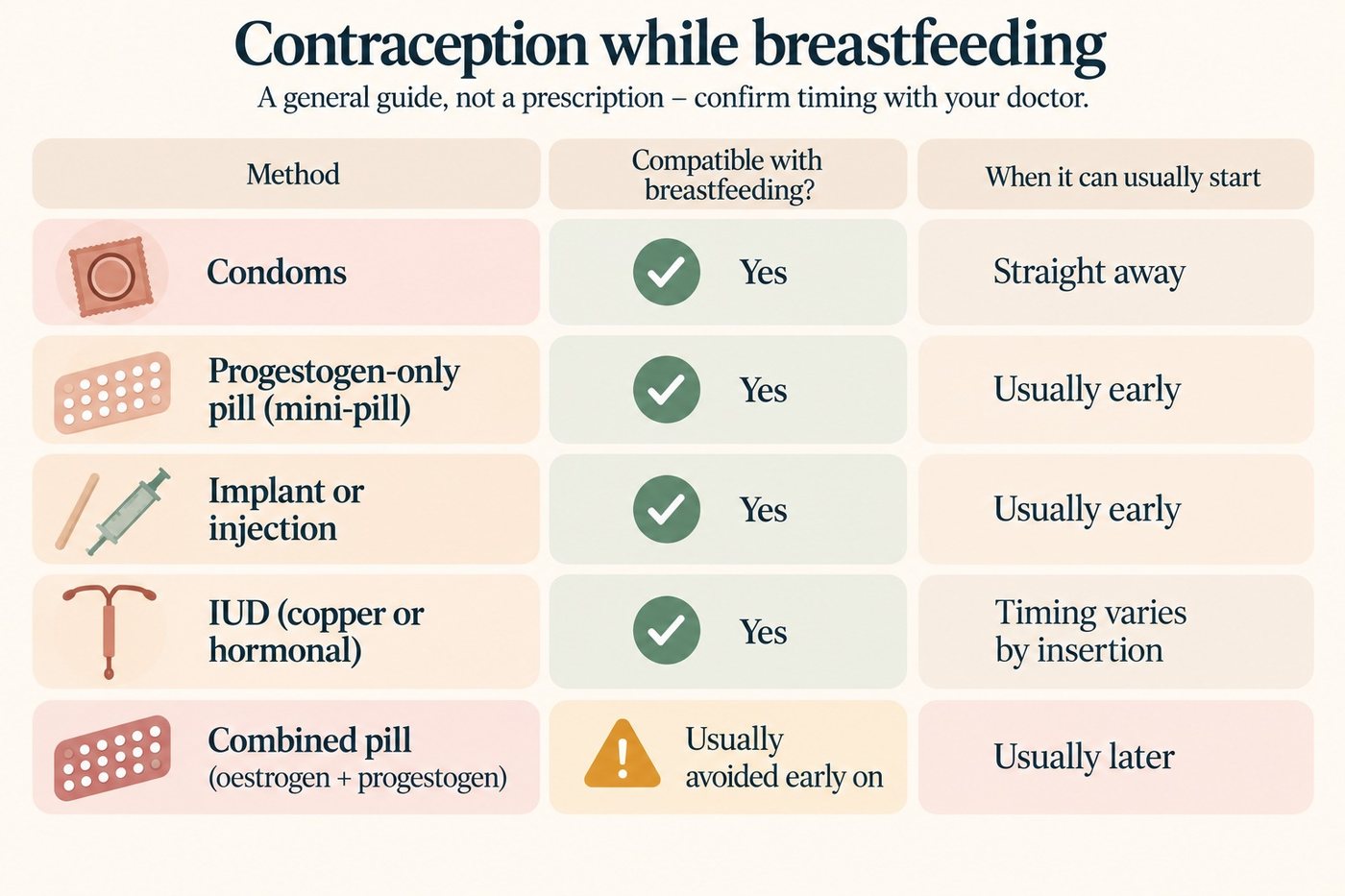
The exact timing depends on the method and on your health and breastfeeding situation, so treat this as a general guide rather than a prescription, and confirm the timing with your doctor. Condoms are also the only option in this list that helps reduce the risk of sexually transmitted infections. In India, many hospitals offer contraception counselling before discharge or at the postnatal visit, and a postpartum intrauterine contraceptive device (PPIUCD) can often be fitted soon after delivery.
Looking ahead
Recovery is not always linear. You may feel ready one week and less interested or comfortable the next, and that unevenness is normal. As healing progresses, your hormones settle, and sleep slowly improves, comfort and interest may return. If they do not, or sex stays painful, you do not have to simply wait it out. Your postpartum check is a useful place to confirm healing, settle on a contraception method that fits your feeding plans, and raise anything that still feels off, including your mood. If you had a caesarean, our guide on recovering from a C-section covers the wider picture of healing.
When to speak to a doctor
Contact a doctor if you notice any of the following:
- Bleeding that becomes heavy, increases, or smells unpleasant, especially alongside other symptoms.
- A fever, unusual or foul-smelling discharge, or feeling generally unwell, which can point to infection.
- A caesarean scar or perineal stitches that stay painful, or that become red, swollen, or begin to open.
- Pain during sex that does not improve, or deeper pelvic pain that persists.
- Persistent low mood, anxiety, or loss of interest in things you usually enjoy.
- Any worry about contraception, or a sense that you may already be pregnant again, in which case contact your provider rather than waiting for your next period.
References
- National Health Service (NHS UK). Sex and contraception after birth.
- NHS Inform (Scotland). Sex and contraception after birth.
- American College of Obstetricians and Gynecologists (ACOG). Postpartum Birth Control.
- American College of Obstetricians and Gynecologists (ACOG). Using Long-Acting Reversible Contraception Right After Childbirth.
- Tommy's. Sexual and reproductive health after having a baby.