
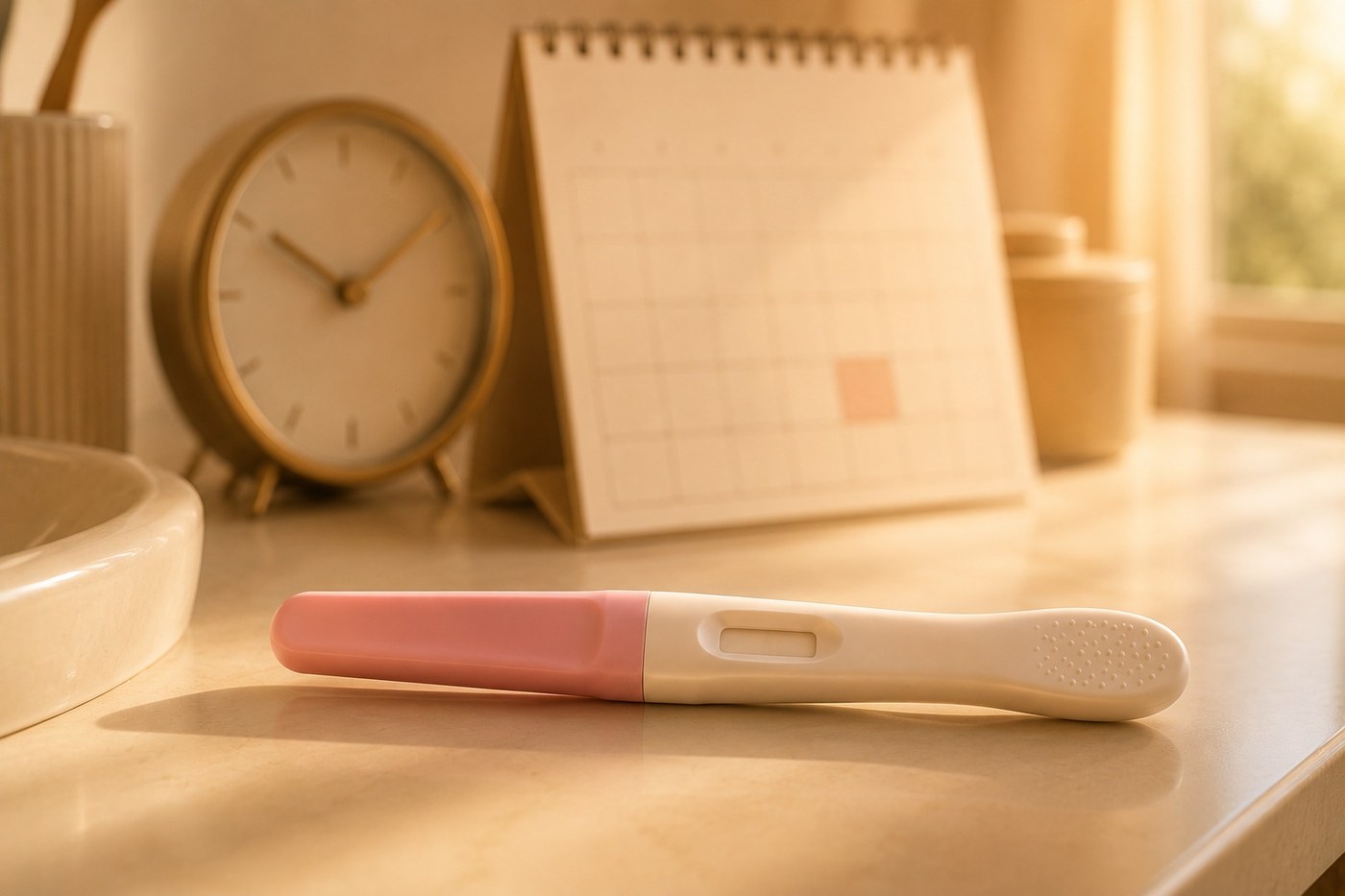
Whether you have been hoping for this for months or a late period has taken you by surprise, one question sits above the rest: when will a test actually tell you the truth?
Testing too early is a common cause of a false negative, a negative result even though you are pregnant. The good news is that the timing is simple once you understand it.
For the most reliable result, test on or after the first day of your missed period. By then, most correctly used home pregnancy tests can give a reliable result, although accuracy still depends on the test, the timing and how it is used. If you cannot wait, some sensitive tests can be used a few days earlier, but an early negative is not the final word.
Key takeaways
- The first day of your missed period is the sweet spot: accurate and early enough for most people.
- Home pregnancy tests work by detecting a hormone that takes time to build after conception.
- Testing early risks a false negative, so a negative before your period is not conclusive.
- First morning urine gives you the best chance of an early positive.
- A faint line usually still counts as positive.
- A negative test with no period means wait a few days and test again.
This is for education and general understanding, not a diagnosis. For guidance about your own situation, please speak to a qualified doctor or midwife.
When is the best time to take a pregnancy test?
The best time is the first day your period is late, or any day after. By then, if you are pregnant, the pregnancy hormone has usually risen enough for a home test to detect it clearly.
Major health bodies, including the NHS, agree that tests are most reliable from the first day of a missed period. Waiting a further week makes an early result even more certain.
If your cycles are irregular and you cannot pinpoint a due date, test at least 21 days after the last time you had unprotected sex.
Why testing too early gives a false negative
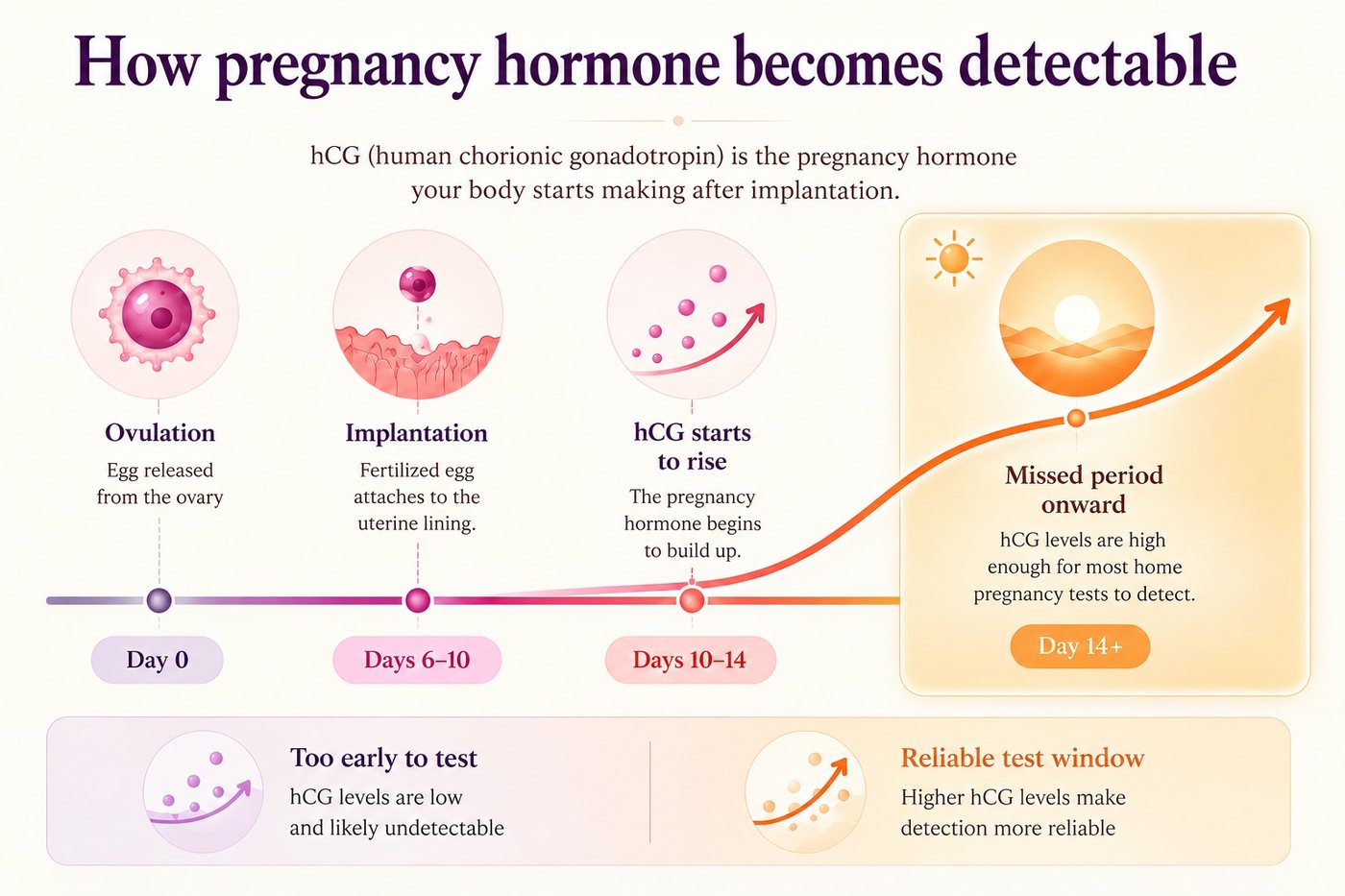
Home tests look for human chorionic gonadotropin (hCG), a hormone your body releases only after a fertilised egg implants, meaning it attaches to the lining of the uterus. It is not there the moment you conceive.
In early pregnancy, hCG usually rises quickly, although the rate varies from pregnancy to pregnancy. Before there is enough hCG for the test to detect, the result can be negative even when you are pregnant.
This is why patience protects you. A test taken a day or two too soon does not mean no pregnancy, it often means not yet detectable.
How early can you test if you cannot wait?
Yes, you can test early. Some tests are more sensitive and can be used a few days before your period is due, so an early positive is possible.
But an early negative cannot be trusted yet. This soon, the pregnancy hormone may simply be too low to show up, even if you really are pregnant.
So if you test early and see nothing, do not read it as a firm no. Wait until your period is actually late, then test again.
How to test for the most accurate result
A test is only as accurate as the way you use it. A few simple habits make a real difference.
| Step | Why it matters |
|---|---|
| Use first morning urine | It is the most concentrated, so hCG is easier to detect early |
| Check the expiry date | An expired test can give an unreliable result |
| Read the instructions first | Timing and method vary by brand |
| Wait the full stated time | Reading too soon can miss a true positive |
| Do not drink lots of fluid beforehand | It dilutes your urine and lowers the reading |
If you are testing early, first morning urine matters most because it is more concentrated, which gives the hormone the best chance to show up. Once your period is late, you can test at any time of day.
What does a faint line mean?
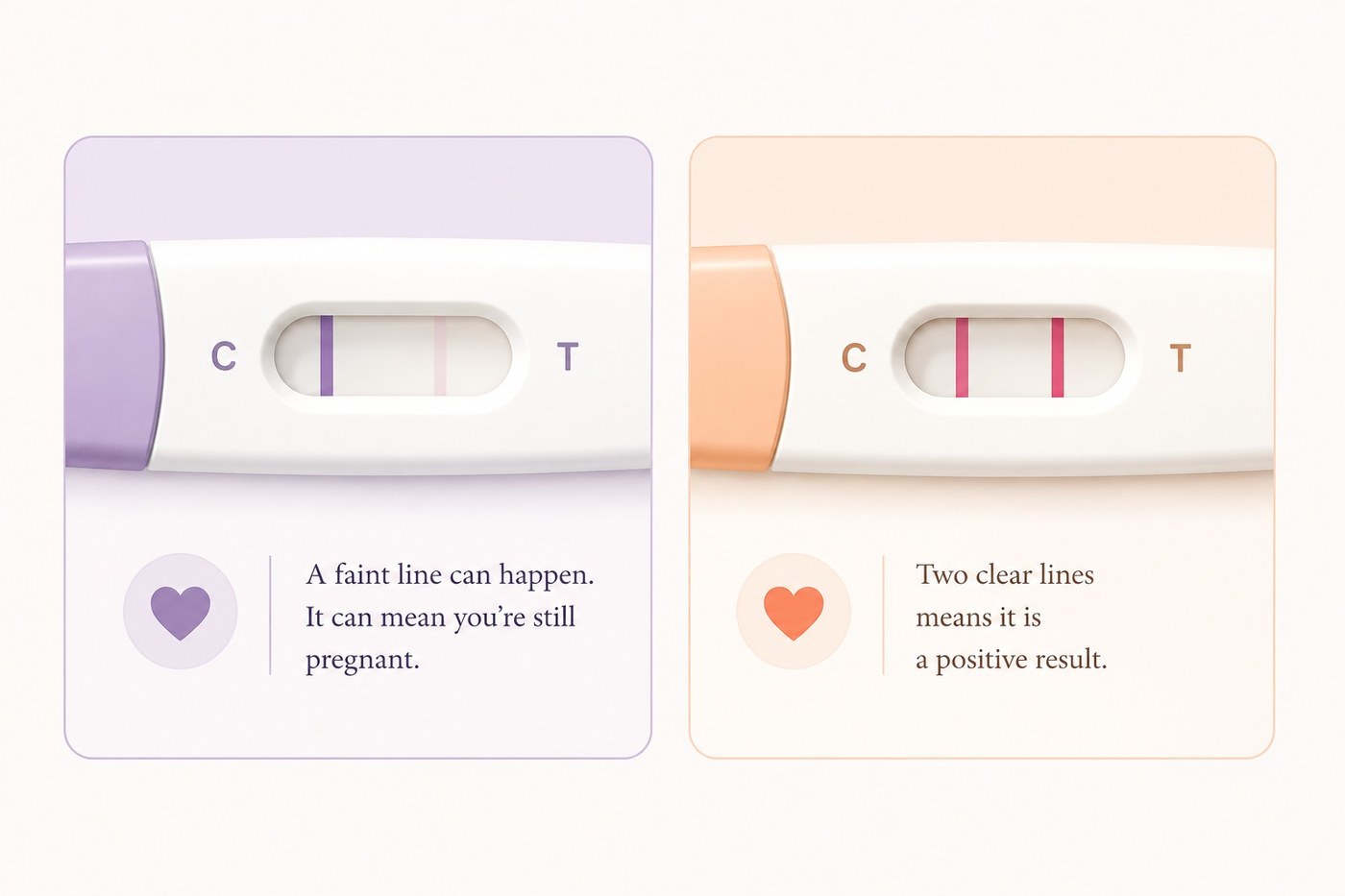
A faint line is still a line. In most cases, it means the test has picked up hCG at an early, low level, which usually points to a positive result, as long as you read it within the time stated in the instructions.
Because the hormone usually climbs over the following days, a repeat test after a couple of days may show a clearer line. Line darkness on its own is not a reliable guide to how a pregnancy is progressing.
If you are unsure, a repeat test in a couple of days, or a visit to your doctor, will give you a firmer answer.
What a positive result means
A positive result almost always means you are pregnant. The test has picked up the pregnancy hormone, which is present once a pregnancy is under way, and false positives are rare.
A clearly positive home test used correctly is usually reliable. The next step is to contact your doctor and begin your pregnancy care.
What if the test is negative but your period has not come?
A negative result is less reliable than a positive one, so a single negative is not always the end of the story. You may have ovulated later than you thought, which delays when the hormone can be detected.
Wait a few days, then test again. Testing at the right time improves reliability, but it does not remove the need to repeat a negative in some situations.
If your period is genuinely late and repeat tests remain negative, speak to your doctor, especially if your cycles are irregular or you may have ovulated late.
Looking ahead
If your test is positive, your next step is to contact your doctor or midwife and begin the early days of care. This is the start of a new stage, not something to rush through in a single afternoon.
If it is negative and you are trying to conceive, tracking your fertile window helps you time both conception and your next test more accurately.
Either way, you now know when a test is most likely to give an accurate result, which is a steadier place to stand in an uncertain moment.
When to speak to a doctor
- You have a positive test and want to begin your pregnancy care.
- Your period is clearly late and repeat tests remain negative.
- You see a positive test alongside severe one-sided pain or heavy bleeding, which needs urgent review.
- Your cycles are very irregular and you are unsure how to time a test.
References
- National Health Service (NHS UK). Doing a pregnancy test.
- Cleveland Clinic. Pregnancy Tests.
- American College of Obstetricians and Gynecologists (ACOG). Good Health Before Pregnancy.