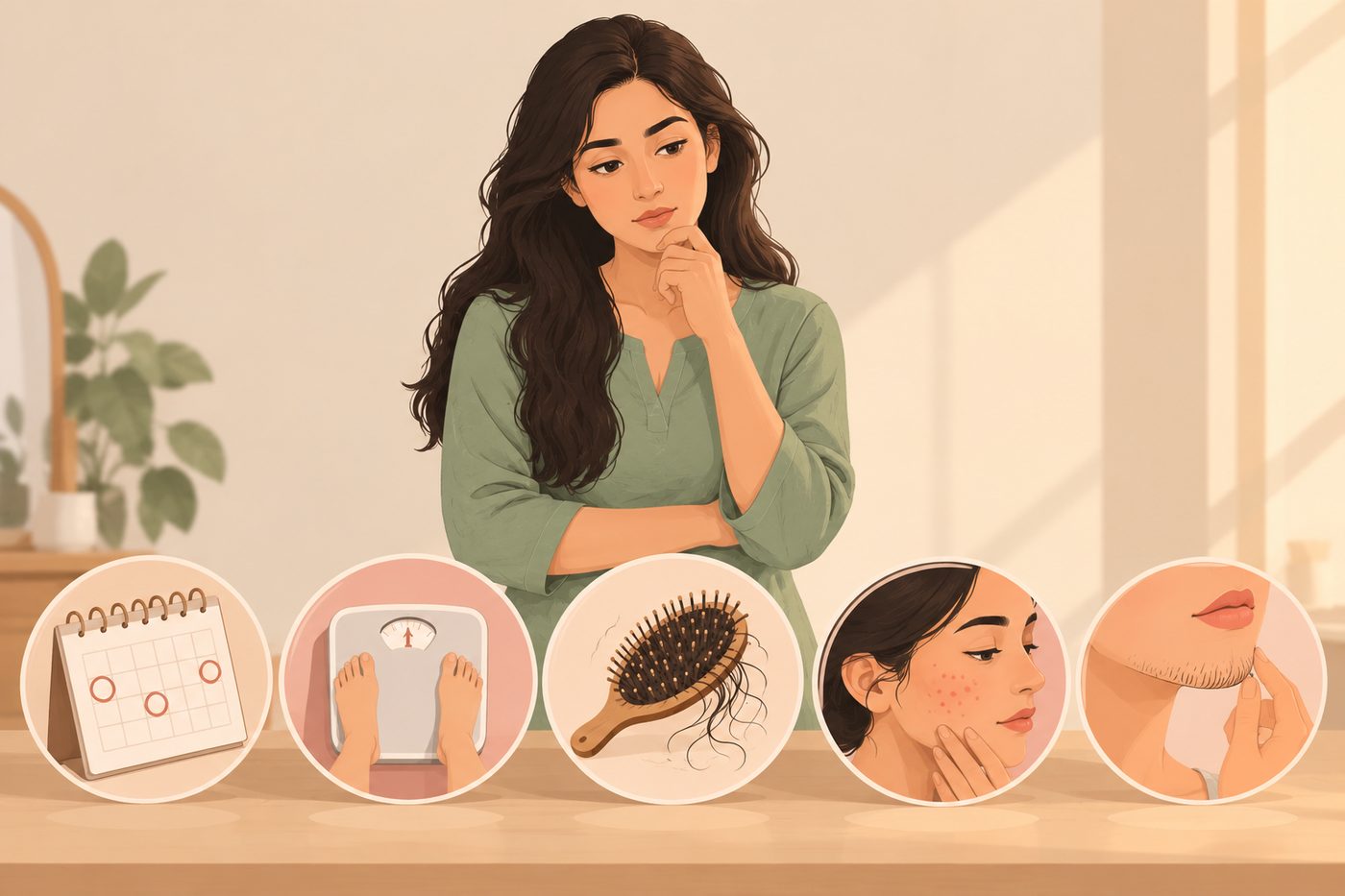
PCOS often brings a pile of advice: a pill from one doctor, a diet from a cousin, an Ayurvedic powder from a neighbour. It is natural to wonder which of these is the real treatment.
PCOS treatment usually starts with everyday habits, then adds medicine matched to what a woman wants help with: regular periods, clearer skin, weight, or a pregnancy. For pregnancy, doctors usually begin with lifestyle support and ovulation tablets such as letrozole. They consider IUI or IVF based on how she responds and her wider fertility picture.
PCOS cannot be cured yet, but it can be managed well. Many women with PCOS manage their symptoms, and many conceive, without needing the most intensive treatments.
Key takeaways
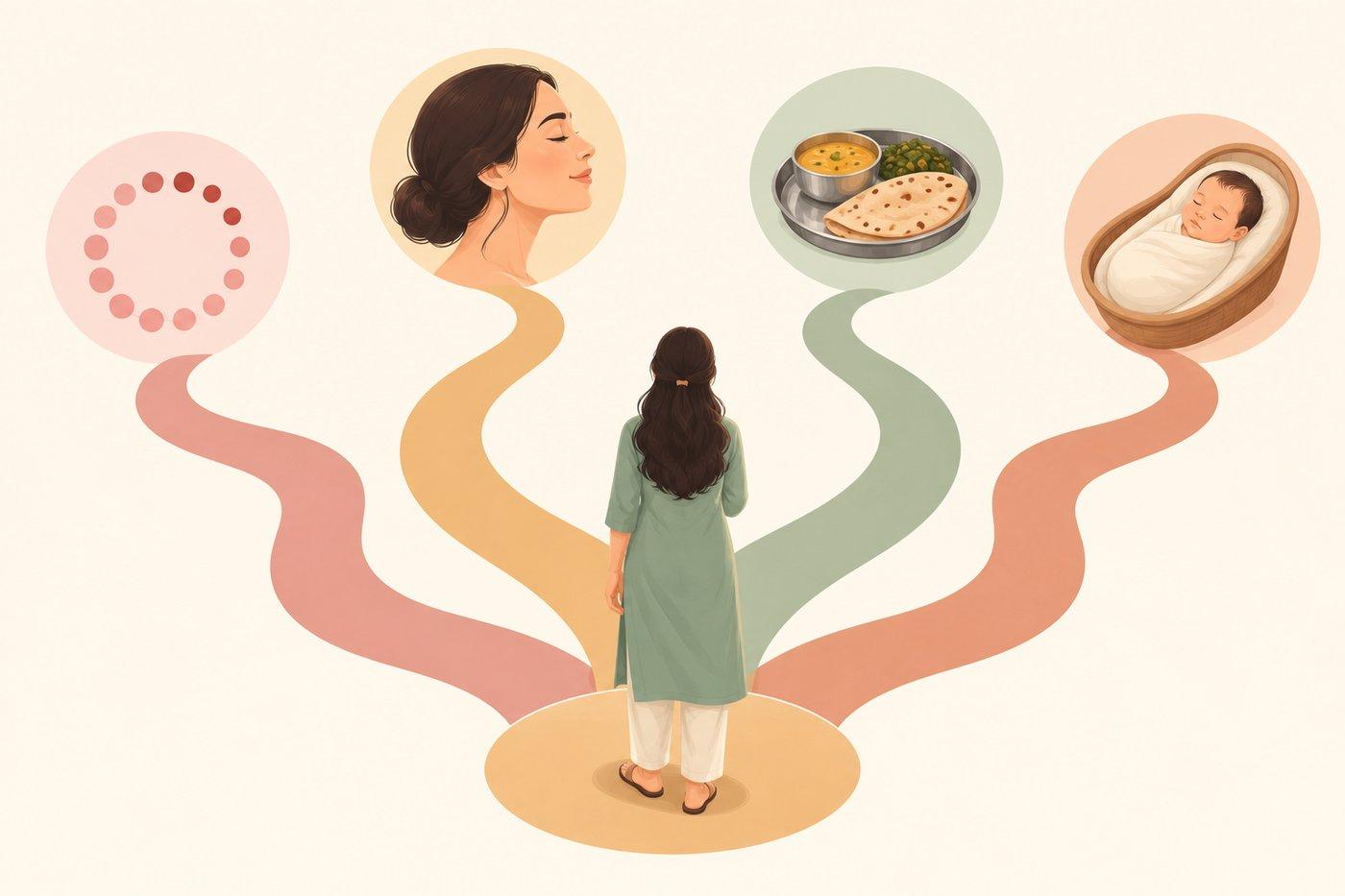
- PCOS treatment is chosen by goal: periods, skin and hair, metabolism, or pregnancy.
- Healthy habits support every plan, alongside medicine where needed. Weight loss is not required for every woman.
- Letrozole is the first-choice tablet to help ovulation for suitable women, and her doctor decides fit and monitoring.
- Ayurveda and supplements like inositol have limited evidence so far, so they work best alongside medical care, not in place of it.
- Different symptoms improve at different speeds, and changing medicines along the way is normal.
The quick answer
PCOS treatment usually starts with healthy habits, then adds medicine matched to her goal: the pill for periods and skin, metformin for insulin resistance, and letrozole to help ovulation. IUI or IVF is considered based on her response and wider fertility picture.
PCOS treatment follows her goal, not just the diagnosis
Two women with the same PCOS report can get very different prescriptions. That is not confusion. It is good medicine.
Doctors ask one question first: what matters most to her right now? The answer decides the plan, and the plan can change as her life changes.
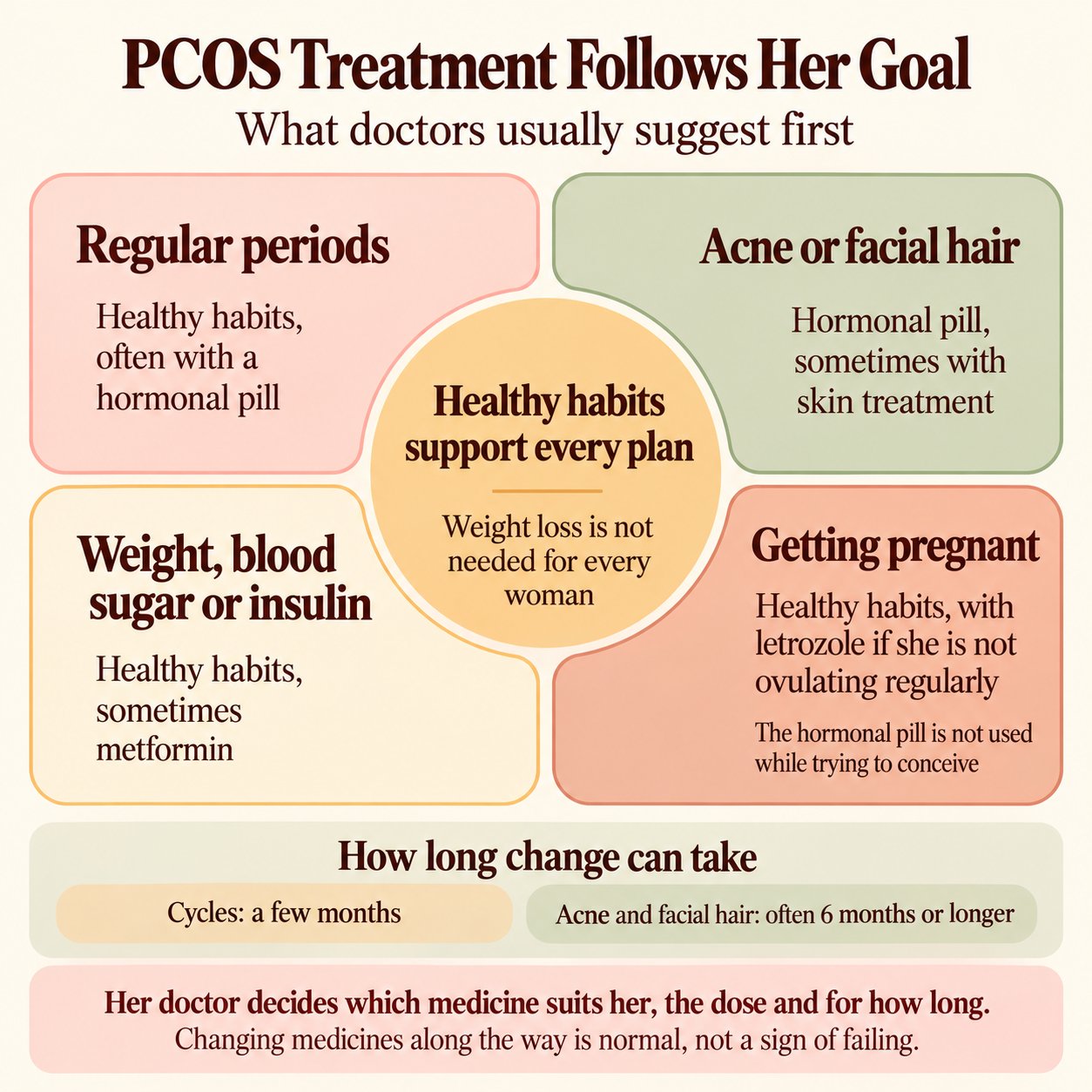
| Her main goal | What doctors usually suggest first |
|---|---|
| Regular periods, not trying for pregnancy | Healthy habits, often with a hormonal pill (combined oral contraceptive pill) |
| Acne or extra facial hair | Hormonal pill, sometimes with skin treatments from a dermatologist |
| Weight, blood sugar or insulin resistance | Healthy habits, sometimes metformin |
| Getting pregnant | Healthy habits, with ovulation tablets such as letrozole if she is not ovulating regularly |
Why healthy habits support every PCOS plan
Healthy habits support every PCOS plan, whatever her weight or goal. They work alongside medical care, though, and many symptoms and goals need more than lifestyle changes alone.
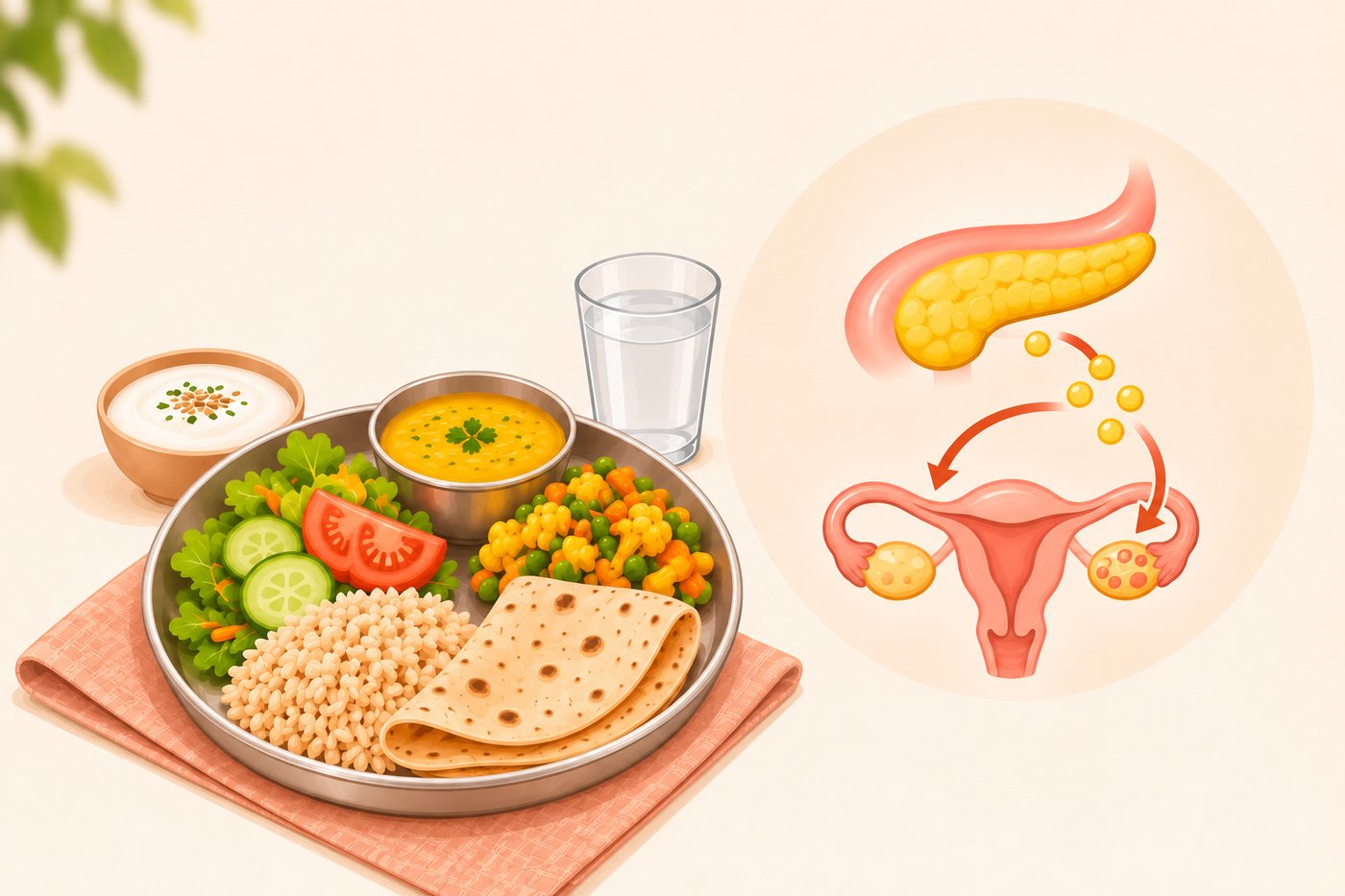
Many women with PCOS have insulin resistance, where the body needs extra insulin to manage sugar. Extra insulin can push the ovaries to make more male-type hormones (androgens), which can upset ovulation, periods and skin.
For some women above a healthy weight, losing about 5 to 10 percent of body weight may improve cycles and ovulation. Weight loss is not needed for every woman with PCOS, and lean women are not asked to lose weight.
There is no single ideal PCOS diet. Everyday Indian staples like rice and roti can stay on the plate. Balance and consistency are what tend to help:
- Protein at most meals, such as dal, chana, rajma, paneer, eggs or curd
- Millets like jowar, bajra and ragi alongside rice and roti
- Plenty of vegetables, with sweets, fried snacks and sugary chai kept occasional
- Movement she enjoys, building towards about 150 minutes a week
A plan she can follow for years matters more than a strict one she drops in a month. A dietitian can shape it around her tastes, routine and health needs.
Which medicines are used, and why?
Medicines are added alongside healthy habits, and each one targets a different problem.
| Medicine | What it helps, and what to know |
|---|---|
| Combined oral contraceptive pill | Regular periods, acne and extra hair. Not used while trying to conceive. |
| Metformin | Insulin resistance, sometimes cycles. Can cause stomach upset, and doctors may check vitamin B12 over time. |
| Progesterone tablets | Brings on a bleed when periods are very infrequent, which helps protect the womb lining. How often it is used depends on her cycle pattern and the doctor’s assessment. |
| Letrozole | Helps ovulation when trying for a baby. Usually taken for 5 days early in the cycle, as her doctor advises. |
| Anti-androgen medicines | Stubborn facial hair. These may affect a developing baby, so doctors usually prescribe them with reliable contraception and stop them before she tries to conceive. |
Her doctor decides which medicine suits her, at what dose and for how long, after looking at her symptoms, reports and plans.
How letrozole for PCOS fits into getting pregnant
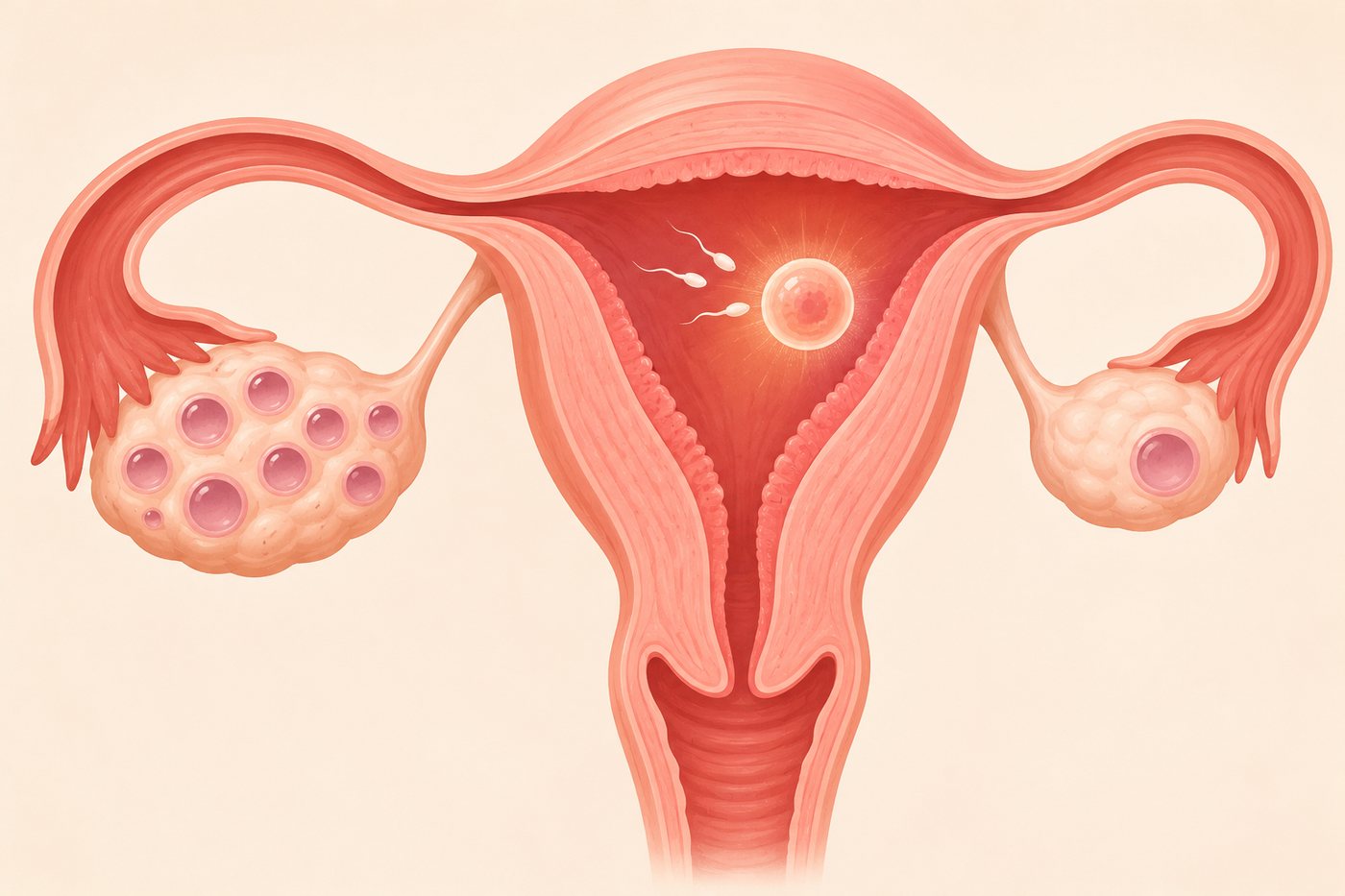
For women with PCOS who are trying to conceive, the most common hurdle is that ovulation does not happen regularly. In this situation, the 2023 International PCOS Guideline recommends letrozole as the first-choice tablet to help ovulation.
In a large trial, letrozole led to more live births than clomiphene, the older tablet. Her doctor decides whether letrozole suits her and how to monitor it. In India, this often includes follicle tracking scans (folliculometry).
If tablets do not lead to ovulation or pregnancy, doctors look at the whole picture: her age, how she responded, tube health and her partner’s semen report. Options they may discuss include:
- Injectable hormones (gonadotropins), sometimes with IUI (intrauterine insemination)
- Laparoscopic ovarian drilling, a small keyhole surgery, in selected cases
- IVF (in vitro fertilisation), especially when other fertility factors are present
These are not fixed steps in a set order. The right next option depends on her doctor’s assessment.
What about PCOS Ayurvedic treatment and supplements?
Many families in India try Ayurveda, home remedies or supplements like inositol, often alongside a doctor’s care. This is common and understandable.
The honest picture is that good-quality research on Ayurvedic and herbal products for PCOS is still limited. The 2023 guideline treats inositol as an option still being studied, not a proven treatment.
If she chooses Ayurveda, a few safeguards help:
- Tell the gynaecologist exactly what she is taking
- Use products from a registered AYUSH (Ayurveda, Yoga and Naturopathy, Unani, Siddha and Homoeopathy) practitioner or a licensed brand
- Avoid herbal products when trying to conceive or pregnant, unless her doctor agrees
- Keep taking prescribed medicine unless the doctor advises a change, even if a product promises a “permanent cure”
Treatment is a long game, and that is normal
Changes take time, and each symptom moves at its own pace. As a rough guide, cycles may take a few months to settle, while acne and facial hair often take 6 months or longer. These are estimates, not promises, and her doctor will review progress along the way.
Treatment also looks beyond the current goal. PCOS can raise the long-term risk of type 2 diabetes, high blood pressure and high cholesterol, so regular check-ups are part of care.
Mood matters too. Anxiety and low mood are more common with PCOS, and talking about them is part of good treatment.
When to see a doctor
A gynaecologist is the right first stop. It helps to book a visit if she has:
- Fewer than 8 periods a year, or no period for 3 months
- Been trying to conceive for 12 months, or 6 months if she is 35 or older
- Sudden heavy bleeding, or new facial hair that grows quickly
- Extreme thirst, frequent urination or other signs of high sugar
- Low mood or anxiety that affects daily life
Looking ahead
PCOS is a long-term condition, but it rarely decides the whole story. With a clear goal, a doctor she trusts and habits she can keep, most women manage their symptoms well, and many go on to have the families they hope for.
A useful next step is understanding her own symptoms in full, including the signs that are often missed.
References
- Teede HJ, et al. Recommendations from the 2023 International Evidence-based Guideline for the Assessment and Management of Polycystic Ovary Syndrome. 2023.
- Federation of Obstetric and Gynaecological Societies of India (FOGSI). FOGSI Focus: PCOS Practice Points, PCOS and Infertility. 2024.
- FOGSI. Update in Managing PCOS in Women. 2024.
- World Health Organization. Polycystic ovary syndrome: fact sheet.
- Legro RS, et al. Letrozole versus clomiphene for infertility in the polycystic ovary syndrome. New England Journal of Medicine. 2014;371:119-129.
- Indian Council of Medical Research (ICMR) PCOS Task Force. Proposal for the ICMR–PCOS Study. JMIR Research Protocols. 2021.
- Inositol for polycystic ovary syndrome: a systematic review and meta-analysis to inform the 2023 International PCOS Guideline. Monash University.
- A scoping review of Ayurveda studies in women with Polycystic Ovary Syndrome. Western Sydney University.
- Chinese herbal medicine for subfertile women with polycystic ovarian syndrome. Cochrane Database of Systematic Reviews.
Common questions
Is PCOD the same as PCOS?
In India, many people use PCOD (polycystic ovarian disease) and PCOS (polycystic ovary syndrome) for the same condition. Doctors and international guidelines now use PCOS. The treatment approach in this article applies whichever name her doctor uses.
Can PCOS go away with treatment?
There is no permanent cure yet. Symptoms can improve a lot with treatment and healthy habits, and some women find symptoms ease with age. Regular check-ups for sugar, blood pressure and cholesterol remain useful.
Does she need to lose weight to get pregnant with PCOS?
Not always. For some women above a healthy weight, modest weight loss may help ovulation. Lean women with PCOS are not asked to lose weight, and ovulation tablets work for many of them.
How long can she take letrozole for PCOS?
Doctors usually try letrozole for a limited number of cycles, often with scans to check how she responds. If ovulation or pregnancy does not follow, they review the next option rather than continue indefinitely.
Can she stop metformin once her periods are regular?
Some women can, but she should decide this with her doctor. Stopping may bring symptoms back, and the right plan depends on her sugar levels and goals.
This article is for general education and does not replace advice from a qualified doctor. PCOS treatment depends on each woman’s health, test results and goals. Please speak to a gynaecologist before starting, stopping or changing any medicine or supplement.
 Medically reviewed byDr. Mahender Singh, MBBS, DCH, MD (Paediatrics)A consultant child specialist and neonatologist with over four decades of practice in newborn and child health.
 Written bySarthak ThakurCo-founder, CTO and Chief Marketing Officer of ParentVeda, and the software engineer who builds its app and the pipeline that checks its articles.
This article explains; it doesn’t diagnose. If your doctor has told you something different, your doctor is right.