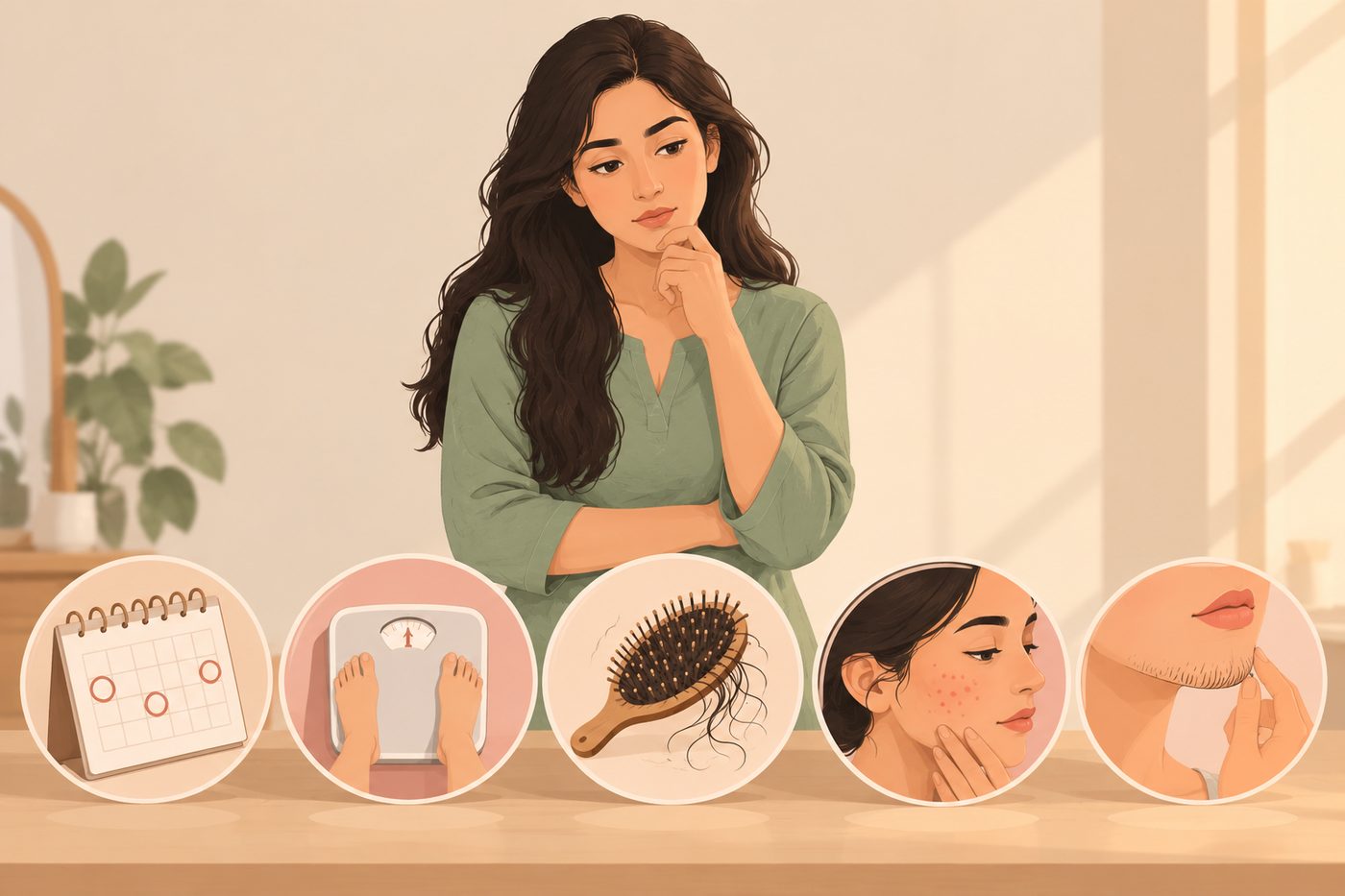
Diet advice for PCOS (polycystic ovary syndrome) comes from everywhere. A cousin gave up rice, a reel swears by fasting, and a relative blames too much mithai. Many women end up eating less and less, and still feel tired, hungry, and unsure what is actually helping.
A balanced PCOS diet can support metabolic health without banning everyday foods. This article shows how to build practical Indian meals, choose satisfying snacks and avoid unnecessary food restrictions.
For most women, that means a familiar Indian plate, arranged differently: more dal, sabzi, protein and fibre, and smaller portions of rice, roti and sweets. It also means fewer refined snacks. Research has not shown any one diet to be best for PCOS, so the right plan is one that fits a woman’s health and routine, and that she can keep up for years.
Key takeaways
- In many women with PCOS, the body responds to insulin less readily. This is called insulin resistance, and it is linked with a higher long-term risk of type 2 diabetes.
- Insulin resistance is common in lean PCOS too, so healthy eating matters at every body size.
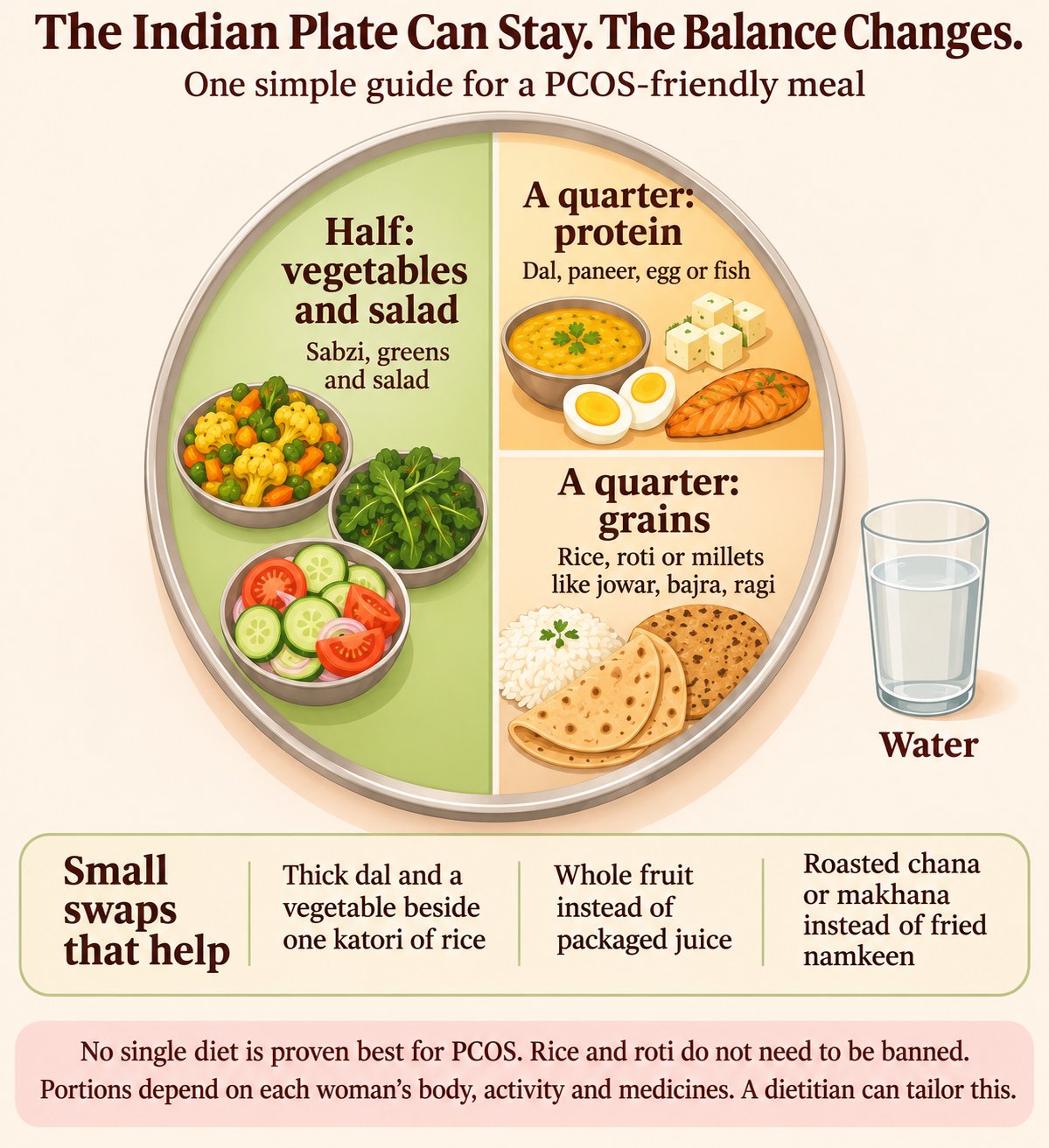
- Research has not found one diet that beats all others for PCOS. A rebalanced Indian plate works well for many women: half vegetables, a quarter protein and a quarter grains.
- Strict or unbalanced diets are not recommended. Regular, balanced meals are easier to sustain.
- Healthy eating and activity can benefit PCOS even without weight loss. Weight loss is not the goal for every woman.
- Women with irregular periods who are trying to conceive do not need to wait a year before seeing a doctor.
The quick answer
A PCOS diet does not need to ban rice or roti. Fill half the plate with vegetables, a quarter with protein such as dal, paneer, eggs or fish, and a quarter with grains, and limit refined snacks, sugary drinks and sweets.
Why does insulin matter in PCOS?
Every meal sends glucose into the blood, and insulin is the hormone that helps move it into the cells. A simple way to picture this is a curve: blood sugar rises after eating, then settles.
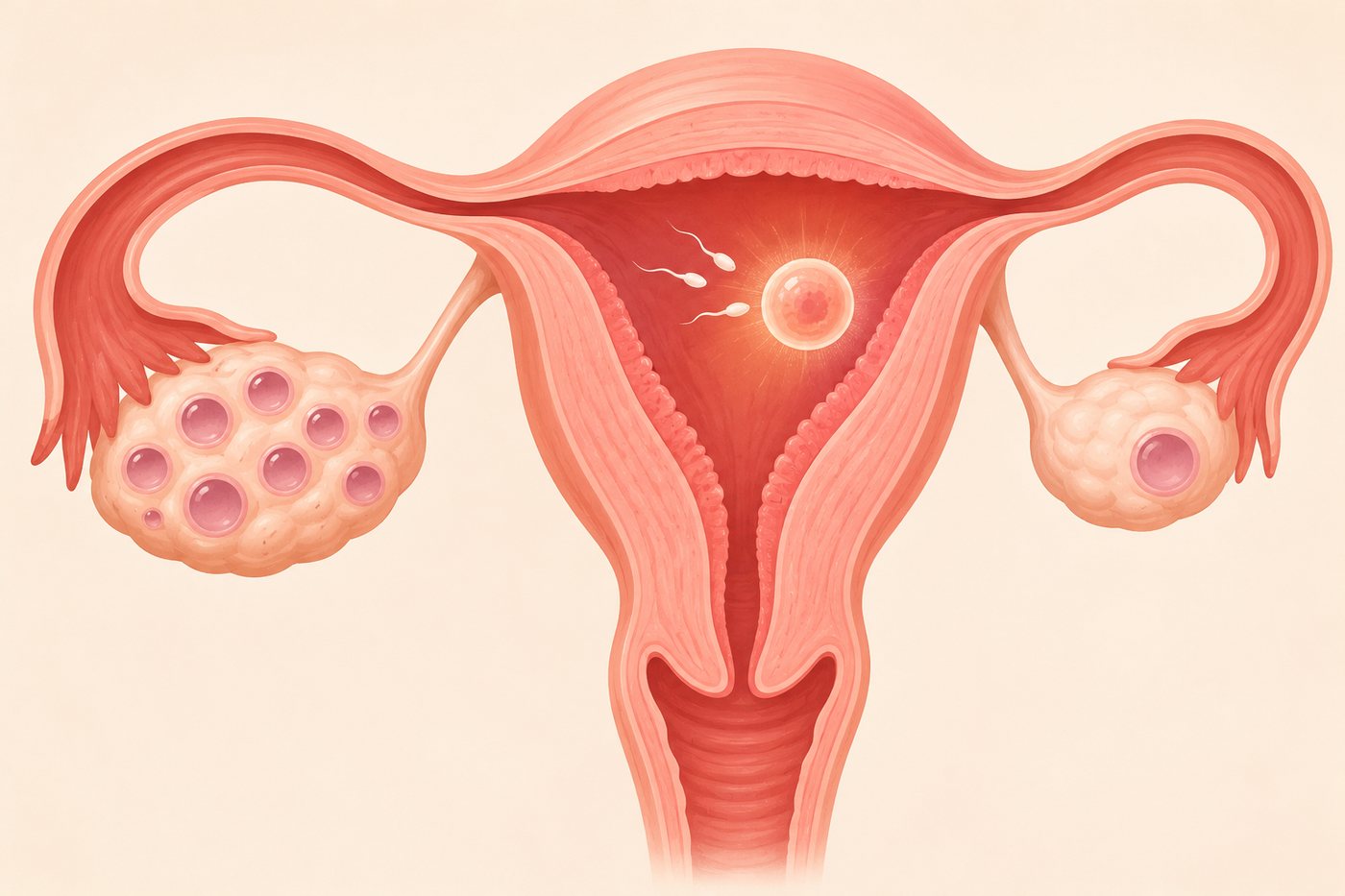
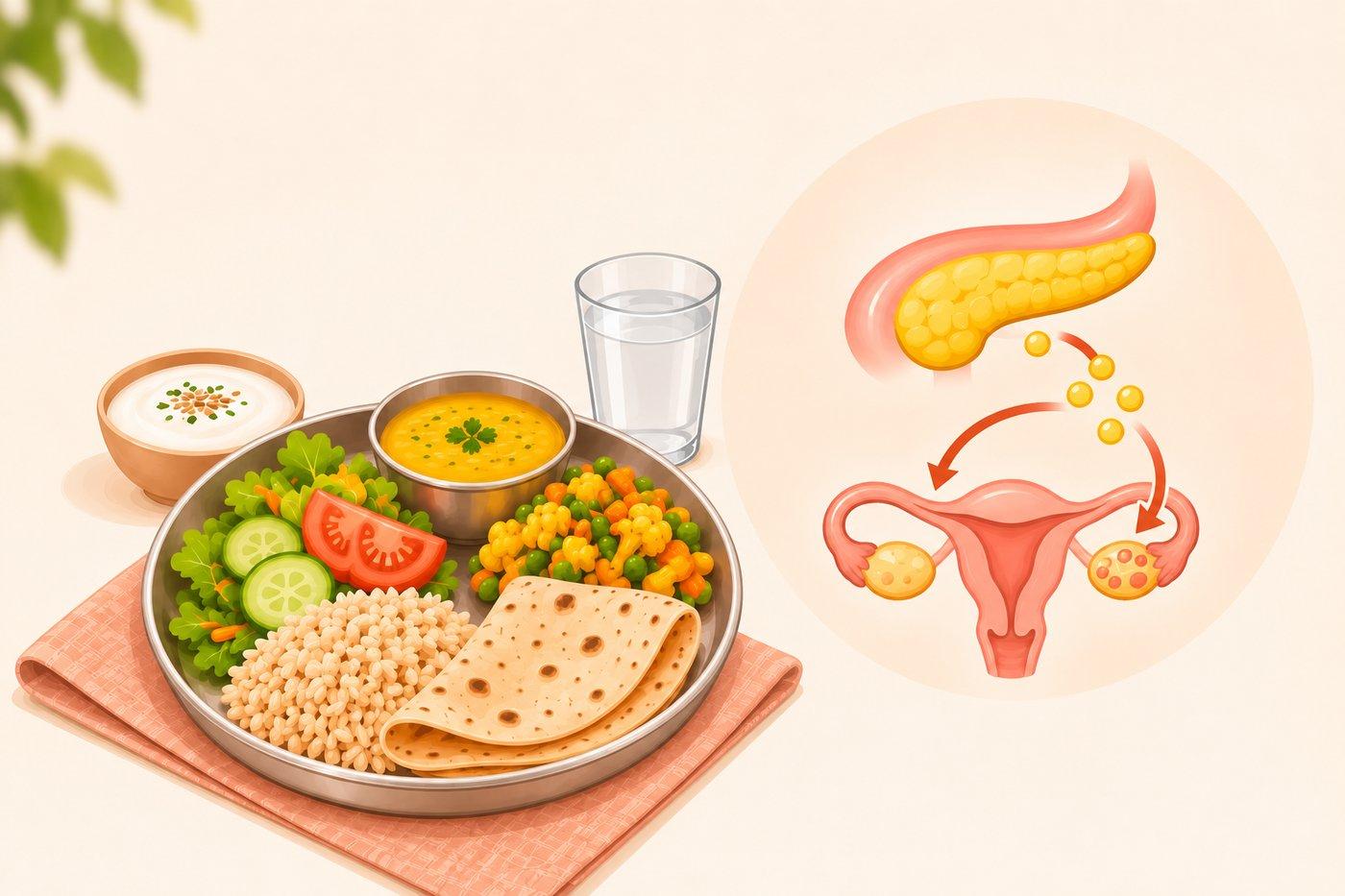
In many women with PCOS, the cells respond to insulin less readily. This is called insulin resistance, and the body may release more insulin to keep blood sugar in range.
Higher insulin is thought to be one of several reasons the ovaries make more androgens. Androgens are the hormones linked with irregular periods, acne and unwanted hair. Other signs worth knowing are covered in PCOS Symptoms: Checklist Including Often-Missed Signs.
Insulin resistance is also linked with a higher long-term risk of type 2 diabetes. The Federation of Obstetric and Gynaecological Societies of India (FOGSI) notes it is common in lean PCOS too. That is why healthy eating matters at every body size.
It is not a willpower problem
Many women with PCOS quietly blame themselves. They skip breakfast, eat a small lunch, and then find themselves reaching for biscuits at five in the evening.
Long gaps between meals, and meals that lack protein or fibre, can leave some women hungry sooner. Regular, balanced meals may help with fullness and make eating patterns easier to sustain.
The Indian plate can stay. The balance changes.
Everyday staples like rice, roti and dal are not the enemy. Blood sugar tends to climb faster when refined carbohydrates are eaten in large amounts with little fibre or protein alongside.
FOGSI guidance favours low glycaemic index (GI) foods, which raise blood sugar more slowly. It also recommends more fibre and enough protein.
| Often worth limiting | A more balanced choice |
|---|---|
| A heaped plate of white rice with thin dal | Rice limited to one katori, served alongside thick dal, a vegetable dish and a bowl of curd |
| Maida naan, white bread, pav | Roti made from whole wheat, jowar, bajra or ragi atta |
| Plain poha or upma | Poha or upma with peanuts, vegetables or sprouts |
| Sugary chai with biscuits | Chai with less sugar and a handful of roasted chana |
| Packaged fruit juice | A whole fruit such as guava, apple, pear or orange |
| Fried namkeen and chips | Roasted makhana, peanuts or a sprouts chaat |
| Mithai on an empty stomach | A small piece now and then, after a meal |
A simple guide is to fill half the plate with vegetables or salad. Fill a quarter with dal, paneer, curd, eggs, chicken or fish, and a quarter with rice, roti or millets. One katori of rice fits comfortably on this plate. What is worth changing is a heaped mound of rice with hardly anything beside it.
Can the order of eating help?
This idea has not been studied in women with PCOS. The evidence so far comes from small studies in adults with type 2 diabetes or prediabetes.
In those studies, blood sugar and insulin after a meal were lower when vegetables and protein were eaten before carbohydrates. Whether the same happens in PCOS is not known.
So this is an optional habit, not a PCOS treatment. Women who want to try it can start with salad and sabzi, then dal or paneer, and finish with roti or rice.
A sample PCOS diet chart for one day
No single PCOS diet chart suits every woman. The table shows one example of a vegetarian day, with swaps for women who eat eggs or meat.
| Meal | Vegetarian example | Egg or non-veg swap |
|---|---|---|
| Early morning | Water and a few soaked almonds or walnuts | Same |
| Breakfast | Besan chilla with paneer and mint chutney, or vegetable daliya | Two-egg vegetable omelette with one multigrain roti |
| Mid-morning | Guava or apple | Same |
| Lunch | Salad, a vegetable dish, dal and a bowl of curd, plus rice limited to one katori or two jowar or wheat rotis | Chicken or fish curry in place of dal |
| Evening | Chai with less sugar and roasted chana | A boiled egg |
| Dinner | Sabzi with one or two rotis and moong dal or paneer bhurji | Grilled fish or chicken with sabzi |
Portions depend on body size, activity and any medicines. A dietitian can tailor this plan.
Women who are vegan, have food intolerances or have other health conditions can adapt this plan with a dietitian. One FOGSI practice point mentions a larger breakfast and a lighter dinner for some women with lean PCOS. This is based on a review rather than trials, so it is an option to discuss, not a rule.
Healthy eating and activity can benefit PCOS even without weight loss, and weight loss is not the goal for every woman. For women carrying extra weight, FOGSI notes that losing 2 to 5% of body weight can help ovulation and cycle regularity. For a 70 kg woman, that is roughly 1.5 to 3.5 kg.
Keto, fasting and viral diet plans
The 2023 International PCOS Guideline is a widely used reference. After reviewing the research, its authors could not identify any diet type that outperforms the rest for PCOS. The guideline cautions against plans that are restrictive or nutritionally unbalanced, and favours eating that respects each woman’s culture and food preferences.
PCOS is also linked with a higher chance of disordered eating and body image worries. Any plan that makes food feel frightening or guilt-filled deserves a second look, and a conversation with a doctor.
Supplements such as inositol are widely sold in Indian pharmacies. The guideline says inositol may be considered, but the evidence that it improves ovulation or weight is limited. It is best discussed with a doctor first. Medicines and other options are explained in PCOS Treatment: What It Usually Looks Like.
Movement works alongside food
Regular physical activity supports overall metabolic health, whatever a woman weighs. FOGSI suggests at least 150 minutes of moderate activity a week, with strength exercises on two days.
A 10 to 15 minute walk after meals is a simple way to add movement. It is good general advice for blood sugar, though it has not been tested as a specific PCOS treatment.
When to see a doctor
This article cannot diagnose PCOS or explain the cause of irregular periods. Only a doctor can do that after an examination and tests. A visit is worth booking if any of these apply:
| Sign | What it can look like |
|---|---|
| Irregular cycles | Periods that come less than 21 days or more than 35 days apart, or fewer than eight periods a year |
| A long gap | No period for more than three months |
| Skin changes | Dark, velvety patches on the neck, underarms or groin (acanthosis nigricans), which can be a sign of insulin resistance |
| Possible high blood sugar | Constant thirst, frequent urination, or unexplained tiredness or weight change |
| Trying to conceive | With irregular or absent periods: see a doctor now, without waiting a year. With regular periods: after a year of trying, or six months if over 35 |
| Eating feels hard | Eating that feels anxious, out of control or tied to guilt |
Looking ahead
For women hoping to conceive, the same balanced habits support overall health before pregnancy. Small, steady changes made now can make the months of trying feel more in control. What else helps is explained in Getting Pregnant With PCOS: What Actually Helps.
PCOS is linked with a higher risk of blood sugar problems, including gestational diabetes during pregnancy. The habits built today are the same ones recommended then.
A doctor can advise when blood sugar testing is appropriate. The 2023 guideline prefers the oral glucose tolerance test (OGTT), which involves a sugary drink and blood tests over two hours. HbA1c (glycated haemoglobin) or fasting glucose are less accurate alternatives when an OGTT is not practical.
References
- Teede HJ, Tay CT, Laven J, et al. Recommendations from the 2023 International Evidence-based Guideline for the Assessment and Management of Polycystic Ovary Syndrome. Human Reproduction. 2023;38(9):1655-1679.
- Monash University. International Evidence-based Guideline for the Assessment and Management of Polycystic Ovary Syndrome 2023.
- FOGSI-ICOG. Good Clinical Practice Recommendations: Update in Managing PCOS in Women. 2024.
- Shukla AP, Iliescu RG, Thomas CE, Aronne LJ. Food Order Has a Significant Impact on Postprandial Glucose and Insulin Levels. Diabetes Care. 2015;38(7):e98-e99.
Common questions
Can women with PCOS eat fruit?
Yes. Whole fruits bring fibre, vitamins and natural sweetness, and they fit well into a PCOS diet. Guava, apple, pear, orange and papaya are easy everyday choices. Fruit juice is different, because the fibre is removed and the sugar reaches the blood faster. One or two servings of whole fruit a day suits most women. Those with diabetes or prediabetes can ask a doctor or dietitian about the right amount.
Is jaggery or honey a healthier swap for sugar?
Not by much. Jaggery and honey contain small amounts of minerals, but the body handles them much like sugar and they raise blood sugar in a similar way. Switching to gud in chai does not make it a PCOS-friendly drink. Reducing the total amount of sweetener, whatever its form, matters more. Sweets made with jaggery can still be enjoyed in small portions, like any other mithai.
Do women with PCOS need to give up milk and dairy?
There is no strong evidence that women with PCOS need to stop having milk, curd or paneer. These foods add protein and calcium, and they help make meals more filling, especially in vegetarian homes. Sweetened dairy, such as flavoured milk, sweet lassi or milk-based mithai, is better kept for occasional treats. A woman who feels a food does not suit her can discuss it with a dietitian before cutting out a whole food group.
Are millets better than rice for PCOS?
Millets such as jowar, bajra and ragi usually carry more fibre than polished white rice, so many women find them more filling. They are a good way to add variety, not a strict replacement. How a grain is cooked and what it is eaten with also affect blood sugar. Rotating millets with rice and wheat through the week, with moderate portions, is a practical approach for most families.
This article is for general education and does not replace personal medical advice. PCOS affects every woman differently, so diet, medicines and tests are best decided with a doctor or registered dietitian who knows her health history. Review of this article by a specialist gynaecologist and dietitian is in progress.
 Medically reviewed byDr. Mahender Singh, MBBS, DCH, MD (Paediatrics)A consultant child specialist and neonatologist with over four decades of practice in newborn and child health.
 Written bySarthak ThakurCo-founder, CTO and Chief Marketing Officer of ParentVeda, and the software engineer who builds its app and the pipeline that checks its articles.
This article explains; it doesn’t diagnose. If your doctor has told you something different, your doctor is right.